


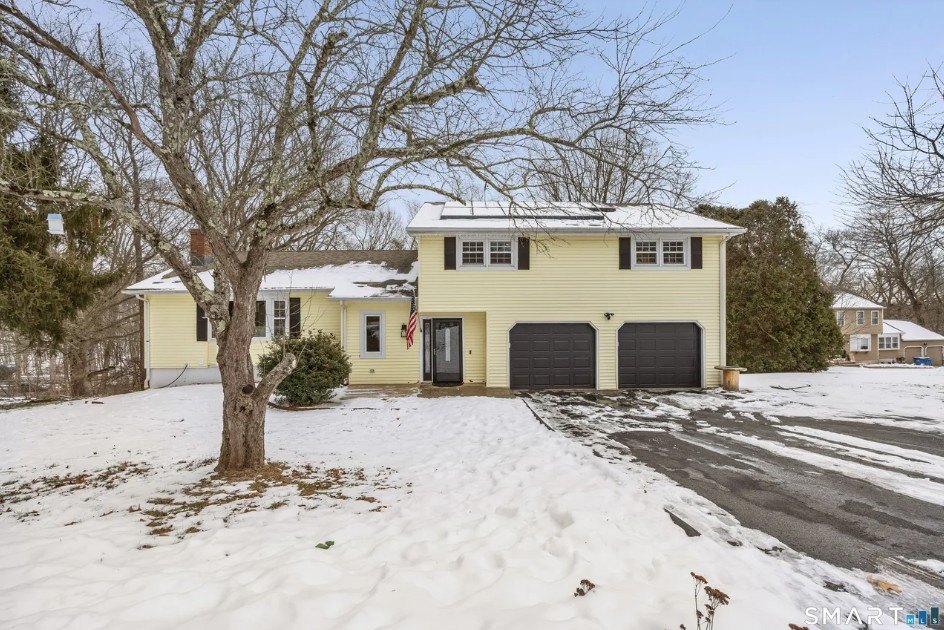
Nicknamed the “Rose of New England,” Norwich, CT, is perhaps best known for its Revolutionary War history as the birthplace of Benedict Arnold—but far from being a dusty museum town, this charming enclave is increasingly drawing homebuyers.
Located roughly halfway between New York City and Boston, the Norwich-New London, CT, metro, which has a total population of 280,000 people, ranked seventh in the Winter 2026 Wall Street Journal/Realtor.com® Housing Market Ranking after jumping 14 spots from the previous quarter thanks to surging demand among buyers seeking a relative bargain.
Realtor.com senior economic research analyst Hannah Jones says Norwich’s growing popularity largely comes down to its convenient location near major Northeast employment hubs, including Providence, RI, Hartford, CT, and New Haven, CT, all of which are situated about 50 miles away.
“The metro offers regional connectivity while maintaining lower housing costs than many surrounding markets,” adds Jones.
The quarterly ranking evaluates the 200 most populous U.S. metros as measured by the U.S. Census Bureau, taking into account real estate demand, housing inventory, median days on the market, median price trends, property taxes, climate risks, unemployment rate, wages, regional price parities, amenities, and other factors that affect the cost of living and quality of life.
The goal of the ranking is to help aspiring homebuyers identify desirable markets to consider when purchasing a primary residence or investment property.
A Northeast bargain
In December, the typical home in Norwich cost just over $445,000, up roughly 10% from a year ago but still a relative bargain compared with many bigger metros in the region, including Boston ($772,000), New York City ($749,000), and Providence ($549,900), according to the Realtor.com December monthly housing market trends report.
Budget buyers struggling with affordability challenges and still-elevated mortgage rates stuck above 6% in those higher-priced markets have taken notice, turning to Norwich as a more affordable alternative.
In the third quarter of 2025, the highest share of listing views for Norwich on Realtor.com came from New York (20.3%), followed by Hartford (18.1%), Boston (15.3%), Providence (5.8%), and New Haven (5.8%).
The typical Norwich listing stayed on the market for 52 days in December, a day shorter than in 2024, reflecting rising demand amid tight inventory that, despite marginal improvements, is still 73% below 2019 norms.
Greg Hanner, broker and owner of Garden Realty in Waterford, CT, tells Realtor.com that looking for a home in Norwich is something of a “balancing act,” because while the metro has lower prices than some nearby markets, it has higher property taxes, and buyers have to take that into consideration before closing.
Hanner says he has had newcomers from as far as Florida and California shopping for homes in the area, but nearby Boston has been a steady source of demand as the city’s elevated housing prices have been pushing budget-conscious buyers farther south.
“They just get more house for the money,” says the broker.

Jobs and lifestyle
The Norwich metro’s economy is dominated by health care services and regional hospital systems; higher education institutions like Connecticut College, the U.S. Coast Guard Academy, and Norwich Free Academy; and advanced manufacturing led by submarine maker General Dynamics Electric Boat, all of which provide a source of steady employment.
“These anchors help sustain housing demand even as economic growth cools elsewhere in the region,” notes Jones.
Additionally, Norwich is located between two large casinos, Mohegan Sun and Foxwoods, which have a major economic impact on the area.
As of December, the unemployment rate in Norwich stood at 3.7%, well below the national rate of 4.4%.
Beyond its industrious side, Norwich stands out for what Jones describes as its “everyday livability,” offering easy access to the Connecticut shoreline, historic town center, museums, and cultural institutions like the Norwich Historical Society and Lathrop Schoolhouse as well as the Leffingwell House Museum.

“The area’s scale, small enough to remain navigable but large enough to support amenities, adds to its appeal for families, retirees, and remote or hybrid workers,” adds the analyst.
Revolutionary War buffs can follow a self-guided trail through town in the footsteps of Norwich’s most controversial hometown hero-turned-notorious traitor to the Patriot cause, Arnold, who was born in the city in 1741 while it was British territory.
Norwich’s sharp climb in the rankings is emblematic of a broader late-2025 trend across the Northeast and Midwest: Midsized metros offering affordability, improving supply, stability, strong quality of life, and regional connectivity gain favor with buyers prioritizing good value over rapid appreciation.
These conditions hold across the top-ranked markets, led by South Bend, IN, which climbed two spots from the last quarter to claim first place this winter, followed by Appleton, WI, Manchester, NH, Canton, OH, Lancaster, PA, and Springfield, MA.