

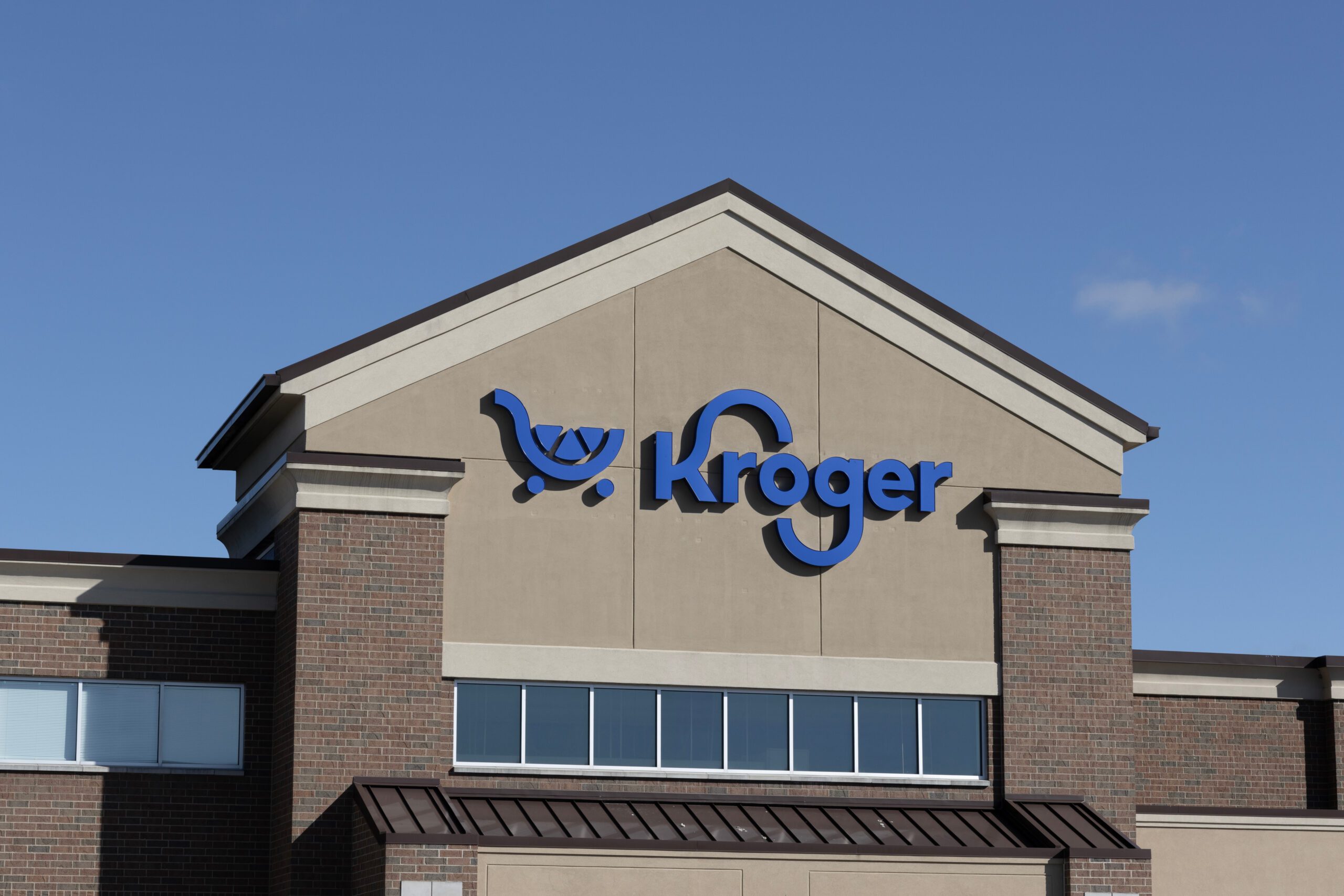
Kroger, one of the nation’s largest grocers, now has a new CEO.
The Cincinnati-based grocery giant has Greg Foran as chief executive officer, effective as of Feb. 9. Foran also joins Kroger’s Board of Directors and succeed Ron Sargent, who served as interim CEO since March 2025.
Sargent served as interim chief executive while the company searched for a replacement for Rodney McMullen, who had worked at Kroger for more than four decades, starting as a part-time stock clerk.
Who is Kroger’s new CEO?
Foran brings a diverse résumé, including a six-year stint at Walmart, where he oversaw online ordering and pickup. During his tenure, he delivered positive comparable sales growth for 20 consecutive quarters and managed more than 4,600 stores and 1 million associates.
Kroger noted in a press release that Foran most recently served as CEO of Air New Zealand, where he led an end-to-end digital transformation to improve the customer experience and make the business more agile. Throughout his five years as CEO, according to Kroger, he led complex union negotiations, managed multiple supply chain crises and invested in fleet upgrades.
Foran expressed excitement about helming the grocer.
“Kroger is one of the most dynamic companies in retail,” Foran said. “The company is built on a strong foundation, supported by a talented leadership team, and caring associates who are dedicated to the customers and communities they serve.”
Challenges that Kroger’s new CEO will face
Sargent will continue to serve as chairman of the board, ensuring a smooth leadership transition.
Industry watchers are following the new hire with interest.
“Kroger’s CEO hire is a positive signal and points to a renewed focus on tighter execution,” said Shawn Cole, president and co-founder at Cowen Partners Executive Search.
Nevertheless, Cole cautioned that Foran’s Walmart experience is not necessarily a plus.
“Any legacy hire coming from a competitor faces a difficult transition,” he explained. “Culture, operating cadence and the customer equation do not transfer cleanly. What worked at Walmart will not automatically work at Kroger because the customer demographics, business model and product-market fit are different.”
Cole sees Walmart’s culture as being built around growth and continuous improvement. Kroger, by contrast, has a more ingrained “establishment” culture, where “this is how we’ve always done it” can slow change, he said.
“The CEO’s challenge will be to adapt quickly, build internal credibility, and modernize operations without breaking what already works,” he assessed.
What Foran will need to do
Dave Mayer, a senior partner at Lippincott, a global brand, experience and marketing consultancy, said the new CEO at Kroger provides an opportunity to reset the growth strategy and address deep operating-model challenges.
Mayer said Kroger is caught in a squeeze where the top 10% of shoppers drive half of all grocery spending while the remaining 90% increasingly hunt for value. Meanwhile, he sees competitors delivering stronger value propositions that Kroger’s middle-market position struggles to match. He pointed to Walmart (scale efficiency), Aldi (limited SKUs with premium private label) and H-E-B (localized experience) as examples.
Mayer said Lippincott’s brand research shows Kroger lags behind all three competitors on value perception, and the company’s multi-banner complexity makes it difficult to compete with any one of its competitors’ models, let alone all three simultaneously.
“Kroger’s portfolio spans discount banners like Payless to fresh-forward propositions like Mariano’s, which requires balancing the creation of distinctive brand propositions for each target audience against shared platforms that drive efficiency,” he said. “Today, with 19 banners, Kroger is stuck in a middle ground that is neither sufficiently distinctive versus local competitors nor fully able to capture the scale advantages of a single national brand.”
Mayer added that the failed Albertsons merger would have delivered additional scale but also added more banners and complexity.
Mayer said the new Kroger CEO should have clear priorities, including simplifying the portfolio to reduce operating complexity and enable truly consumer-focused, destination propositions for each target audience.
Kroger ranks No. 6 in Digital Commerce 360’s Top 2000 Database. The database ranks North America’s largest online retailers by their annual ecommerce sales. Furthermore, Kroger is No. 1 in the database’s Food & Beverage category, though it competes with Mass Merchants — Walmart and Target — that rank higher in the Top 2000 for online grocery sales.
Do you rank in our databases?
Submit your data and we’ll see where you fit in our next ranking update.
Sign up
Stay on top of the latest developments in the online retail industry. Sign up for a complimentary subscription to Digital Commerce 360 Retail News. Follow us on LinkedIn, TikTok, X (formerly Twitter), Facebook and YouTube. Be the first to know when Digital Commerce 360 publishes news content.