


What is Imposter Syndrome?
Imposter Syndrome is not a medical condition. It is a term for the feeling you have when you believe that you do not really know what you are doing. It is self-doubt.
You know how you feel when you get a new project or a whole lot more responsibility and suddenly you feel you’re in the wrong job? It’s as if you have to step into someone else’s shoes every day as your own just aren’t good enough.
You’re not alone — that feeling is Imposter Syndrome.
3 Ways to overcome Imposter Syndrome
In this video, which was filmed at PMI Synergy in London, I share 3 reasons why we can feel like frauds at work and 3 tips to overcome Imposter Syndrome.
It’s 16 minutes long, safe for work!
Imposter Syndrome is the feeling of self-doubt you have when you believe you don’t really know what you are doing.
Who came up with the concept of Imposter Syndrome?
When psychologist Pauline Clance was in graduate school, she was constantly worrying that she wasn’t good enough. She didn’t think her performance in exams was adequate. She dwelt on the information she didn’t know instead of what she did.
Her friends grew tired of hearing her worries, so she stopped sharing them. She managed to get good grades in her exams, but was still worried that she wasn’t measuring up to the achievements of others. Instead of seeing success as the result of skill and effort, she (and others around her) attributed it to luck, timing, or other external factors.
Pauline didn’t know it at the time, but she had Imposter Syndrome.
She went on to develop the concept of Impostor Phenomenon with fellow psychologist Susanne Imes. They are widely published on the topic. Although it is commonly called “imposter syndrome,” psychologists originally described it as the impostor phenomenon because it is not a clinical disorder. Both terms are in use today and at work you’ll probably hear people call it a syndrome.
What does Imposter Syndrome feel like?
You attend a meeting where the discussion goes over your head and you suddenly feel like an idiot, even though you are supposed to be taking the minutes. You believe that you are in completely the wrong job and the wrong company and you are in no way worthy of holding your current position.
Surely it is only a matter of time before someone notices that you are not up to the job and fires you?
You might be experiencing imposter syndrome if you:
- Attribute your success to luck rather than ability
- Feel anxious about being exposed as ‘not good enough
- Over-prepare or overwork to compensate
- Discount praise or positive feedback
- Compare yourself unfavorably to peers
- Set unrealistically high standards and feel disappointed when you don’t meet them.
That’s how Imposter Syndrome manifests itself: it undermines your self-confidence. It can hit anyone, at any time.
Remember, Imposter syndrome isn’t a clinical diagnosis. It’s a pattern of thinking. And the good news is: patterns can be changed.
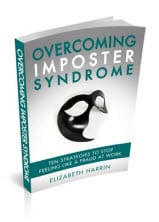
There are loads of stories from men and women struggling with Imposter Syndrome in my book, Overcoming Imposter Syndrome.
Who gets Imposter Syndrome?
We all get it — men and women. When I speak at conferences about imposter syndrome I ask people in the audience to put up their hand if they have ever felt like a fraud at work, and you know what?
Nearly every hand goes up, every time.
In reality, lots of people feel that they don’t measure up. When you take on something new – a new project, a new responsibility – you might be surrounded with people who are subject matter experts or who have been in a similar role as yours for years.
It feels as if they know everything, and you don’t know anything at all.
Worry, concern, fear, shame, embarrassment, being overwhelmed: all these are reasons that keep people quiet about their Imposter feelings.
If you are brave enough to ask your colleagues whether they have ever felt as if they are splashing around in the deep end while everyone else swims gracefully by, then you are breaking the silence around Imposter Syndrome.
Go on, ask someone.
When you tell the truth about how you feel, you will encourage other people to do the same. Your truth gives them permission to act in the same way. And that changes things for everyone.
The impact of imposter syndrome on leadership and delivery
Imposter syndrome doesn’t just affect how you feel. It affects how you lead.
You may:
- Delay decisions because you fear getting them wrong
- Over-prepare for meetings and burn yourself out
- Avoid escalating risks because you think you “should have handled it”
- Micromanage to maintain control
- Underplay your authority in stakeholder conversations.
Over time, this can reduce team confidence and slow delivery. And it’s not a great feeling for you either. When you second-guess yourself constantly, your team senses uncertainty. If you have to keep checking with the big boss about what to do, or running every decision past a collective, then they’ll realize you feel out of your depth — whether you technically are or not.
Ironically, the coping behaviors you use to protect yourself — overworking, overchecking, avoiding visibility — can increase stress and reduce effectiveness.
Confident leadership doesn’t mean knowing everything. It means being comfortable not knowing everything, and still moving forward.
Why imposter syndrome is common in project management
If you’re a project manager, you operate in a role that is almost perfectly designed to trigger imposter thinking! Sorry about that…
You’re accountable for outcomes you don’t directly control. You work across functions where you may not be the subject matter expert. You’re visible to sponsors and leadership. And when something goes wrong, you’re often the first person asked for answers.
In project environments, you may:
- Lead people who are more technically experienced than you (check)
- Make decisions with incomplete information (check)
- Navigate ambiguity and shifting priorities (check)
- Present to executives who challenge your assumptions (check!)
- Take over projects mid-stream and inherit problems (check!!)
All of that creates exposure. And exposure creates vulnerability.
Because project management is about coordination, influence, and judgment (not just technical expertise) it can be easy to undervalue your own contribution. You may think, “Anyone could do this.” That’s rarely true, trust me.
Imposter syndrome thrives in roles where your value isn’t always tangible. That’s why so many capable project professionals quietly struggle with it, myself included.
Is Imposter Syndrome normal?
Feeling like a fraud is (unfortunately) very normal. There is a name for these feelings and by now you know that the name is Imposter Syndrome.
You are not alone in feeling like this, and just knowing that can be a step towards overcoming Imposter Syndrome, regaining your self-confidence and feeling like you have all the skills you need to tackle life at work.
For more tips on how to overcome Imposter Syndrome, read Overcoming Imposter Syndrome.
Do you have imposter syndrome? A quick self-check
Take a moment and reflect on the following statements. Be honest with yourself. No one is listening!
- When I succeed, I feel relief more than pride.
- I worry that people overestimate my abilities.
- I believe I have to work harder than others to maintain credibility.
- I downplay compliments or redirect praise.
- I fear being asked a question I can’t answer in meetings.
- I feel uncomfortable when I’m described as an “expert.”
If you agreed strongly with several of these, you may be experiencing imposter thinking. Or even imposter-ish thinking.
This isn’t about labeling yourself, it’s about awareness. Once you recognize the pattern, you can begin to interrupt it, and help your brain reframe some of your working practices in a way that doesn’t make you feel out of your depth from time to time.
Imposter syndrome vs self-doubt – what’s the difference?
Not all self-doubt is unhealthy. In fact, a degree of reflection can improve your performance. And if you know you don’t have the skills to do brain surgery, you really shouldn’t be doing it! So some self-doubt in your abilities might be appropriate in certain situations. The key difference lies in how you interpret your thoughts.
The table below shows some differences between imposter thinking and healthy self-reflection.
| Imposter Thinking | Healthy Self-Reflection |
|---|---|
| “I don’t deserve this role.” | “What skills should I strengthen in this role?” |
| “I just got lucky.” | “Timing helped, but I also worked hard.” |
| Fear of being exposed | Willingness to learn and improve |
| Perfection required | Progress is acceptable |
| Avoid visibility | Seek feedback constructively |
If your internal dialogue is about exposure rather than development, you’re likely dealing with imposter syndrome — not constructive self-critique.
Overcoming Imposter Syndrome: A How To Guide
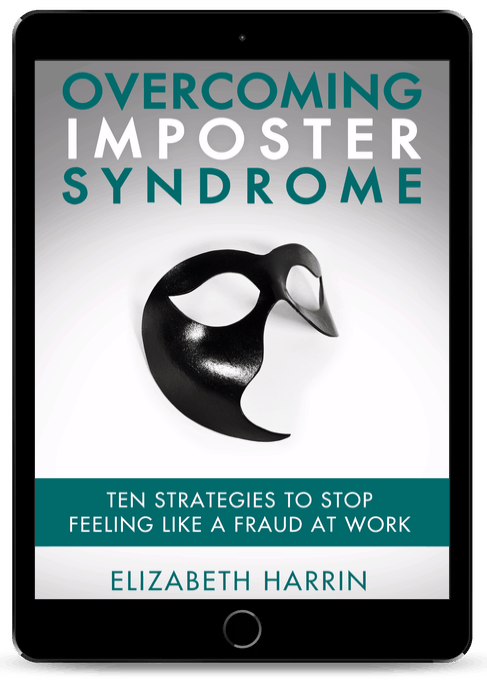
Overcoming Imposter Syndrome explains what Imposter Syndrome is, the symptoms and shares 10 ways to overcome those fraudulent feelings. The book includes stories from men and women who have built their self-confidence, tackled Imposter Syndrome and found their own ways to feel more positive about their performance at work.
Most of the books about Imposter Syndrome explain the symptoms and the rationale behind why we feel like that.
Learning about why we feel like that is important but I wanted to write something practical that would help people make changes to their attitudes and behavior straightaway. The book is full of practical tips from me and people I interviewed.
Helen, one of the people who got an early copy, said, “I am now 58 and retired. I wish someone had given me a book like yours about 25 years ago. I have learnt all the lessons in it the hard way.”
Get the ebook now: Overcoming Imposter Syndrome: Ten Strategies To Stop Feeling Like a Fraud at Work.
Quick Answers
What is imposter syndrome also known as?
Imposter syndrome is also known as imposter phenomenon, fraud syndrome, the imposter experience or imposterism.
How do you stop feeling like an imposter?
Stop thinking the thoughts that lead you to believe you aren’t good enough.
Recognize your true skills and appreciate the contribution you make.
Understand your real weaknesses and look at ways to plug those gaps.
Who suffers from imposter syndrome?
When I speak about imposter syndrome at conferences, almost everyone (men and women) confess to feeling like a fraud at some point in their career. Imposter syndrome is widespread and most people have feelings of self-doubt from time to time.