


Merchants develop private-label brands to boost revenue, improve supply chain control, and differentiate their stores. The process is not simple, but it can be profitable.
Retailers are the customer-facing endpoint in a network of brands, manufacturers, and distributors.
Profit comes after those participants have taken a share.
Private Benefit
Amazon, Walmart, and Target, as examples, have their own brands. The aim is to improve unit economics in at least three ways.
- Profit. Sourced directly from a manufacturer, private-label brands remove one or more layers of intermediaries from the supply chain, usually distributors or other brands. A nearly identical private brand can earn more margin, even at a low price.
- Supply chain control. The retailer can select a manufacturer, define the product’s specifications, negotiate minimum order quantities, and align lead times with peak demand.
- Differentiation. Because the private label is exclusive to its owner, no competitor can sell it or match the SKU. Customers who like the private brand must return to the retailer to buy more.
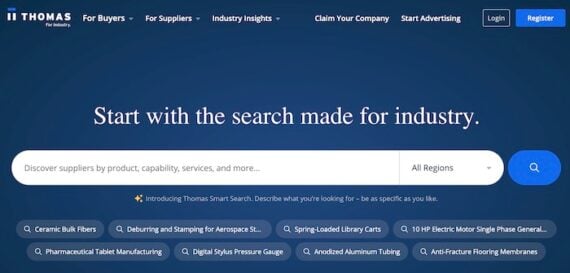
Thomasnet is a popular source for locating manufacturers, as is Alibaba.
Private vs. White Label
Private-label and white-label products are not the same. The difference is typically customization and exclusivity.
Private label goods are manufactured to a retailer’s specifications and sold exclusively under its brand. The retailer controls features, materials, packaging, and positioning.
White-label products are generic items that a manufacturer produces and sells to multiple brands. Retailers typically apply their own label or packaging but cannot substantially change the product itself.
Print-on-demand merchandise largely follows a white-label model since the base product is standard, although custom artwork can give it a private-label feel, a “private-label lite.”
Process
Launching a private-label product is a lot of work. Complications can arise at any point. The following steps are illustrative but not exhaustive. The devil is always in the details.
Choose a niche and validate
The first step is identifying a product with demand and room for improvement. Sources include marketplace listings, search trends, and product reviews to identify gaps. Even analyzing the products you already sell well can uncover potential private-label alternatives.
Tools such as Helium 10, Jungle Scout, and Google Trends can help estimate search demand and competition. Generative AI platforms can summarize thousands of product reviews to identify common complaints or feature requests.
Define the product and positioning
Once demand is validated, the merchant determines what makes the product unique.
Differentiation might include materials, features, packaging, manufacturing origin, or bundling complementary items. Even the price point can be a differentiator. Think good, better, best pricing, for example. The retailer also sets a target price and margin based on those differentiators.
Find manufacturers
Would-be private label owners typically locate manufacturers through directories such as Thomasnet and Alibaba, as well as trade shows and industry networks. The process usually involves requesting quotes, comparing minimum order quantities, and ordering samples.
Overseas manufacturers often have lower per-item costs, but domestic suppliers offer advantages such as faster shipping, easier communication, and improved quality oversight.
Create the brand and packaging
Branding turns a functional product into an offering. Choose a brand name, design a logo, and create packaging that communicates the product’s value and market positioning. Packaging impacts shipping durability and the unboxing experience.
Generative AI tools can assist with drafting product descriptions, generating branding ideas, and testing packaging concepts before committing to a final design.
Confirm compliance and product specifications
Before production may begin, the merchant and manufacturer will finalize product specifications and compliance requirements.
Specifications may include materials, dimensions, packaging instructions, and labeling. Some product categories and certifications require official testing.
Plan logistics and fulfillment
Next, the retailer decides how inventory will be stored and shipped. Will the merchant manage warehousing and fulfillment in-house? Will it outsource?
Logistics planning includes freight costs, lead times, and inventory management.
Place the production order
After approving the final product, the merchant places the first production order.
This order is the result of negotiations that cover unit price, payment terms, production timelines, and quality expectations. It kicks off the sales process.
Launch
Launch strategies include email promotions, advertising, social media posts, and influencer partnerships. Initial customer reviews are important for establishing credibility.
AI-powered advertising tools can help with campaign targeting and bidding as performance data accumulates.
Improve and expand
The final step is iteration. Analyze reviews, returns, and sales data to refine the product. Improvements might involve materials, packaging, or new variations.
In short, private label products allow ecommerce companies to move beyond reselling existing brands and create merchandise directly associated with their businesses.