Running a manufacturing operation without clear documentation quickly leads to delays, miscommunication and costly mistakes. Manufacturing documents bring structure to production workflows, helping teams stay aligned, track progress accurately and ensure every stage of the process is executed with consistency and control.
What Are Manufacturing Documents?
Manufacturing documents are structured records used to plan, execute, monitor and control production activities. They include materials, processes, schedules, instructions and quality requirements. These documents ensure consistency across operations, support traceability and provide a reliable framework for managing manufacturing workflows from start to finish.
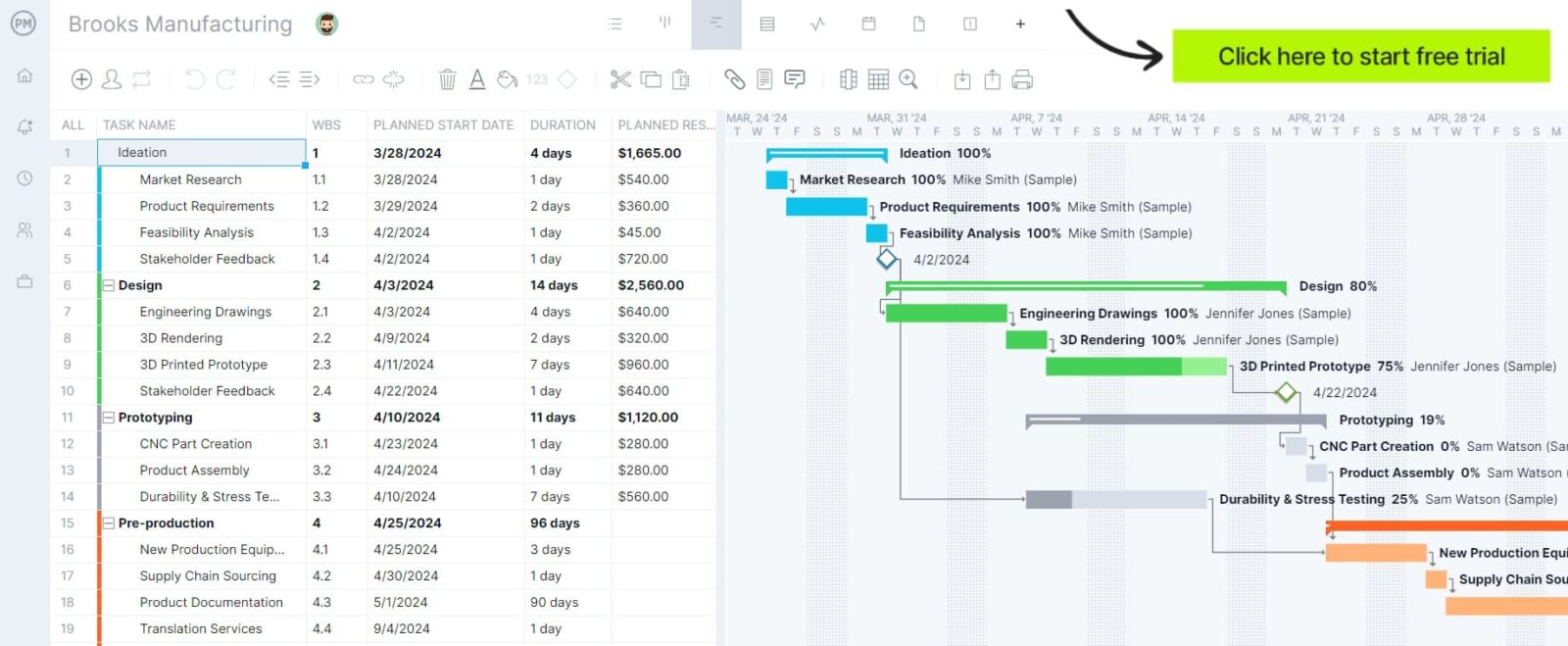
As important as documentation is, manufacturing businesses need planning, scheduling, and tracking tools to manage their operations and projects. ProjectManager offers tools such as task lists, Gantt charts, timesheets, workload charts and real-time dashboards and reports, which allow manufacturers to plan their processes, create production timelines, establish budgets and track costs. Get started for free today.
What Is Manufacturing Document Management?
Manufacturing document management is the process of organizing, storing, controlling and maintaining manufacturing documents throughout their lifecycle. It involves version control, access permissions, document workflows and traceability to ensure accurate, up-to-date information is available to teams, supporting production efficiency, compliance and efficient coordination across manufacturing operations.
Manufacturing Document Management Tips
Managing manufacturing documents effectively requires structure, consistency and the right systems in place to keep information accurate, accessible and aligned with production workflows.
- Establish a centralized system where all manufacturing documents are stored and easily accessible.
- Implement version control to ensure teams always work from the latest document revisions.
- Define clear access permissions so only authorized personnel can edit critical documents.
- Standardize document formats to improve readability and consistency across manufacturing operations.
- Regularly review and update documents to reflect current processes and production requirements.
- Use automated workflows to streamline approvals, updates and document distribution across teams.
- Train employees on proper document usage to reduce errors and improve operational efficiency.
1. Production Plan
A production plan is a detailed document that outlines what products will be manufactured, in what quantities, and within a specific project timeline. It includes information on production sequences, required resources, work centers, and scheduling parameters that define how manufacturing activities are organized and executed.
Without a clear production plan, coordinating tasks across teams becomes unpredictable and inefficient. It allows managers to align resources, balance workloads and ensure production targets are met on time while minimizing disruptions, delays and unnecessary operational costs throughout the manufacturing process.
- Provides a structured overview of manufacturing activities, helping teams understand production priorities and sequencing clearly.
- Improves resource allocation by matching labor, equipment and materials with planned production demands.
- Supports better schedule control by aligning production tasks with realistic timelines and capacity constraints.
- Reduces operational inefficiencies by identifying bottlenecks and optimizing workflows before production begins.
- Enhances coordination between departments by ensuring everyone works from a shared production schedule.
2. Master Production Schedule
A master production schedule is a time-phased manufacturing document that specifies which finished goods will be produced, in what quantities, and on which dates. It translates demand data into scheduled production outputs, detailing planned order releases and completion timelines across a defined planning horizon.
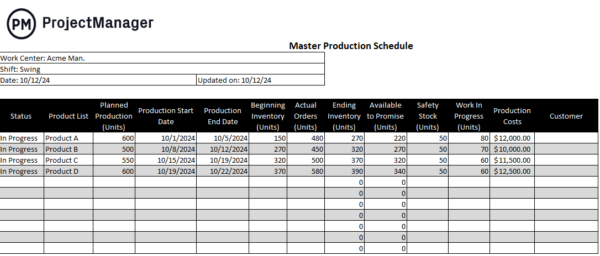
From a planning standpoint, this document bridges demand forecasts with actual production execution. It helps teams coordinate manufacturing schedules with sales expectations, ensuring the right products are produced at the right time while maintaining alignment between inventory levels, production capacity and customer delivery commitments.
- Aligns production output with demand forecasts to reduce excess inventory and prevent stockouts.
- Improves visibility into future production requirements across the entire manufacturing planning horizon.
- Supports better coordination between sales, operations and supply chain planning functions.
- Enhances production scheduling accuracy by providing a clear, time-phased manufacturing roadmap.
- Enables proactive decision-making when adjusting production based on changing demand conditions.
3. Bill of Materials
A bill of materials is a structured manufacturing document that lists all raw materials, components, subassemblies and quantities required to produce a finished product. It defines the hierarchical relationship between parts, including item specifications, reference designators and assembly sequences used during manufacturing processes.

When teams rely on accurate material data, production runs more smoothly and predictably. This document ensures that every required component is accounted for, helping procurement, inventory and production teams stay aligned while avoiding shortages, delays or errors that can disrupt manufacturing operations.
- Provides complete visibility into all materials and components required for product manufacturing.
- Improves inventory management by clearly defining material requirements for each production run.
- Reduces production errors caused by missing, incorrect or improperly specified components.
- Supports accurate cost estimation by detailing quantities and specifications of required materials.
- Enhances coordination between procurement, inventory and production teams throughout operations.
4. Purchase Order
A purchase order is a formal manufacturing document issued by a buyer to a supplier that details requested materials, quantities, pricing, delivery dates, and payment terms. It serves as an official transaction record, including item descriptions, specifications and agreed conditions documented before procurement activities begin.
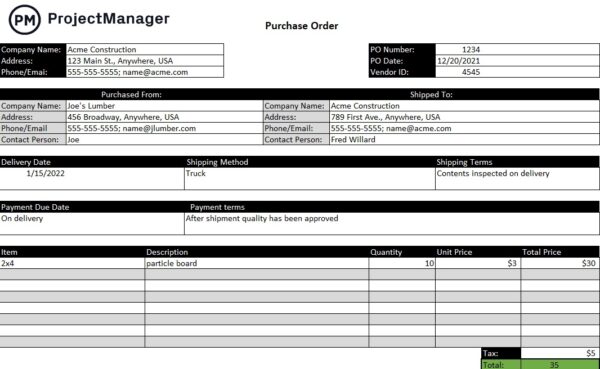
Once procurement activities start, this document becomes the backbone of supplier coordination. It ensures that materials are ordered correctly, delivered on time and aligned with production schedules, while also providing a reference point for tracking orders, managing supplier performance and resolving discrepancies during purchasing processes.
- Establishes clear communication between buyers and suppliers regarding materials, quantities and delivery expectations.
- Improves procurement accuracy by documenting exact specifications and agreed purchasing terms in detail.
- Supports order tracking by providing a reference for monitoring supplier deliveries and timelines.
- Reduces disputes with suppliers by clearly defining pricing, quantities and contractual conditions upfront.
- Enhances financial control by linking purchasing activities with budgeting and cost management processes.
5. Work Order
A work order is a detailed manufacturing document that authorizes and outlines specific production tasks to be completed on the shop floor. It includes information such as job instructions, required materials, labor assignments, equipment usage and process steps needed to execute a defined manufacturing activity.
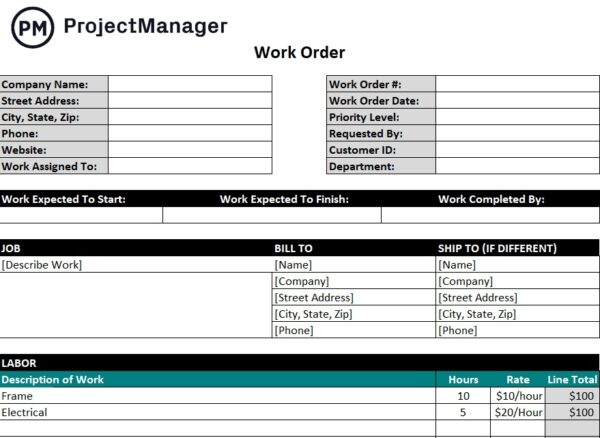
On the shop floor, clarity is everything, and this document provides it. It directs operators on what needs to be done, how it should be done and when tasks must be completed, ensuring that production activities stay organized, consistent and aligned with the overall manufacturing schedule.
- Provides clear instructions for production tasks, reducing confusion and improving execution accuracy.
- Ensures consistency in manufacturing processes by standardizing how work is performed across teams.
- Improves accountability by assigning tasks, responsibilities and timelines to specific personnel.
- Supports production tracking by documenting progress and completion status of manufacturing activities.
- Enhances operational efficiency by organizing workflows and minimizing downtime or task misalignment.
6. Standard Operating Procedure
A standard operating procedure is a formal manufacturing document that provides step-by-step instructions for performing specific tasks or processes. It includes detailed guidelines, required tools, safety requirements and quality standards, ensuring that each activity is carried out consistently according to predefined operational methods and technical specifications.
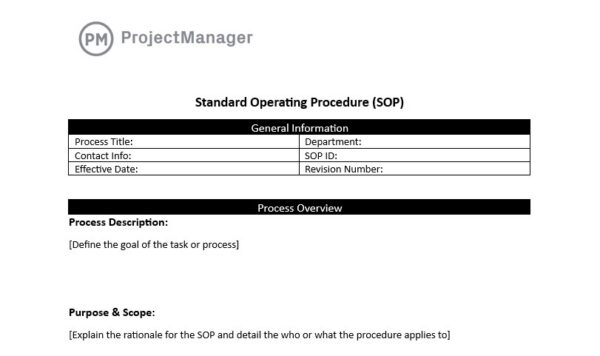
When processes vary between operators, results become unpredictable and harder to control. This document brings uniformity by guiding how tasks should be executed, helping teams maintain consistent output quality, reduce variability and ensure that operations follow established safety, compliance and performance standards across manufacturing workflows.
- Ensures consistent execution of manufacturing tasks regardless of operator experience or skill level.
- Reduces errors and rework by clearly defining standardized procedures and expected outcomes.
- Improves training efficiency by providing clear, repeatable instructions for onboarding new employees.
- Supports compliance with safety regulations and quality standards across manufacturing operations.
- Enhances process control by minimizing variation and maintaining uniform production performance.
7. Non-Conformance Report
A non-conformance report is a manufacturing document used to record instances where products, materials or processes fail to meet specified quality standards. It captures details such as the nature of the defect, affected items, inspection results, and reference specifications associated with the identified non-compliance.
Whenever something goes wrong in production, documenting it properly becomes critical. This manufacturing document helps teams investigate issues, track defects and ensure that corrective actions are identified and implemented, preventing the same problem from recurring and protecting overall product quality and customer satisfaction.
- Provides a structured way to document and track quality issues across manufacturing processes.
- Improves root cause analysis by capturing detailed information about defects and failures.
- Supports corrective and preventive actions to reduce recurring production problems over time.
- Enhances quality control by ensuring non-conforming products are identified and addressed quickly.
- Strengthens compliance by maintaining documented records of quality issues and resolutions.
8. Assembly Instructions
Assembly instructions are a manufacturing document that provides detailed, step-by-step guidance for putting together components into a finished product. They include sequences, diagrams, required tools, torque specifications, part orientations and technical notes that define how each assembly operation should be carried out on the shop floor.
On a busy production line, even small misunderstandings can lead to defects or delays. This document guides operators through each step, ensuring components are assembled correctly, consistently and in the right order, helping maintain product quality while keeping the assembly process aligned with overall production requirements.
- Reduces assembly errors by providing clear, detailed instructions for each production step.
- Improves product consistency by standardizing how components are assembled across all units.
- Supports faster training by giving new operators structured guidance for assembly tasks.
- Enhances production efficiency by minimizing confusion and rework during assembly operations.
- Ensures compliance with technical specifications, tolerances and product design requirements.
9. Quality Control Plan
A quality control plan is a manufacturing document that defines inspection procedures, testing methods, acceptance criteria and control points used to verify product quality. It outlines when inspections occur, what characteristics are measured, and which standards must be met throughout different stages of the manufacturing process.

Keeping quality consistent across production requires more than occasional inspections. This document establishes a structured approach to monitoring outputs, helping teams detect issues early, maintain compliance with standards and ensure that finished products meet defined quality expectations before reaching customers or moving to the next stage.
- Provides a clear framework for inspecting and verifying product quality at each stage.
- Improves defect detection by defining specific checkpoints and measurable acceptance criteria.
- Ensures compliance with industry standards, regulations and internal quality requirements.
- Reduces waste and rework by identifying quality issues early in the process.
- Enhances customer satisfaction by consistently delivering products that meet expectations.
10. Stock Register
A stock register is a manufacturing document that records inventory movements, quantities on hand, item descriptions and storage locations. It tracks incoming and outgoing materials, including dates, transaction references and balances, providing a continuously updated record of inventory levels across warehouses, production areas and storage facilities.
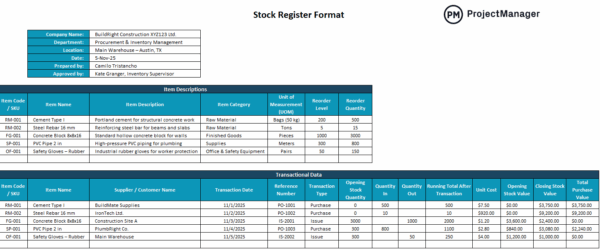
Inventory quickly becomes difficult to manage without a reliable tracking system in place. This document helps teams monitor stock levels, avoid shortages or overstocking and maintain accurate records, ensuring materials are available when needed and aligned with production schedules and procurement planning activities.
- Provides real-time visibility into inventory levels across warehouses and production areas.
- Reduces stock discrepancies by maintaining accurate records of material movements and balances.
- Supports better inventory planning by aligning stock levels with production requirements.
- Minimizes production delays caused by missing or unavailable materials during operations.
- Improves traceability by documenting when and where inventory transactions occur.
11. Material Requisition Form
A material requisition form is a manufacturing document used to request materials, components or supplies from inventory or procurement teams. It includes item descriptions, quantities, required dates, requesting departments and authorization details, serving as a formal record of internal material requests within manufacturing operations.
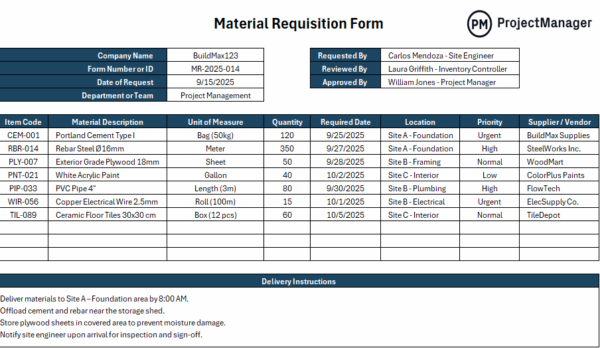
When production teams need materials, delays often come from unclear or undocumented requests. This document streamlines the process by clearly specifying what is needed and when, ensuring materials are issued efficiently while maintaining control over inventory usage and supporting accurate tracking of material consumption.
- Standardizes how materials are requested, reducing confusion and miscommunication between teams.
- Improves inventory control by documenting material usage and tracking internal requests accurately.
- Ensures timely material availability by clearly communicating production requirements in advance.
- Enhances accountability by requiring authorization and recording who requested specific materials.
- Supports cost tracking by linking material usage to specific jobs or production activities.
12. Routing Sheet
A routing sheet is a manufacturing document that defines the sequence of operations required to produce a product. It lists each process step, associated work centers, machines, tools and standard processing times, outlining the exact path materials follow as they move through the production workflow.
As products move through different stages, coordination between work centers becomes critical to avoid delays. This document guides how work progresses across the production line, helping teams follow the correct sequence of operations while maintaining alignment between equipment usage, labor allocation and overall production scheduling requirements.
- Provides a clear sequence of operations, ensuring tasks are performed in the correct order.
- Improves production efficiency by optimizing workflows and reducing unnecessary process delays.
- Supports capacity planning by identifying required machines, tools and work centers for tasks.
- Enhances scheduling accuracy by defining processing times for each production operation.
- Reduces bottlenecks by mapping out the flow of materials across the production process.
How ProjectManager Helps Manage Manufacturing Projects
ProjectManager gives manufacturing businesses a centralized platform to plan production, manage resources and track progress and costs in real time. Teams can build detailed project schedules on Gantt charts, use task lists to assign tasks to the shop floor, track costs with timesheets, balance employees’ workloads and monitor progress with real-time dashboards and reports.
ProjectManager also offers AI features and online collaboration features so nothing falls through the cracks. Teams can share manufacturing documents, comment on tasks and stay aligned without back-and-forth emails or outdated files. On top of that, ProjectManager integrates with tools such as QuickBooks, Salesforce and Acumatica, and offers an open API so manufacturing organizations can connect with their favorite tools.
ProjectManager is online project management software that empowers manufacturers to plan, manage and track production in real time. Get started with ProjectManager today for free.