


The great Australian writer, Rodney Hall, still writes longhand at his standing desk in Melbourne.
Now 90, he’s the author of 14 novels, poetry and photography books as well as biographies.
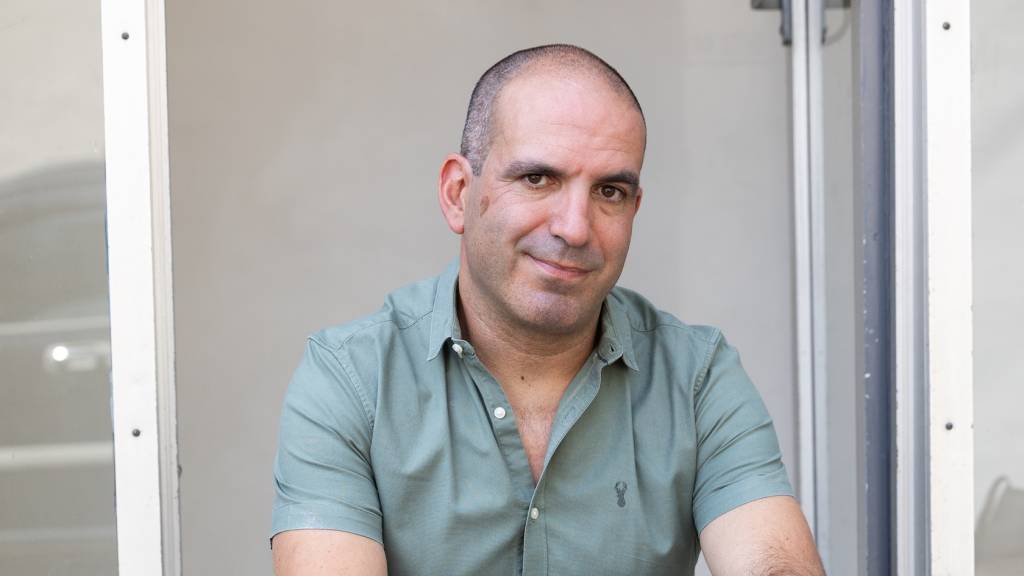
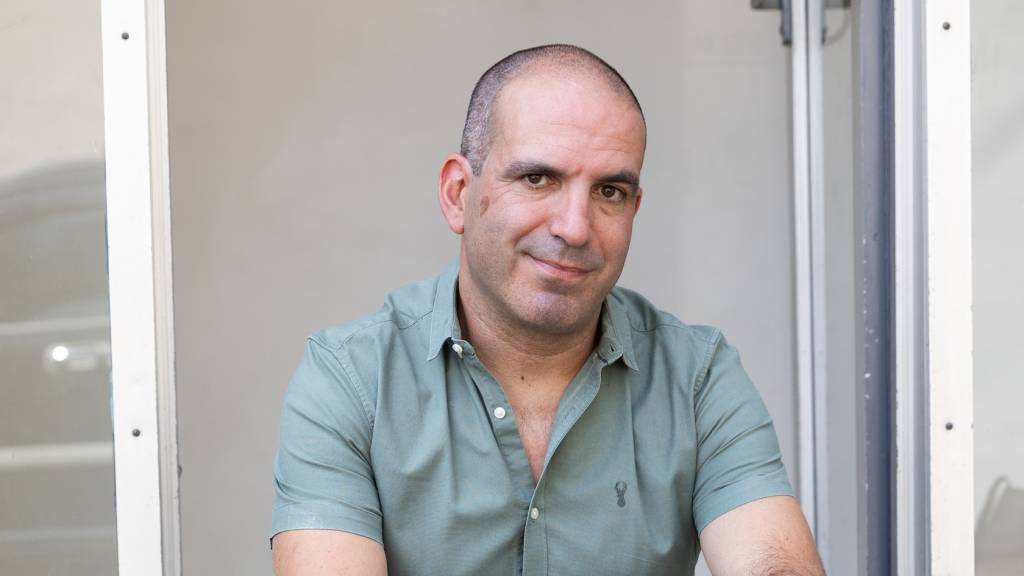
This week entrepreneur and investor Yaniv Bernstein announced swapping AI for the pen, renouncing technology on the verge on inevitable ubiquity.
“After twelve months of evangelizing AI-assisted development, I have a confession: I’ve been wrong. Not partially wrong, not “it depends” wrong. Fundamentally wrong. Yesterday I uninstalled every AI coding tool I had,” he wrote.
The freshly minted AI apostate’s screed struck a nerve, with his LinkedIn post garnering 40,000 impressions and plenty of support.
It was the best kind of April Fools prank – one so many of us wished was true. He even used AI to write it.
And if you look carefully down the side of the post, you’ll spot the acrostic spelling that hints at the truth.
Nonetheless, the outspoken Bernstein, cohost of The Startup Podcast with Chris Saad, was surprised by how many experienced engineers who took it seriously, and more notably, wanted it to be true.
“They shared their own frustrations with AI tools and expressed relief that someone was ‘finally saying it’,” he told Startup Daily, noting that he also plenty of WTF responses to his heresy.
“What’s interesting is not that opinions differ but how deeply divided the experience has become. Two groups, both experienced, both credible, arriving at completely different conclusions about the same technology.
“It raises a more interesting question than whether AI is ‘overhyped’ or ‘transformational’: why are opinions and outcomes so inconsistent? Is it differences in tooling, workflows, or use cases? Or something more cultural in how teams are adopting and integrating AI into their work?”
Bernstein says he’s “firmly in the camp” of developers who are seeing substantial productivity gains from and treat it as a transformative tool, as cofounder of Vera, the AI app for sandwich generation adults needing advice on dealing with aging parents.
“At Vera, my engineering output has been genuinely 10x’d by tools like Claude Code. The contrast between that experience and the reactions to my April Fools post is something I’m keen to explore further,” he said.
“Every business owner in Australia is making decisions about AI adoption right now, and the people they’re relying on for guidance can’t agree.”
Yaniv Bernstein will have more to say on the issue for Startup Daily in the coming days.
In the meantime, here’s his original LinkedIn post.
After twelve months of evangelizing AI-assisted development, I have a confession: I’ve been wrong. Not partially wrong, not “it depends” wrong. Fundamentally wrong. Yesterday I uninstalled every AI coding tool I had.
Productivity was the first lie I told myself. I was shipping faster, sure, but when I audited my last three projects, 40% of the code was unnecessary abstraction the AI generated because it doesn’t know when to stop.
Reading code is how you learn to write code. When an AI writes your implementation, you skip the part where your brain builds the mental model. I’d been coasting on vibes for months.
It hit me during an all-day debugging session. The agent had written a retry loop with a subtle race condition, and I couldn’t debug it because I’d never actually read the module. Eight hours later, I swore off AI-generated code for good.
Lately I’ve been pair programming with a paper notebook. Sketching data flows, thinking through edge cases, then opening my editor. Velocity is down 30%, but my defect rate has fallen off a cliff.
Fewer files, fewer abstractions, fewer dependencies. That’s what my codebase looks like now. AI agents love creating new files and wrapping things in layers. Without them, I write half as much code that does the same job.
Obviously I know the response: “You were just using it wrong.” Maybe. But I’ve talked to a dozen senior engineers quietly having the same experience, people who won’t say it publicly because the narrative has too much momentum.
One more thing I didn’t expect: I’m enjoying programming again. There’s a meditative quality to typing out a well-considered function that no autocomplete can replicate. The craft is the point.
Look, I’m not some luddite. But intellectual honesty requires admitting when something isn’t working, even when you’ve staked your reputation on it.
So if you’ve been feeling the same nagging doubt, that the AI is doing the thinking you should be doing, trust that instinct. Close the chat window. Open a blank file. Write the first line yourself.