


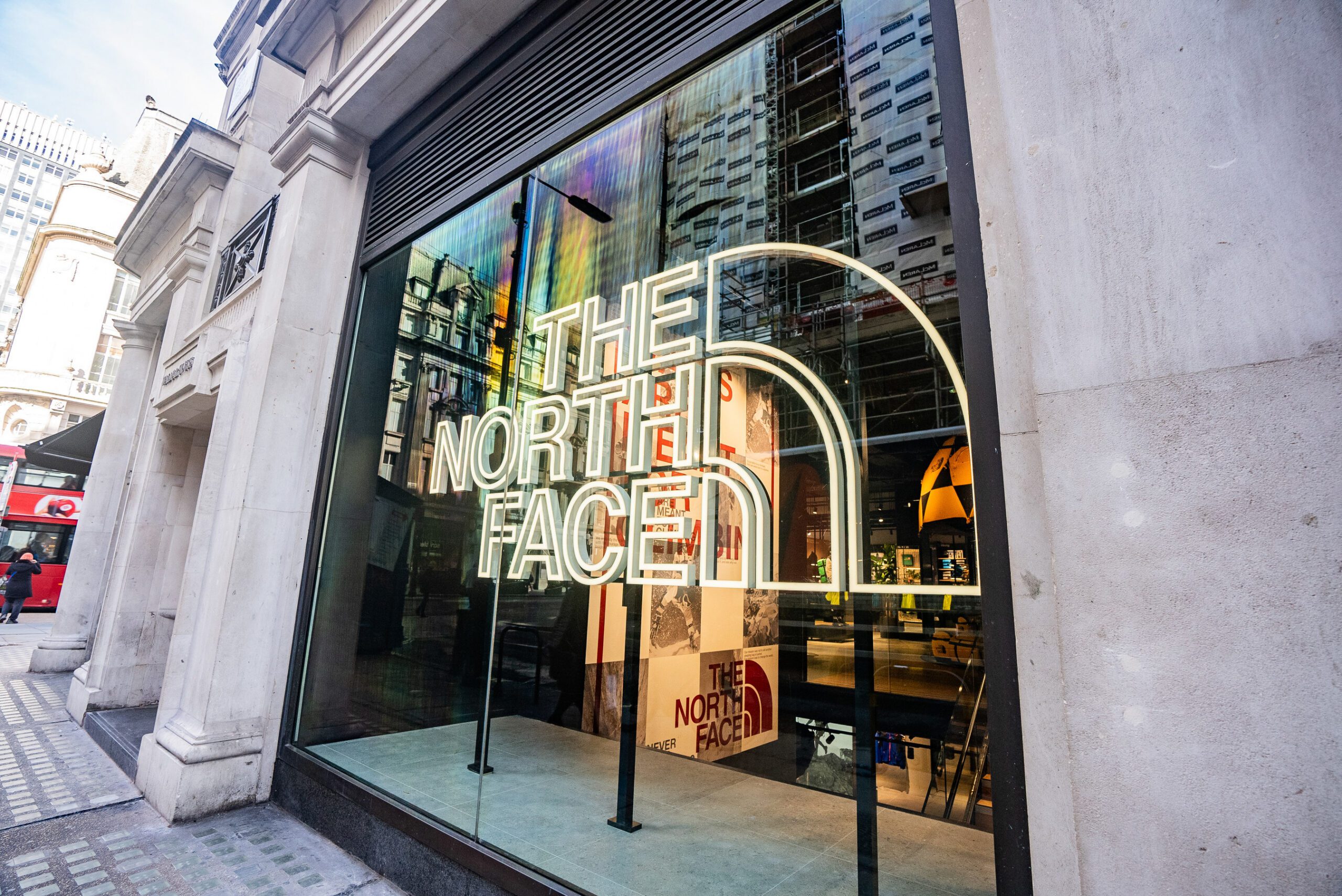
Apparel and footwear giant VF Corporation is seeking a clearer view of its global inventory as it looks to better sync its digital storefronts with physical availability.
The parent company of The North Face, Vans and Timberland said it’s overhauling how it tracks stock across its vast network of stores, distribution centers and supply chain partners. The move could help bridge the gap between what shoppers see on its brand websites and what is actually available on store shelves at any given moment.
To do that, VF Corp. will deploy Nedap’s Inventory Engine across its brand portfolio and more than 1,500 stores globally, according to an April 21 announcement.
Nedap, a Netherlands-based technology firm, provides software designed to track inventory at the individual item level. That visibility can be critical for omnichannel retail, as fulfillment services like buy online, pick up in store (BOPIS) depend on knowing whether a product is actually available at a specific store.
“Our consumers expect the same level of product availability and service whether they shop online, in-store or through any of our brand touchpoints,” Carsten Trenz, vice president of digital at VF Corporation, said in a statement. “Unified visibility across our operations allows us to deliver that consistency and build long-term customer loyalty.”
The Nedap deployment is slated to begin with The North Face in the second quarter of 2026, giving VF a starting point before it expands the system to additional brands.
VF Corp., which also owns brands including Smartwool, Icebreaker and Altra, ranks No. 49 in the Top 2000 Database. The database is Digital Commerce 360’s ranking of North America’s online retailers by their annual ecommerce sales. There, VF falls under the “Accessories & Apparel” merchandise category.
VF looks to connect more of its supply chain
VF Corp. is also looking beyond the store floor. The retailer’s inventory project will include distribution centers and vendor partners, Nedap said, extending the system to more of VF’s upstream supply chain.
That broader view could help VF understand product movement earlier in the inventory lifecycle, before merchandise reaches stores. More broadly, Nedap said the system could help VF reduce inventory mismatches, keep more products available and manage stock more consistently across channels.
The rollout is also meant to support VF’s efforts to address gray-market activity, which can involve products being sold through unauthorized channels, and strengthen brand protection, Nedap said.
The technology behind the rollout is built around radio frequency identification, or RFID, and other item-level data sources. According to Nedap, its Inventory Engine pulls data from tools such as handheld scanners, portals, tunnels and overhead readers. It then turns those signals into insights retailers can use for replenishment, fulfillment, allocation and loss prevention.
Hope Waldron, vice president of supply chain strategy at VF Corp., said expanding the retailer’s RFID program beyond stores will offer “greater transparency across our entire supply chain.”
“That visibility improves our ability to ensure product availability, strengthen brand protection, and deliver a more consistent consumer experience,” Waldron said in a statement.
VF selected Nedap after first piloting a different inventory solution, according to the announcement. After reassessing its needs “for scalability, architecture and global support,” VF chose Nedap based on its large-scale rollout experience and retailer user community, among other factors, Nedap said.
Why inventory accuracy matters for omnichannel retail
Inventory gaps can quickly become customer experience problems, especially when shoppers increasingly expect online product availability to match what’s actually in stores.
In a 2024 Cin7 survey of more than 600 consumers, 91% of shoppers said they feel frustrated when items they want are out of stock. Another 70% said they had abandoned an entire purchase because one item was unavailable, while 94% said item availability influences where they shop.
The survey also found that nine in 10 shoppers said real-time inventory updates would make them more likely to purchase from a store.
For VF Corp., those expectations raise the stakes for accurate inventory data across channels.
“In today’s retail landscape, unified commerce only works when brands can rely on one consistent source of truth for their inventory,” Hilbert Dijkstra, managing director of retail at Nedap, said in a statement. “VF’s decision to invest in end-to-end visibility reflects a clear vision for the future: the ability to serve consumers seamlessly across any channel.”
VF’s digital channel gains momentum
The rollout comes as VF Corp.’s direct-to-consumer (DTC) business is showing signs of improvement.
In its fiscal third quarter, VF said DTC performance returned to growth, driven by digital. Globally, DTC was up 4% year over year, or 3% in constant currency excluding workwear brand Dickies. VF completed the $600 million cash sale of Dickies to Bluestar Alliance during the quarter, which ended Dec. 27.
The North Face, where VF will begin the Nedap deployment, also posted growth in Q3. VF said the brand’s revenue increased 8% year over year, or 5% in constant currency. CEO Bracken Darrell said on the company’s earnings call that both DTC and wholesale were up globally for the brand, with 15% growth in the Americas.
Timberland’s revenue also grew 8% year over year, or 5% in constant currency, marking its fifth consecutive quarter of growth, VF said.
Vans remained under pressure, with revenue down 8% year over year, or 10% in constant currency. Still, Darrell said digital traffic trends improved in the Americas and Europe, the Middle East and Africa. That led to global ecommerce growth for Vans for the first time in more than four years, he said.
Do you rank in our databases?
Submit your data and we’ll see where you fit in our next ranking update.
Sign up
Stay on top of the latest developments in the online retail industry. Sign up for a complimentary subscription to Digital Commerce 360 Retail News. Follow us on LinkedIn, TikTok, X (formerly Twitter), Facebook and YouTube. Be the first to know when Digital Commerce 360 publishes news content.