


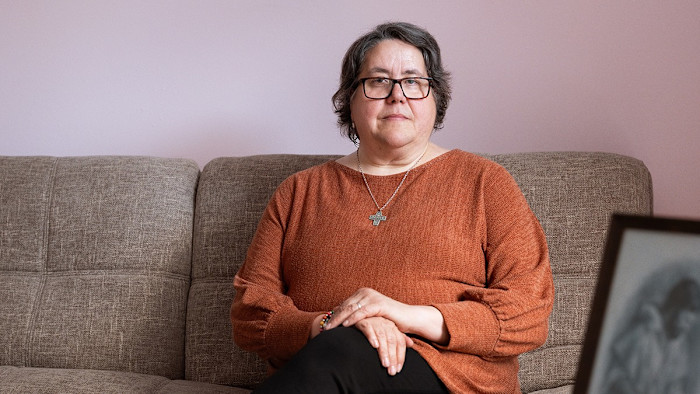
The red-brick convent in west London is immaculately kept. Vases of tulips are dotted on polished tables. Crucifixes hang on painted walls. In the dining room, there are replicas of Leonardo da Vinci’s “The Last Supper” and Jean-François Millet’s “The Angelus”, which shows two peasants praying at dusk. Huge glass doors open out to a garden bursting with spring flowers.
I have come to meet an activist investor who has earned a reputation for taking on corporate America. Sister Susan Francois, a Catholic nun who has gone up against companies from Citibank to Microsoft, ushers me in. The 53-year-old American, usually based in New Jersey, is in the UK to take part in a retreat and attend an investment workshop for leaders of religious congregations.
As treasurer of the Sisters of St Joseph of Peace, an order split between the US and Britain, Francois has become the public face of the shareholder resolutions that the sisters file at American companies, taking boards to task over issues ranging from human rights to climate change. The order has held shares since 1884, when its founder Margaret Anna Cusack arrived with railway stocks. But this was not the path Francois had expected to follow when she entered religious life almost 20 years ago. “I have a vow of poverty. So the fact that I am also an investor representing this congregation of sisters is strange. But God has a sense of humour,” she laughs.
Over the years, the St Joseph order has used its investments to care for ageing nuns, help other causes and, increasingly, push for corporate change through shareholder advocacy. “We have these resources because we had wise businesswomen [in the order] who invested,” Francois says, but that money “is meant to promote the common good and to work against injustice and oppression.”
The work has included a multiyear campaign at Citigroup, focusing on the bank’s financing of fossil-fuel projects and its impact on indigenous rights. After the nuns won support from about one-third of shareholders, the bank published a report on indigenous rights. Previously, the sisters targeted Microsoft, prompting the company to pledge to improve its lobbying disclosures. In some cases, companies have committed to meeting their demands even before a shareholder vote, despite the fact the nuns hold only small stakes in businesses. “It is an active form of non-violence and a way of engaging respectfully as corporate citizens…” Francois says. “I never think of it as fighting.”
In just a few weeks the nuns’ motion on human rights will go to a shareholder vote at the annual meeting of Palantir, the tech company which has pushed back against criticisms of the use of its technology in wars and whose work with immigration enforcement has been controversial. The nuns have asked Palantir to produce a human rights impact assessment, a process aimed at identifying and addressing adverse effects of business practices. (Palantir did not respond to FT requests for comment but has called on shareholders to vote against the proposal.)
Francois regularly posts TikToks outside an immigration detention centre in New Jersey. “I volunteer . . . so have heard first-hand how people have been tracked down, how they have been arrested, how information has been shared.” She dismisses the Trump administration’s official line that Immigration and Customs Enforcement agents are largely targeting immigrants who have committed crimes.
Mostly, shareholders vote with the company, but Francois points out that drawing attention to such issues is key to the sisters’ work. “Success is not that the corporation does what we wanted, but that moral questions are raised.”
As we talk, three sisters nearby are watching on television the installation of the Archbishop of Canterbury, Sarah Mullally, the first woman to lead the Church of England and the global Anglican community. Despite differences between the Anglican Church and their own denomination — in the Catholic Church only men can hold the most senior positions — the nuns are enthralled.
Francois was raised Catholic. Her parents, a local politician and social worker in Maryland, always pushed their five children to use the “gifts” they had to make a difference, however small, she says. But as a teenager she found it difficult to “feel at home in a church that struggles with gender equality”. After dabbling with Buddhism and Quakerism, she returned to Catholicism in her twenties. When I ask about the restrictions on women’s roles in Catholic leadership, her response is careful: “Our sisters have long advocated for women’s rights in society and in church,” she says, adding it was “good” that Popes Francis and Leo had appointed “some women to higher levels”.
We are meeting in late March, before the public row between President Donald Trump and Pope Leo over the Iran war. Francois, who tweeted a prayer at Trump daily during his first term, says, “Many of the members of the current administration are professed Catholics who seem to have a non-holistic view of Catholic teaching and that is concerning.” Prominent Maga figures were among the American Catholics aghast at Trump’s attack on a religious leader.
Francois is hopeful that the first American pope will make it harder for political and corporate leaders in the US to ignore the Church’s calls for a more responsible capitalism. “While he’s saying the exact same teaching as his predecessors, he is saying it with the credibility of understanding American capitalism and democracy. He’s not as easily dismissed.”
Under the Trump administration, the Securities and Exchange Commission has made it easier for companies to reject the ESG shareholder resolutions that the nuns have been ferocious in filing. Francois finds the crackdown concerning. Her rights as a shareholder are restricted by such rulings, she argues. “We are the investors. To create a system where you limit who is able to raise questions of the board is dangerous,” she says. As well as the issue of right and wrong, there are business questions about “reputational risk . . . environmental risk” to be asked.
What about the argument that if you don’t like what a given company is doing, you could just sell out of it? That’s too simplistic, she retorts. The nuns shun many “sin stocks”, such as gambling companies, and sold out of fossil-fuel shares in 2022. Since then, they have looked to diversify, including a bigger focus on financial institutions and technology, often with an eye on driving change. Francois argues there is a “responsibility” to try to help companies be better: selling out would not allow them to do this.
Only half-joking, she adds that just having a nun in the room can result in better behaviour from executives. “They apologise often for [their] language . . . there is often this virtue signalling where if they went to a Catholic school or if their aunt was a nun, you always get that information,” she says. She laughs as I tell her I’m named after my great aunt, a nun.
With the US annual meeting season in full flow, religious investors are scrambling to navigate the new Trumpian system — and figure out what options, however small, they have to make a difference, she says. Something she is sure of is that the nuns will find a way. “Sisters are really persistent,” she says.
Attracta Mooney is the FT’s climate correspondent
Find out about our latest stories first — follow FT Weekend Magazine on X and FT Weekend on Instagram