


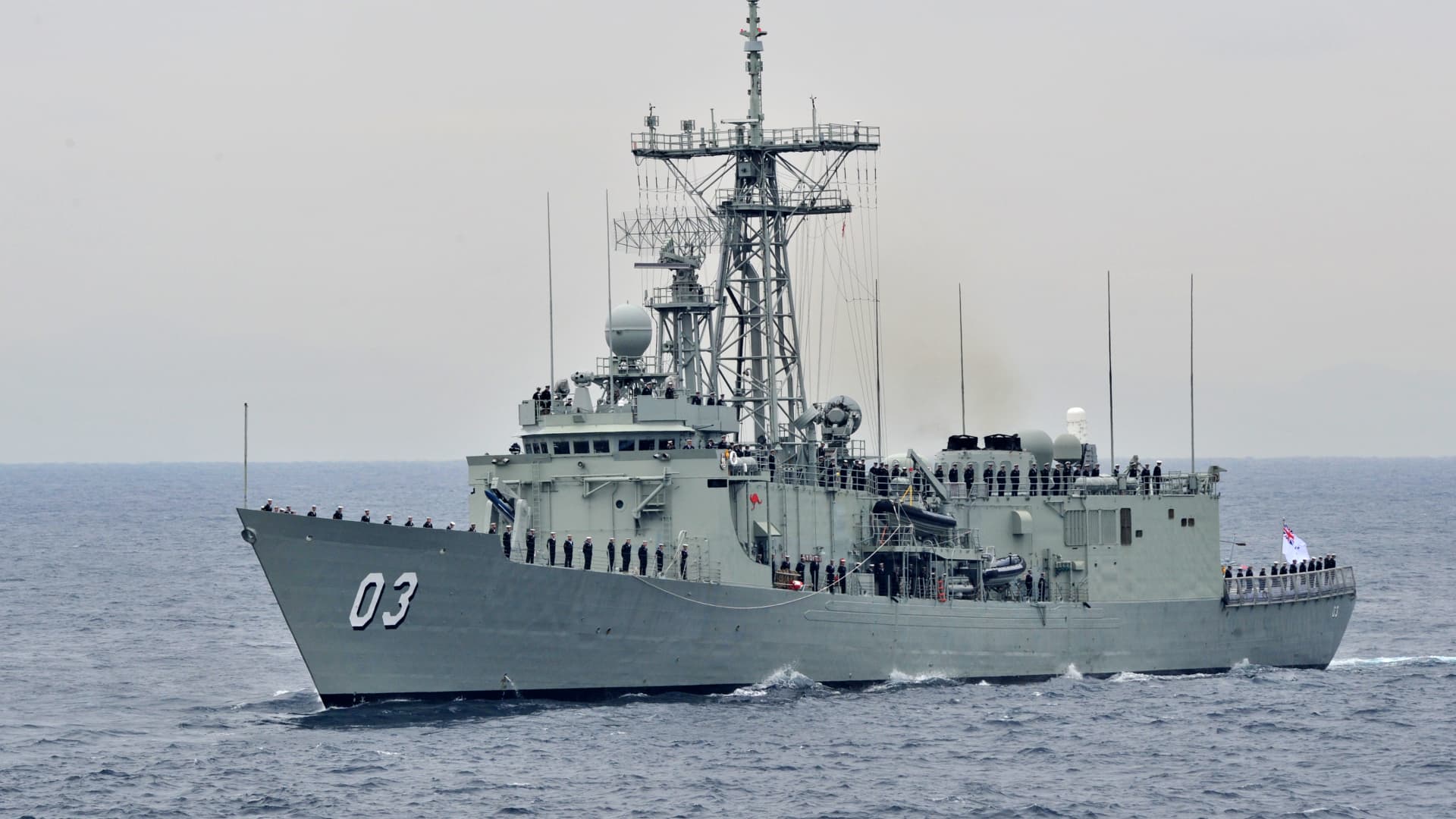
Defense stocks plummeted on Wednesday after a report that Germany will abandon plans to build six warships, fuelling investor fears that the boost to defense contractors from increased government spending may not fully materialize.
Berlin is planning to scrap a multi-billion-euro project to build the F126 frigates, according to multiple media reports, citing people familiar with the matter. It would have been the biggest warship commission since the Second World War. Instead, Berlin will buy eight smaller Meko A-200 frigates from the German company TKMS.
German munition maker Rheinmetall, a big beneficiary of German government contracts, fell as much as 19% in midday trading, on track for its worst day since 1989, according to FactSet. Its smaller peer TKMS rose 13%.
The company had been expected to become the lead contractor of the F126 frigate program in a deal worth as much as 12.8 billion euros ($14.5 billion), pending budget committee approval. It would have taken over the contract from Dutch shipyard Damen Naval after years of delays.
Rheinmetall declined to comment. The German government didn’t immediately respond to a request for comment.
The Stoxx Europe Aerospace & Defense ETF traded 1.5% lower.
Other German-listed stocks Hensoldt and Renk fell 3.9% and 5.9%, respectively. Sweden’s Saab fell 2.6%, Italy’s Leonardo was down 4.9%, and British giant BAE Systems traded 0.1% higher, reversing earlier losses. The pan-European blueship Stoxx 600 index traded largely flat.

Defense stocks have had a tough 2026 so far.
The moves come after European defense stocks have traded markedly down year-to-date, amid souring sentiment for defense companies as investors weigh the prospect of an end to the wars in Ukraine and the Middle East, and question how much of governments’ military spending commitments will materialize.
Shares of Rheinmetall were down about 30% from January highs coming into Wednesday trading.
An overhaul of the F126 program would be a blow to both Rheinmetall and Germany’s defense ambitions, as the country has vowed to achieve the “strongest conventional army in Europe” by 2039. It is also planning to take a 40% stake in tankmaker KNDS, which is due to IPO soon, alongside France.
A year ago, NATO allies agreed to increase defense spending from 2% to 5% of GDP by 2025 after years of pressure from Washington.
That increased military spending, including by Europe’s largest economy Germany, makes defense “a compelling investment story,” PitchBook’s Director of Research, EMEA Private Capital, Nalin Patel, told CNBC’s “Europe Early Edition” on Wednesday.
Despite the recent downturn, European defense stocks have seen a massive boost in recent years, with rapidly growing order backlogs, and valuations have skyrocketed.
“There’s a lot of volatility within the market, however, defense is an area that is signaling particularly strong growth, so potentially the valuation is valid,” said Patel.
For Rheinmetall specifically, analysts say the F126 loss calls into question the company’s naval targets of 5 billion euros by 2030. Citi’s Charles Armitage predicts the business unit will reach only half that in the given time period, with total group sales of 37 billion euros.
The news “takes some froth out,” he said, reiterating a Buy rating on shares, “but valuation [is] not frothy.”