


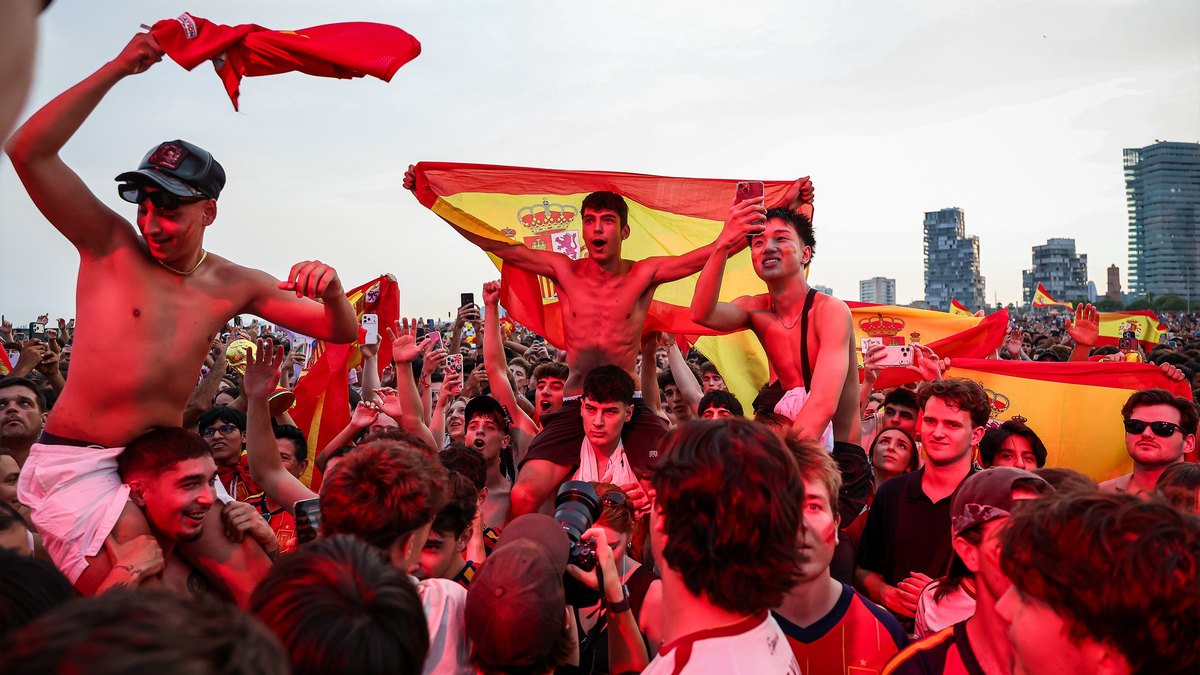
The 2026 FIFA World Cup attracted new fans to the sport and generated more than a billion dollars in revenue for vacation rental hosts in host cities, though some cities saw greater windfalls than others.
Short-term rentals on Airbnb and other platforms in host cities generated $1.33 billion in revenue during the tournament, June 10–July 19, according to data and analytics firm AirDNA. That’s around $276.7 million more than those cities brought in during the same period last year.
Part of the surplus revenue could be attributed to additional bookings. More than 2.3 million Airbnb nights were booked during the group stage alone, which ran June 10–27, according to AirDNA data. That’s an 11% increase year over year.
The 39-day global soccer tournament was held this year in 16 cities across North America, including Los Angeles; Philadelphia; Atlanta; New York City; Boston; Seattle; Kansas City, MO; San Francisco; Houston; Dallas; and Miami in the U.S.
As well, matches were held in Toronto and Vancouver in Canada, and Monterrey, Mexico City, and Guadalajara in Mexico.
The World Cup was big money for Airbnb hosts
As Dan Hunt, president of FC Dallas and co-chair of the North Texas FIFA World Cup 26 Dallas Organizing Committee Board, put it: “This is like getting 9 Super Bowls in 30 days.”
The matches brought in an astounding $2 billion to Dallas alone, and a chunk of that was in the short-term rental market, which saw $26 million in revenue from the events.
Overall, World Cup visitors contributed to a 16% year-over-year surge in Airbnb bookings in host cities. But the biggest impact was felt in pricing: Hosts in World Cup cities were able to boost prices during matches, contributing to an additional $231.8 million in revenue.
Not surprisingly, Miami ($42.7 million), Los Angeles ($32.7 million), Dallas/Fort Worth ($26 million), and New York/Jersey City/Newark ($22.8 million) captured the largest amount of revenue from the tournament. But smaller cities, including Monterrey, Guadalajara, and Kansas City, saw the biggest percentage gains in booking, jumping 96%, 91%, and 88% year over year, respectively.
The particular nature of the World Cup—in which fans often wait until the last minute to book lodging because they’re waiting to see if their team advances in the tournament—meant that as the tournament progressed, so did prices.
AirDNA found that hosts in several cities raised available nightly rates by as much as 90% compared to typical summer averages as the tournament went on. But that tactic worked best in cities where hotels and short-term rentals were in limited supply, and where matches were highly anticipated—such as the England vs. Norway match held in Miami.
World Cup winners and losers
Surprisingly, hosts in some cities failed to see much of a benefit from hosting World Cup games. New York/Jersey City/Newark, the San Francisco Bay Area, and Seattle actually saw demand drop between 3% and 5% year over year.
That may be in part because these are normally high-demand areas and some visitors may have postponed or rescheduled their regular travel to avoid spiking World Cup pricing and congestion.
And in Kansas City, Seattle, and Vancouver, a year-over-year increase in available properties drove down overall prices.
At least part of that Airbnb inventory increase can be attributed to promotions that Airbnb ran ahead of the World Cup. Earlier this year, Airbnb offered new hosts a $750 signing bonus. Kansas City, Vancouver, and Seattle were the top three cities to see a boost in new signups from the promotion.