

Ever since graduating from business school in 2006, one of my favorite ways to learn is through case studies. And there’s no better case study for understanding the IPO quiet period than Anthropic’s upcoming IPO.
Anthropic is expected to publicly file its IPO prospectus after Labor Day, with a listing as soon as late September or early October. The Information reported it on August 27 and Reuters picked it up the same day, although nothing is certain.
Between now and then, you’re going to read a lot about Anthropic. Almost none of it will come from Anthropic.
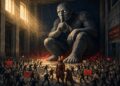
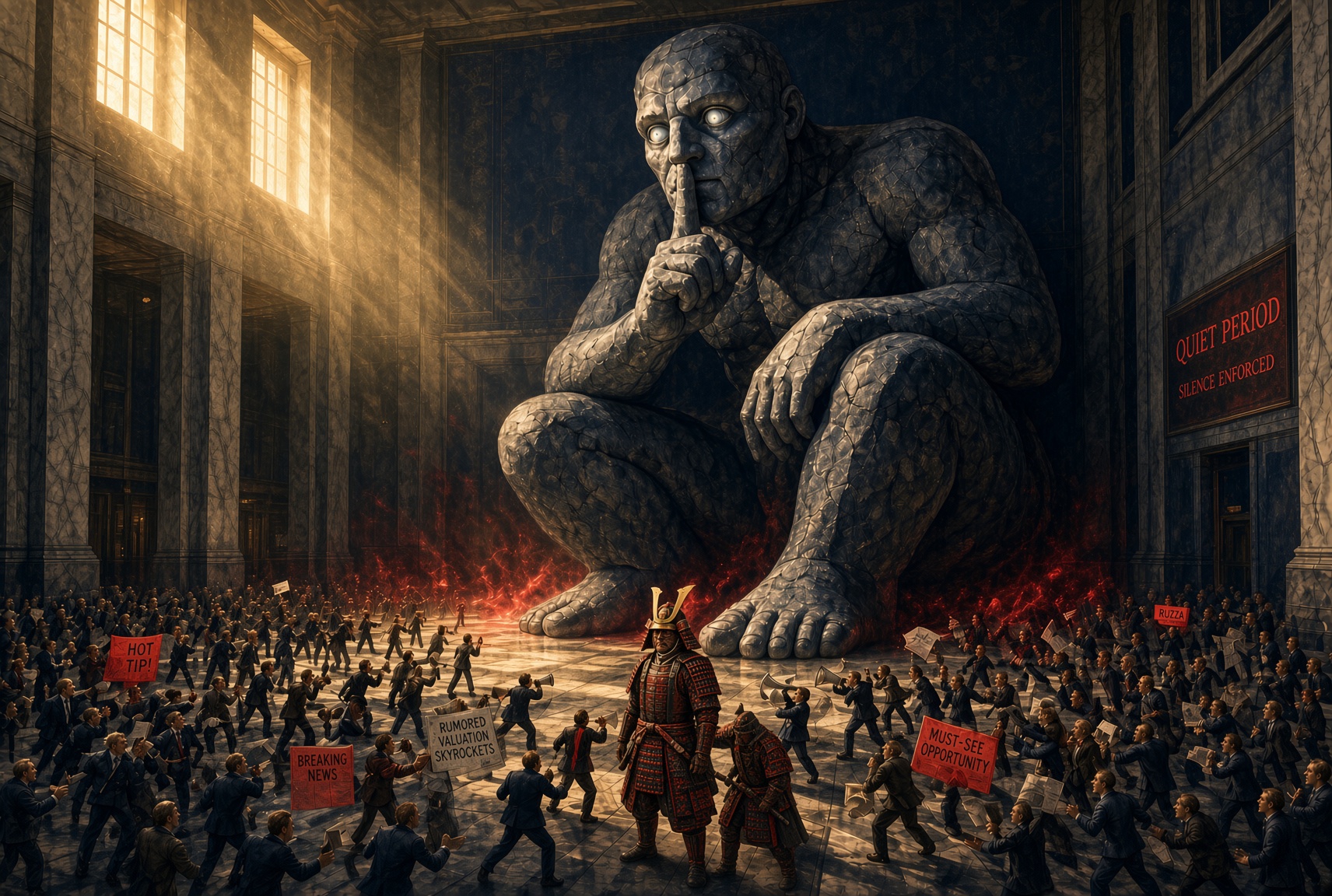
That’s the quiet period doing its job, and most investors misunderstand what it does. They think the whole world goes silent. It doesn’t. The company goes silent. Everybody else keeps talking, which creates one of the strangest information environments in all of investing.
I spent 13 years in equities at a couple of investment banks, from 1999 to 2012. During that stretch I worked on dozens of IPOs, maybe over 100. I sat with management teams through roadshow lunches, introduced them to my clients’ offices, provide demand feedback to the syndicate desk, and fought for allocation for the accounts that deserved it. And sometimes for the ones that just yelled loudest.
So I’ve watched this process from the inside, repeatedly, through the dot-com bubble and the 2008 crash. Here’s how it actually works, and what it means if you’re trying to build exposure to Anthropic, or any private company, before it lists.
A disclaimer. I’m not a securities lawyer, and I’ve been out of the industry since 2012. I’m just a guy who kickstarted the modern-day FIRE movement in 2009 when I started writing about my plan to escape the finance industry. I rely on my investments more than the average person to support my family since W-2 income is nonexistent. I own Anthropic through traditional and public venture capital. I’m trying to build more Anthropic exposure through VCX and other vehicles at the lowest price possible before the IPO roadshow begins. This post is for informational purposes only.
The Quiet Period Is Not One Period
First, clear up a naming problem. People use quiet period to mean two completely different things.
For an already-public company, it refers to the self-imposed blackout before earnings, when management stops talking to investors. That is convention, not law.
For a company going public, it means something else entirely. It is a set of legal restrictions under the Securities Act of 1933 that govern what an issuer may say while it is in registration. That is the one we care about, and it comes in three phases that get progressively looser, not tighter.
Phase one, pre-filing. From the moment a company decides to go public until it publicly files, Section 5(c) prohibits offers entirely. Written, oral, doesn’t matter. And offer is defined so broadly that publicity designed to condition the market counts. This is the phase lawyers call gun-jumping, and it is the most restrictive of the three.
Phase two, the waiting period. Once the registration statement is publicly filed, the company gains latitude. Oral offers become permissible. The preliminary prospectus can circulate. This is when the roadshow happens.
Phase three, post-effective. Shares price and trade. For a company listing on a national exchange, a 25-day prospectus delivery requirement follows, after which normal disclosure rules take over.
Notice the direction of travel. The gag loosens after the public filing, not before.
Don’t confuse the quiet period with the lockup period either. The quiet period runs mostly before the listing and ends 25 days after it. The lockup starts at the listing and typically runs 90 to 180 days past it. One governs information. The other governs supply.
Which brings us to where Anthropic is sitting right now.
Anthropic Is In The Tightest Phase Today
Anthropic submitted a confidential draft S-1 on June 1, 2026. Confidential means the SEC reviews it privately. The public has seen nothing. An EDGAR check on August 31 turned up no S-1 or S-1/A.
So technically Anthropic has not filed a registration statement at all. It is in phase one. No offers, written or oral.
There is a second squeeze. A rule known as 163A gives companies a safe harbor for communications made more than 30 days before filing, as long as they don’t reference the offering. With a public filing expected after September 7, Anthropic is now inside that 30-day window and has lost the safe harbor.
In other words, their lawyers got stricter this month, not looser.

When Anthropic announced the confidential filing on June 1, the Anthropic’s blog post explicitly cited Rule 135. That is the narrow safe harbor letting a company say an offering exists without that statement legally becoming an offer. Companies name-check Rule 135 when counsel is driving the car.
When The Information broke the Labor Day timeline, the sourcing was people familiar with the process. Reuters noted Anthropic did not respond to a request for comment. Silence on the record while bankers and insiders talk is the sign of a company in registration.
And when Anthropic disclosed on August 17 that its annualized run rate had passed $65 billion, up from $47 billion in mid-May, look at what the disclosure did not include. No valuation commentary, projection, or mention of the offering. Rules 168 and 169 permit ordinary-course factual business information, and that is precisely, carefully, all it was.
Here Is The Part Investors May Get Wrong
The restrictions bind the issuer and its underwriters. That’s it.
It was the media and shareholders who started projecting that Anthropic could finish 2026 with $100-$120 billion in revenue and reach $200 billion in 2028. Anthropic itself has not confirmed these projections.
During the IPO process, management has to be careful about what it says publicly, particularly around forward-looking financial expectations. Management obviously knows what investors and the media are expecting, and will likely try to thread the needle: temper expectations enough to keep the enthusiasm alive, while setting a bar that it believes it can realistically beat in the future.
Bloomberg can report. CNBC can speculate. Analysts at firms not on the deal can publish price targets. Prediction markets can quote odds. I can write this post. None of us are in registration, so none of us are restricted.

This produces an information environment that is genuinely bizarre. The single entity that knows the most about Anthropic is the one legally prevented from telling you anything, while thousands of people who know considerably less face no constraint whatsoever.
Every valuation number floating around right now, the $1.5 trillion, the $2 trillion, the secondary marks above $1.2 trillion, comes from reporters, bankers speaking off the record, or people like me doing arithmetic. Not from the company.
So please discount everything you read, including information from me. The only people who know all the details are company management and its bankers.
The Minimum 10-Day Research Blackout
There is a second quiet period stacked on top of the first. The analyst research blackout period.
Under FINRA rules, a firm that acted as manager or co-manager on an IPO cannot publish research on that company for at least 10 calendar days after it starts trading. So Goldman Sachs, Morgan Stanley and JPMorgan, the three banks leading this deal, will be silent on Anthropic through the listing and for a week and a half after. There will be many more book runners given the IPO size is expected to surpass SpaceX’s.
Then, on roughly day 11, all three initiate coverage at once. Depending on where the price is at the time, the analysts will almost certainly be bullish as they project 1-5 years ahead.
I watched this happen more than a hundred times. It is not subtle. A stock trades for two weeks on retail flow, momentum and whatever the non-underwriter shops publish. Then the bulge bracket price targets land in a cluster, usually generous, and the stock gets a second look from institutions who were waiting for the sell-side blessing.
If Anthropic lists in early October, mark roughly mid-October on your calendar. That is the second event, and it is separate from the listing itself.
Why Any Of This Matters For VCX
I own Anthropic exposure two ways. Through two traditional venture funds that started deploying capital in 2022, where I’m a limited partner, and through Fundrise’s Innovation Fund, VCX, where Anthropic is about 22% including cash and Treasuries, and roughly 29% of the actual startup portfolio.
I’m about $435,000 (based off a $965 billion valuation) into a target $500,000 Anthropic position and still building. So the quiet period is not an academic topic for me. It’s a pricing mechanism. To pick up the last $65,000 of Anthropic exposure, I need to buy roughly $295,000 more of VCX. Ideally at the lowest price possible before the roadshow begins.
Think about what the quiet period actually suppresses. It stops the company from hyping its own stock. No CEO on CNBC walking through the total addressable market. No investor deck circulating. Nothing from management blessing a valuation or a forecast.
The reporters will handle that part instead, such as the WSJ sourcing a $30 trillion TAM to people familiar with the matter. That’s about a quarter of global GDP, but it moves the story along. None of it carries the company’s signature, which is exactly what makes it easy to discount.
For someone still accumulating, that vacuum is useful. The last officially reported NAV is a stale June figure, the unlock selling hasn’t fully cleared, and the most powerful marketing engine in this deal, Anthropic itself, is legally muzzled for the exact stretch I’m trying to buy in.
Then the prospectus lands, and the vacuum fills all at once.
What The S-1 Will Actually Do
The public S-1 is not just a legal formality. It’s the first verified look at a company everyone has been guessing about for a year.
Audited financials. Gross margin, which tells you what it costs Anthropic to serve a dollar of inference and which absolutely nobody outside the company knows today. Customer concentration. The full cap table and share count. Risk factors, written by lawyers who are required to enumerate everything that could go wrong.
That document will be covered for days. It’s the moment “Anthropic is growing fast” becomes a set of numbers retail investors can actually price against.
Just remember that an S-1 is at heart a disclaimer. The scariest sentences in it are there because a lawyer put them there, not because management is trying to warn you off. Expect a wave of headlines mining the risk factors for doom, and expect most of that doom to be boilerplate.
And here is the thing about the mechanics that I think is underappreciated. Retail will get only a tiny allocation in a hot IPO, which Anthropic’s will likely be. I spent years fighting for allocation on behalf of institutional clients managing billions, and even they got cut back on hot deals. An individual investor with a brokerage account is not getting a meaningful piece of the fastest growing company in history.
Which is exactly why vehicles that already own the shares matter. If you can’t get in the front door, you buy something that walked in years ago.
The challenge is getting in at a good price. Back when I was in the business from 1999 to 2012, there was no way for the public to do this at all. If you weren’t an institution or an employee, you didn’t get allocation at the IPO price. You waited for the stock to start trading and paid the first print, which on a hot deal was often 50% – 100%+ above where the deal was struck.
A retail investor can now buy a listed fund holding Anthropic at a price set by a market that has never seen an audited income statement. That’s a genuinely new option, but new doesn’t mean cheap. So do your due diligence.
What I’m Doing
My plan is straightforward. Keep accumulating VCX while the company is muzzled and the last officially reported NAV is a stale June figure. Hold through the S-1 and the listing. My target is $50 in 2027.
That target isn’t arbitrary. The fourth quarter is when analysts and investors stop valuing a stock on the current year and start rolling forward to the next one. Get past the listing, past the 10-day research blackout, and into Q4, and the $50 stops being a stretch and starts being someone’s base case.
The risk is obvious. The quiet period could just as easily be masking bad news as good. Nobody outside Anthropic has seen an audited income statement. If gross margins come in worse than the market assumes, or customer concentration is uglier than expected, or the growth rate is below expectations, the S-1 becomes the catalyst in the other direction. Every argument I’ve made about the information vacuum cuts both ways.
I’m taking that risk on purpose. I’ve written before about taking more risk to avoid being average, and this is what it looks like in practice. Not a clever hedge or a diversified basket. A concentrated position in a company I can’t fully see into, sized big enough to matter and small enough to survive being wrong. For reference, about 20% of my non-real estate investments is in venture. That’s the price of admission for anyone hoping to do better than the index.
I’m also aware that I’m talking my book here. Anthropic will be my largest private company holding, and I wish I had owned far more back in 2023. But I can’t change the past, which is why I’m doing what I can today. Discount accordingly and do your own work.
The quiet period is not a pause in the story. It’s the compression before the release. The information doesn’t disappear. It piles up behind a legal dam and then arrives all at once, in a document, on a date you can roughly predict.
As an AI maximalist and Anthropic shareholder, I’m looking forward to what comes next. Warts and all, though I’m betting on beauty.
Reader Questions
Have you ever tried to get IPO allocation as an individual investor? How did that go? And if you’re building pre-IPO exposure to Anthropic or OpenAI, what route are you using? Curious whether anybody has found something better than the closed-end fund workaround.
Disclosure: Fundrise is a long-time sponsor of Financial Samurai and I am an investor in Fundrise funds, including its flagship real estate fund, and NYSE-lised the Innovation Fund (VCX). I am also a limited partner in multiple venture funds with Anthropic exposure. Nothing here is investment or legal advice. Securities regulations are complex and fact-specific, and I am neither a lawyer nor your advisor.
Why I Started Investing in AI
I started buying private AI companies in 2023 for two reasons. I experienced its potential as a writer who needed his work edited, and I saw the risk of AI wiping out millions of jobs. My kids were three and six at the time, and I needed to find a solution for them.
So the position doubles as a hedge on their behalf. If AI lives up to the hype, the job market they graduate into gets brutal, but my Anthropic and OpenAI positions do well and I can use those gains to help them if needed. If AI turns out to be a dud, I lose money, but they inherit an economy with jobs and can take care of themselves.
Having a why has given me more courage as an investor. It’s easy to trim a position when it’s just a number on a screen. It’s much harder to sell when you know exactly who and what the money is for.
Want every new post the moment it publishes, ad-free for the first few hours? Sign up at here.