



After my posts on being broke again at 49 and feeling silently stressed, some of you let me have it. Irresponsible. Reckless. Top of the market psychology.
All fair points. Please keep the respectful criticism coming.
I appreciate the pushback because it forced me to look hard at my risk profile and explain it out loud. So here’s my defense. Part of it is financial. The other part is psychological, and that’s the part almost nobody talks about.
I have a liquidity problem. I don’t have a solvency problem. One makes me annoying at Red Rocks. The other gets your house foreclosed on.
My hope is that this post also gets you to review your own risk profile too. Leave a portfolio alone for a few years, and your actual asset allocation can drift far from what you really want. Rising markets, new commitments, and life changes all quietly rewrite your risk tolerance for you.
My Venture Investing Philosophy Post FIRE
I left the permanent labor force in 2012. Since then, AI has accelerated the decline of my ability to earn supplemental retirement income. So the only realistic way to outpace inflation is to invest aggressively until my free cash flow runs dry.
And if AI is the biggest threat to my income, and potentially my children’s future income, it only makes sense to own the very companies capable of ruining our lives. If you can’t beat them, become an LP.
I’ve been investing since 1996 and have survived multiple bear markets. During the global financial crisis, I lost about 35% to 40% of my net worth in roughly six months. Money that took 10 years of aggressive saving and investing to build, gone. That experience taught me a risk-appropriate asset allocation isn’t optional. It’s survival.
So I cap private investments at 20% of my investable capital. That includes venture capital, venture debt, and angel investing. These investments are opaque, illiquid, and charge higher fees. I’m OK with that. I’m happy to pay up for access to potentially higher returns, and I enjoy outsourcing the work so I don’t have to think about it.
I also cap my private and public equity exposure to 50% of my net worth. At my age, I prefer less volatility, not more.
My goal is to outperform the average index investor. You don’t do that by owning only what the average index investor owns. At the same time, my other goal is to stay unemployed until my youngest leaves home in 12 years.
If 100% of my 20% goes to zero, I’ll be battered but still survive. Yes, private and public markets are correlated, so a bad year for one is probably a bad year for both. But ring-fencing a fifth of my capital protects the other 80% from my worst instincts. More on that below.
Five Capital Calls In Five Weeks
To show you how ferocious the capital calls have been, here’s a five-week snapshot of every wire I sent to my venture funds.
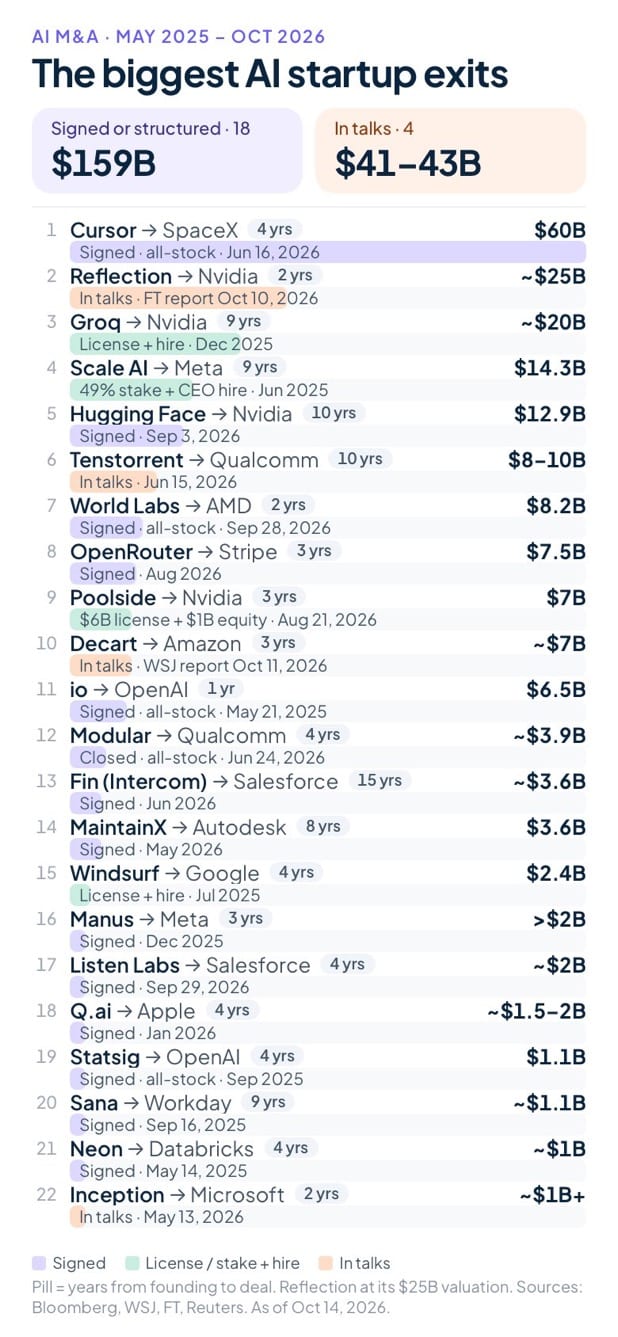
This may also be an ominous indicator of bubble behavior in the private markets as too much liquidity chases too few promising deals. Venture funds must get bigger to successfully compete.

Five capital calls in five weeks totaling $111,150. That’s way more than my passive income and online income combined. Hence the financial constraint.
Even a Managing Director at an investment bank making $1.5 million a year would wince. An MD’s base salary is about $500,000. Most of the pay comes as a year-end bonus withheld at close to 50% in a high-tax state. Then up to half of that bonus may be paid in deferred cash and stock that vests over three or four years. On paper, $1.5 million. In the checking account, a lot less.
And this was just one flurry. I’ve had four more like it this year, and the year isn’t over. Carrying silent stress is inevitable.
Why Aggressive Venture Investing Has Its Benefits
Before making any investment, I spend hours modeling the risk-reward potential and stress-testing my liquidity. Then I assign every investment a specific purpose. If I can’t explain why a dollar is going somewhere, it doesn’t go.
Finally, I talk each investment through with my wife and my father, and sometimes with the Financial Samurai community. Three sets of eyes catch what one set of overconfident eyes misses.
Here’s why I’m comfortable investing in venture so aggressively post FIRE.
1) It Protects Me From Myself
I’m a terrible trader. Before 2011, I’d rack up 1,000 trades a year and walk away up or down $20,000. All that time and stress for a coin flip. My old big boss eventually flew in from New York to tell me to stop. So I did. Please don’t day trade.
Since then, I’ve mostly been a buy-and-hold investor in index funds and individual stocks like Google and Apple. Mostly. I’ve still made some dumb trades that lost me plenty of money.
Money committed to venture can’t be traded. It’s in the hands of general partners who are incentivized to find the best private companies to make their LPs, and themselves, money.
So I don’t view that 20% as being at greater risk. Ironically, I view it as being in safer hands. With GPs incentivized to make money and raise new funds, I see them as better fiduciaries than me, who opted out of the grind. Further, when selling is one tap away on your phone, the biggest risk to your portfolio in a bear market is usually you.
2) It Forces Me To Invest Through Downturns
In 2009, I wrote that I should buy rental properties in Vallejo, California, which was getting obliterated by the financial crisis. I didn’t buy a single one. Too scared, and too much of a PITA. Opportunity lost.
In 2012, I even tried to sell my primary residence because I feared a housing relapse and I had just left my day job. Luckily, nobody bid on it. I sold it in 2017 for a lot more.
Venture helps with consistently investing, even during bad times. Funds typically call about 90% of committed capital over three to five years, whether I feel brave or not. When the next downturn hits, I’ll be investing at lower valuations even if every fiber of my body wants to hoard cash.
Every major S&P 500 decline has eventually been followed by new all-time highs. Knowing that was never the hard part. Acting on it while everyone panics is. Capital calls act on it for me.

3) Top Tier Venture Firms Can Generate Superior Returns
Most venture capital firms have not beaten the NASDAQ over the past 10 years. However, the very top tier have and can continue to do so. Therefore, if you can get invited to one, jump at the chance.
I finally was able to invest in a tier one fund’s 2026 vintage after investing in their 2018 and 2022 vintages. Demand was oversubscribed, and I wasn’t going to miss out on the opportunity to max out my allocation with them.
So far, they are doing well with investments in names like Instinct and Etched. However, these venture returns are not real until they exit. All the same, the markups feel good anyway as they keep FOMO at bay.

The Psychology Nobody Talks About: Sacrifice Feels Good
Now for the part that gets lost in the investment allocation debate.
I’m a thrill-seeker. At 18, I got in trouble with the law, largely from taking stupid teenage risks. Afterward, I figured the worst outcomes in life were going to jail, getting beat up, or getting shot. I’d been in plenty of fights, so I could handle the first two. I drew the line at getting shot, because I didn’t want my parents to be sad.
When your baseline for a bad life is that low, everything else is a win. Landing any job is a win. Having a girlfriend is a win. Being able to see and hear is a win. Any money beyond basic living expenses is a huge win. I’m perpetually grateful to be here after a rough start.
That mindset makes taking risk easier because if I lose, I’m still in a better place than I was. I’ll admit it can also make taking irresponsible risk easier. That’s exactly why the 20% cap exists.
But here’s what really drives me.
There’s little hope for an unemployed old man like me to make big money again. I had my run: McDonald’s at 15, temp jobs, 13 years in banking, then 17 years writing on Financial Samurai. All good things must come to an end, and I’m at peace with that.
What I’m not at peace with is my children losing their shot before they even get to take it.
It bothers me when some AI executives gleefully talk about wiping out millions of jobs. They may be right. But you’d think people building world-changing technology would know how to read the room. Millions of parents are listening, and we are not amused. These executives should be afraid of the masses, who won’t give up without a fight.
So every time a capital call hits, I feel worse about my liquidity but better about my children’s future. That’s a trade I’ll take every time. As a father, I’d give any part of myself to help my kids be OK. I’m sure every parent would too.
The discomfort of feeling broke today is outweighed by the hope that the capital comes back in 10 to 12 years, with a return, right when they’re entering adulthood.
This is the psychological component people miss. Sacrifice feels good when it’s for the people you love. Every wire feels like a small act of protection. It’s the financial version of a parent eating last.
Money is also only half the plan. After school and on weekends, my wife and I are their homeschool teacher, working on skills that may matter in an AI world. A financial safety net is nice. Being able to build your own is better.
Life Is Too Easy And Too Dangerous To Leave Up To Your Own Devices
Is a 20% cap enough? I’m not sure. Over the long run, the S&P 500 and Nasdaq have been fantastic, often beating alternative investments. But the temptation to tinker grows the more money you have.
With $100,000 invested and stocks down 20%, you’re probably still working and happy to buy the dip.
With a $10 million portfolio and no job, a 20% decline means $2 million gone in months. That could be a decade of savings. That’s when people do dumb things during downturns.
This is why I also own real estate. I can’t sell a house on my phone easily, so I don’t. That illiquidity is a feature, and it’s the reason I’ve held some properties for so long. When values dip, I don’t see a daily quote. And if a neighbor’s sale tells me my home is worth a lot less, at least I’ve been enjoying living in it.
Living In America Is Fantastic
Having lived abroad growing up for 13 years, I know how good we’ve got it in America. Our freedom, our rule of law, and our entrepreneurial spirit give people real hope that hard work leads to reward. America isn’t perfect, but it’s still the best country in the world for freedom and capitalism. Why not invest in it?
The flip side is that comfort makes it easy to coast. We overeat and our abs disappear. We binge TV and video games. Then we wake up 10 years later wondering why we don’t have more money and freedom.
Venture capital goes to the heart of the American spirit: entrepreneurship. I want to back the most driven people taking the biggest risks to change the status quo. At the same time, I want to own plenty of the S&P 500, the all-star team of corporate America.
Living capital call to capital call is uncomfortable, and I won’t make the same mistake with my next commitment. But I’ll keep investing aggressively, because I have one clear goal: build as big a financial safety net as possible by the time my kids become adults.
Call it reckless if you want. I call it being a dad who thinks in two timelines.
Reader Questions
Is 20% of investable capital in private investments too aggressive for a retiree with young children? What’s your limit? Have you ever invested in something partly because it made you feel like a better provider? And do capital calls make you a more disciplined investor, or just a more stressed one?
Get A Free Second Opinion On Your Risk Profile
Leave a portfolio alone for a few years, and it drifts. A rising stock market can quietly turn a 60/40 investor into an 80/20 investor without them lifting a finger.
If you have over $100,000 in investable assets, you can get a free financial consultation with an Empower financial professional here. Link your accounts, and they’ll review whether your actual allocation still matches the risk you want to take.
It’s a lot cheaper to find out now than during the next bear market.
Financial Samurai is a long-time affiliate of Empower and is currently not a client.
Read More Books
If you want a step-by-step plan for building wealth without losing your mind during capital calls, bear markets, or anything in between, pick up a copy of Millionaire Milestones: Simple Steps To Seven Figures. I distilled 30+ years of investing and 17+ years of writing into a roadmap that helps you reach your first million and beyond, at any income level.
It’s a USA Today bestseller published by Portfolio Penguin. You can grab a copy on Amazon or wherever you buy books. Building wealth is a marathon, and the right framework keeps you from tripping over your own feet.
Stay In Touch
Join 60,000+ readers and sign up for my free weekly newsletter here. I write about investing, real estate, venture capital, and raising a family in an AI-driven world, all from firsthand experience.
To get new posts in your inbox as soon as they’re published, ad-free for the first few hours, sign up here.
Money is too important to be left up to pontification. I’ve been writing from firsthand experience since 2009, and I’ll keep sharing what I’m seeing and doing with my own money.