


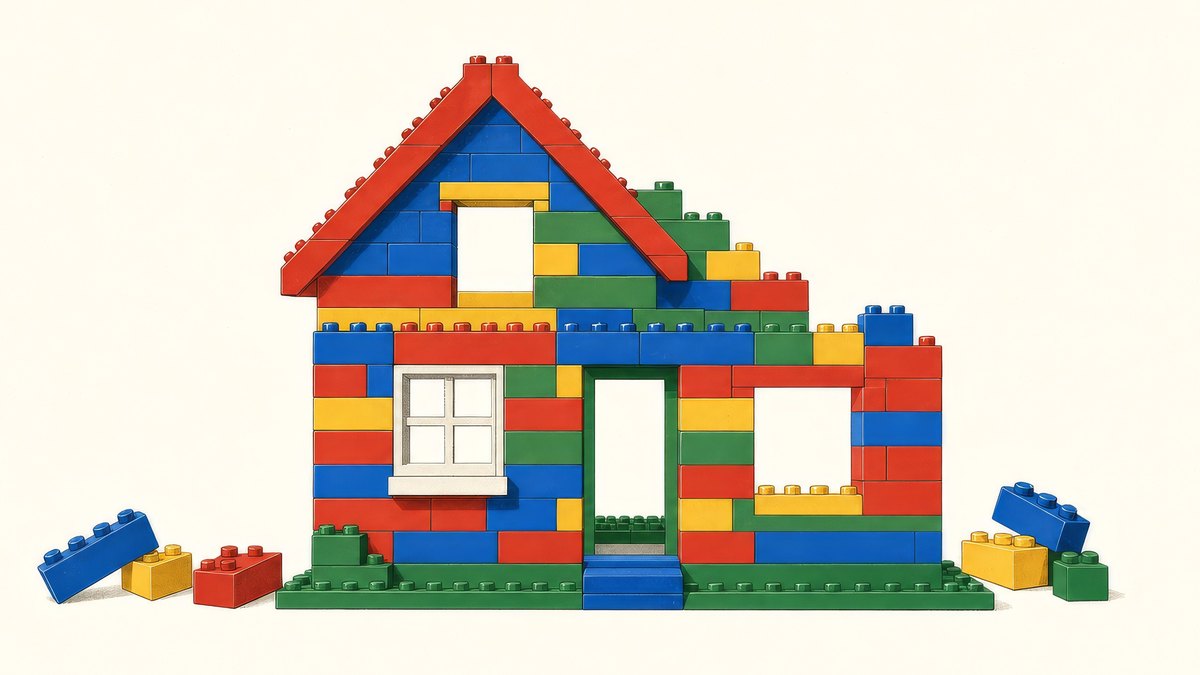
Given the choice between saving money and indulging in the pleasures of childhood, a majority of millennials say they would choose the latter.
Some 51% reported they would rather do “kidulting” activities than saving the money, according to the Harris Poll’s Rise of Kidulting Report.
The term describes adults buying products or participating in activities traditionally associated with childhood. Think building a model set or collecting toys—but this time, with your own hard-earned money.
That appetite is fueling a boom in childhood novelties. U.S. toy sales to adults grew 25% in the first half of 2026 compared with a year earlier, according to Circana—helping propel the industry even as consumers remained anxious about the economy.
Nowhere is that anxiety more obvious than in the housing market, with many young adults struggling to afford a place of their own. Nearly one-third of adults aged 18 to 34 lived with their parents in 2025, according to Realtor.com® research.
On the surface, it’s easy to cast those trends as evidence of a generation reluctant to grow up, with kidulting starring as its latest shortsighted indulgence: the new avocado toast supposedly standing between young adults and a home of their own.
But economic research suggests that explanation may get the relationship backward.
Why childhood becomes something worth buying
Among Harris respondents who had participated in play during the previous year, 46% said a product or experience being affordable or easy to justify would make them more likely to buy it. Meanwhile, 41% selected a reminder of something they loved growing up.
Those two motivations—affordability and nostalgia—help explain why kidulting fits this particular economic moment. One offers a pleasure people can still afford. The other offers the promise of something familiar.
That stands in stark contrast to the uncertainty surrounding one of adulthood’s most important milestones. Some 69% of millennials and 70% of Gen Z identify homeownership as a life goal—while only 57% and 54%, respectively, believe it is achievable for them, according to a Realtor.com survey from 2025.
Importantly, the gap between wanting a home and believing you can get one did not emerge from a collective failure of discipline—the economics changed.
In 1990, a typical home cost roughly three times a typical household’s annual income. By 2025, that ratio had climbed to roughly five. That means the price of admission to homeownership has risen sharply relative to what households earn—even before mortgage rates enter the equation.
And when the future becomes both more expensive and less certain, looking backward can become more appealing.
Across eight studies, Sheng Bi and colleagues found that consumers who felt powerless showed a stronger preference for nostalgic products than those who felt powerful. Their study, “When Feeling Powerless, We Crave Nostalgia,” identified uncertainty about the future as an underlying mechanism.
Their findings offer a way to understand why someone might look backward while struggling to move forward. A home can remain out of reach despite years of planning. A childhood pleasure offers something familiar to enjoy today.
When saving no longer feels like a path to homeownership
That uncertainty can also change what feels worth saving for.
Economists Seung Hyeong Lee and Younggeun Yoo propose a model in which households respond differently depending on whether homeownership still seems attainable: Those who see a path toward buying may cut spending to improve their chances, while those who see the goal as beyond reach may spend more in the present.
The logic turns the avocado toast argument on its head. Giving up a $50 or $100 pleasure makes sense when each sacrifice appears to move someone measurably closer to a down payment. Once the gap becomes enormous, the same sacrifice buys far less progress.
Again, it’s easy enough to measure how this timeline has broken down for young adults today. While it took just three years to save for a down payment in 1990, it now takes closer to a decade—nearly three times as long, according to research from Realtor.com.
And whether hobby spending substantially changes that timeline is a separate question. Harris measured a hypothetical preference, not how much respondents actually diverted from savings.
YipitData’s analysis found toy and game spending concentrated among middle- and higher-income households. Shoppers aged 35 to 44 with household incomes of at least $150,000 were disproportionately represented in building-and-construction toy spending.
It’s further evidence that kidulting is not literally draining millennials’ down-payment accounts en masse. Instead, it’s flourishing in a culture where delayed milestones have weakened the old assumption that today’s restraint will reliably purchase tomorrow’s adulthood.
What happens when adulthood takes longer to reach
A September analysis from Boston College’s Center for Retirement Research estimates that economic conditions account for roughly half the increase in adults aged 25 to 34 living as guests in their parents’ homes since 2007.
Likewise, a 2024 study found that renters in less affordable housing markets began having children later than those in more affordable markets.
The findings help put kidulting in a different context. The small indulgence of an affordable collectible can’t be blamed for delaying the launch of entire generations into adulthood—but the rising cost of reaching its traditional milestones can.
And when adulthood itself stretches out, consumer behavior is likely to stretch with it.
Someone can be 32, building a career, paying bills, and still living at home. They can want a home of their own while knowing it could take years longer to reach. And while those milestones move further out, the pleasures of childhood remain relatively easy to buy.