


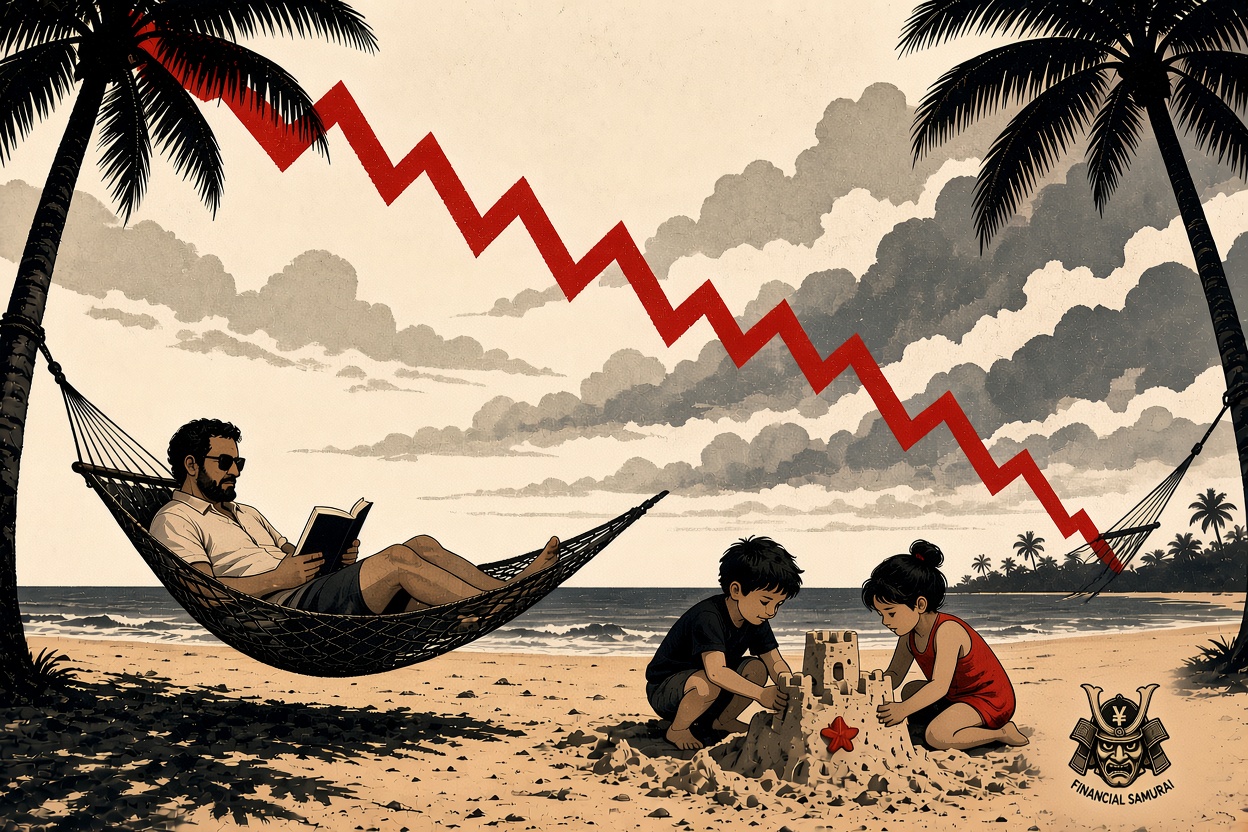
As my public equity portfolio gets obliterated thanks to being overweight tech stocks, I started dusting off my resume to go back to flipping burgers at McDonald’s. Then halfway through the application, I wiped away my tears and took a deep breath.
As every long-time investor knows, the name of the game is survival. If you can make it through the downturn, good things usually await on the other side.
We’re not in an official bear market, yet. But plenty of individual tech names have already fallen by over 20%, and when you’re overweight those names, the index’s official status doesn’t matter much.
So I thought it might be helpful for those who are retired, or who are close, to discuss the positives of going through a downturn. We’ll also review how long downturns usually last so we can better prepare.
The Wealth Effect Was Numbing A Lot Of Pain
As the midterm elections showed, a lot of people are not happy with the way our country has been led. But the discontent didn’t appear overnight. The stock market was simply acting as a giant dose of Lidocaine.
As long as stocks kept going up, we could more easily bear higher oil prices, higher food prices, higher housing costs, higher college tuition costs, and explosive medical costs. After all, our investment returns were growing faster than inflation. $6 for a gallon of gas stings a lot less when your brokerage account is up $50,000 for the year.
But that tolerance for rising costs disappears the moment our investments start losing money. Suddenly, $89 a pound for wagyu feels personal.
When the wealth effect vanishes, consumers cut back. Fewer dinners out. Fewer vacations. The new car gets pushed out another year. With declining corporate profitability, companies accelerate layoffs to protect margins. The newly unemployed tighten spending even further.
Rinse and repeat until economists officially declare a recession six months after everybody already felt it.
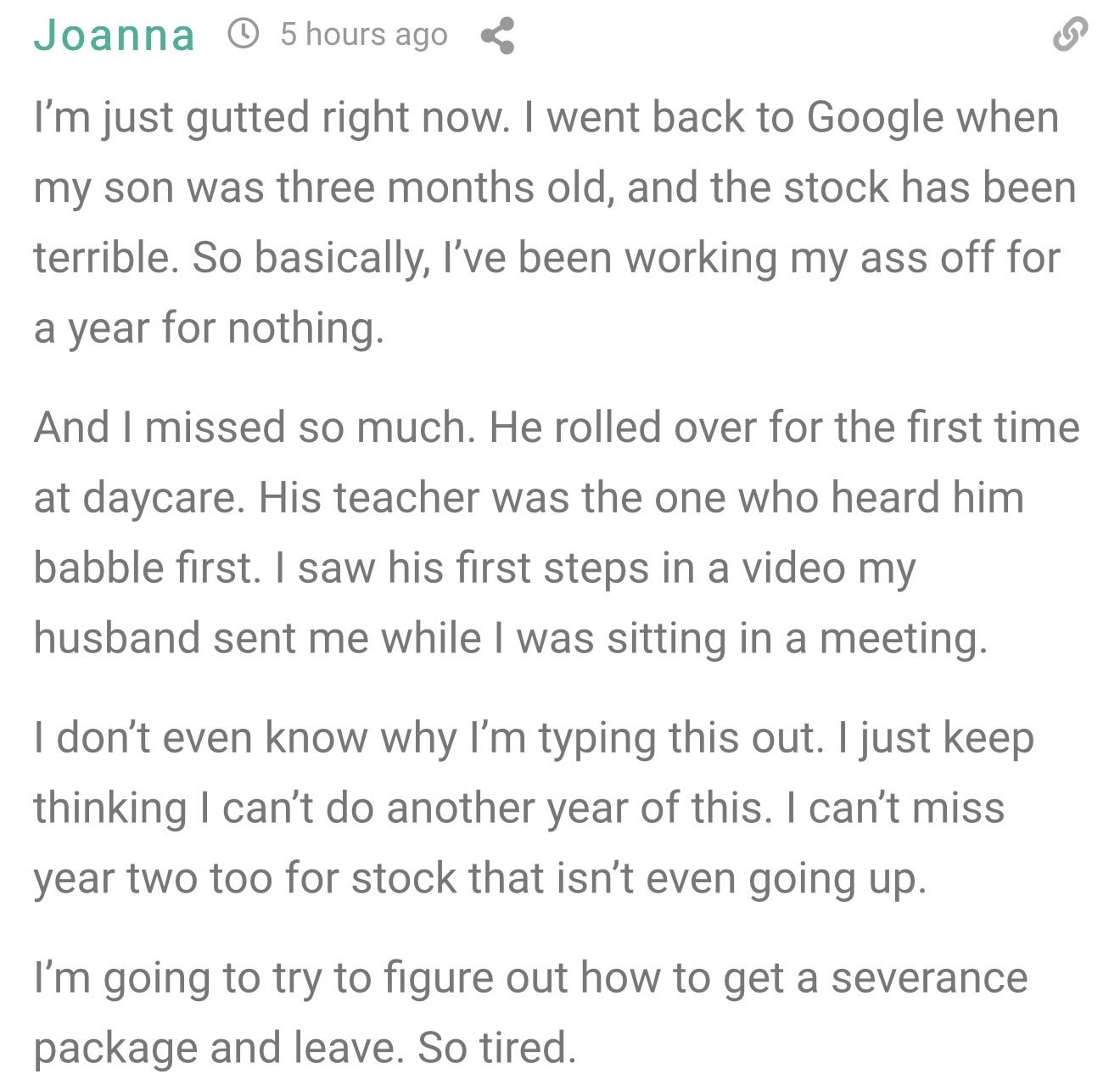
If you see the writing on the wall, you want want to get ahead of the layoffs by negotiating your own severance package. If you do, you will probably have an easier time getting a much better exit offer than being lumped with the masses.
Sequence Of Returns Risk Is The Real Fear For Retirees
If you’re newly retired, your biggest fear is sequence of returns risk. That’s the risk of suffering big losses early in retirement while you’re also withdrawing money to live on. Do that for too long and your portfolio may never recover.
Lose enough and you get forced back to work. Nobody who has tasted freedom wants to return to Monday morning status meetings and performance reviews from someone half their age.
Retirees who live off their investments should feel worse about a bear market more than the average worker. We don’t have a paycheck to cushion the blow. We may not have much spare cash flow to buy the dip either.
But here’s the key point. If your investments can survive the correction or bear market, you should actually feel good during a downturn. Not ecstatic, but relatively good. Because the alternative is working hard for no financial reward.
How do you know if you can survive? Run through this quick checklist:
- You have over one year of living expenses in cash or Treasury bills, so you never have to sell stocks at the lows.
- Your passive income from rentals, bonds, and dividends covers a meaningful chunk of your expenses.
- You can cut discretionary spending by 20% to 30% without feeling miserable.
- If stocks fell another 35% from here, you might still wake up at 2am in cold sweats, but you can sitll pay your bills.
How Long You’ll Have To Gut It Out
So how long will the pain last? History offers some comfort, provided you have the patience of a parent waiting for a toddler to put on his shoes while already 15 minutes late.
According to Capital Group, the S&P 500 has dropped 10% or more about once every 18 months since 1954. A 20%+ bear market shows up about once every six years.
In other words, if you plan on a 40-year retirement, expect roughly 25 corrections and six or seven bear markets. Declines are the price of admission, not a sign the world is ending. Get used to them.
| Decline | How often it happens | Average length, high to low |
|---|---|---|
| 5% or more | About twice a year | 46 days (1.5 months) |
| 10% or more (correction) | About once every 18 months | 133 days (4.4 months) |
| 15% or more | About once every 3 years | 247 days (8 months) |
| 20% or more (bear market) | About once every 6 years | 402 days (13 months) |
Source: Capital Group, S&P 500 data from 1954 through 2025.
Hartford Funds, using Ned Davis Research data going back to 1928, counts 27 bear markets. Stocks fell 35% on average and took 289 days, or about 9.6 months, to hit bottom.
Bear markets were far more common during the Depression era. Since 1945, there have been 15, or one about every 5.1 years.
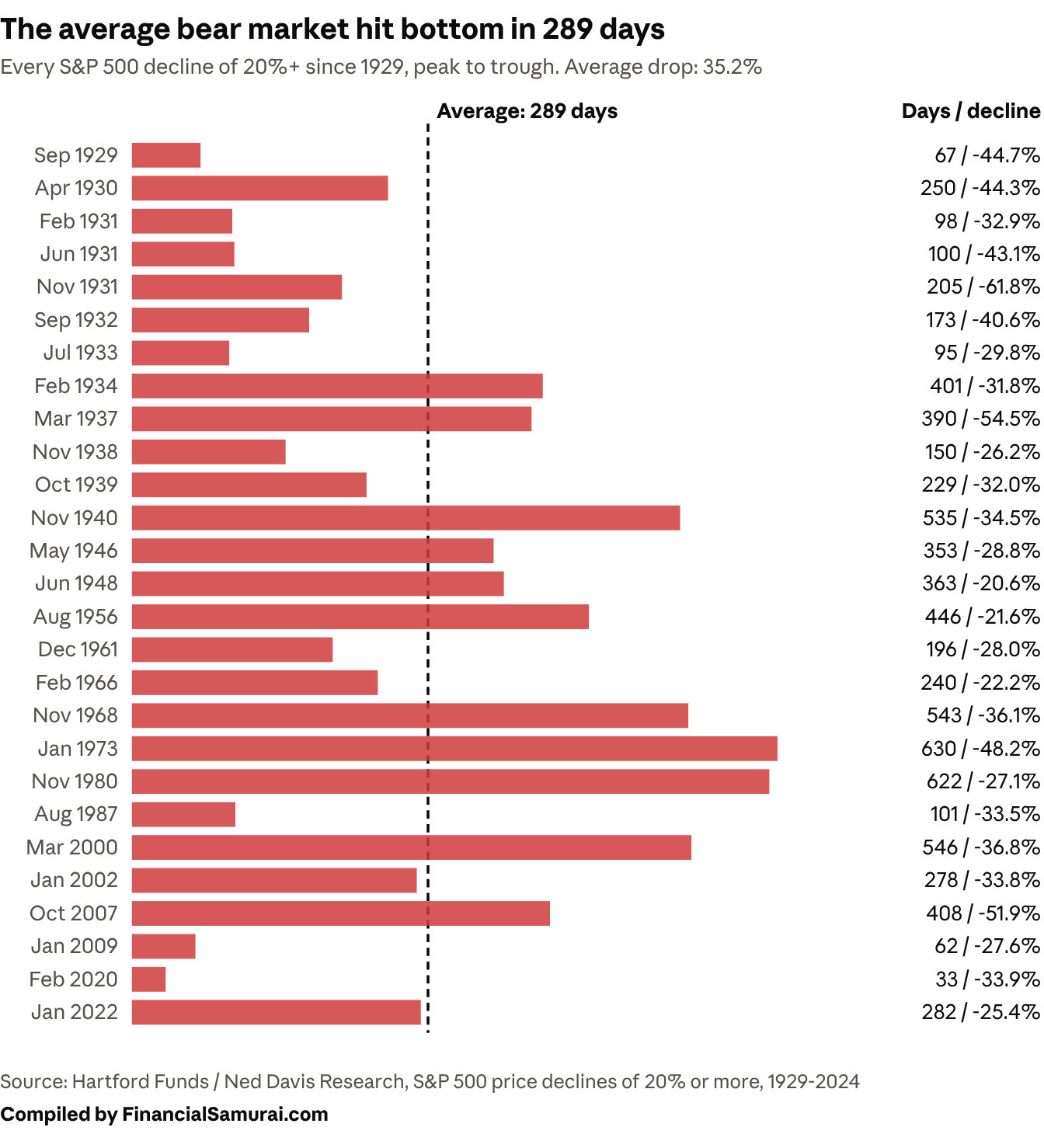
Two caveats before you get too comfortable. First, these figures measure peak to trough. Getting back to your old high takes longer. Second, the 1973 and 1980 bear markets each dragged on for more than 600 days. Averages are nice until you’re living through the outlier.
The Stock Market Always Recovers
But here’s the part that should make everyone feel better. Every S&P 500 correction since 1929 has been followed by a recovery, and the average return in the first year after the bottom was 52%. And the recoveries are happening quicker now, if we include the 2025 Liberation Day and 2026 Iran War events.
Hartford also found that about 42% of the S&P 500’s strongest days over the past 20 years occurred during bear markets. Sell in a panic and you’ll likely miss the rebound.
My takeaway: In a realistic worst-case scenario, plan on gutting out roughly 12 to 18 months of pain from peak to trough, with a longer tail to fully recover. That’s why the one to two years of cash is fine, especially with interest rates still high.
The Less You Work, The Better You Feel
The existential dilemma of a bear market is this:
- Do you work harder and risk running in place, or even losing money?
- Or do you work less, play more golf, pickleball, and poker, and spend more time with your kids, because there’s no longer much point to the grind?
The correct answer is to work less hard and YOLO more. Let me explain using a concept I call Return On Effort (ROE).
During a bull market, working less hard actually increases your Return On Effort because your investments provide most of the returns. Unless you have a sales job or some other role tightly correlated to performance, an extra 15 hours a week rarely moves the needle. You’re better off riding the organization’s growth.
During a bear market, working hard to run in place or lose money makes even less sense. There’s nothing you can do to stem declining consumer confidence, new socialist policies, higher taxes, and so forth. Your boss isn’t handing out raises while revenue is falling. See Google’s collapse after having such a huge lead in the AI race.
If anything, your extra effort earns you the privilege of doing the work of three colleagues who just got laid off. Congratulations on your 0% raise.
So you work less hard to protect your declining Return On Effort. Not because you’re lazy. Because you’re rational.
By Definition, Retirees Work The Least
With this logic in mind, who works the least? The unemployed, the traditional retiree, and the early retiree.
Therefore, so long as your investments can withstand the beating, you’re going to be just fine. Psychologically, as a retiree, you must push yourself to do less and have more fun.
Happiness is relative. During a bull market, plenty of early retirees feel a twinge of FOMO watching former colleagues get promoted and cash fat RSU checks. During a bear market, that FOMO flips. Nobody envies the guy grinding through a reorg while his stock comp gets cut in half.
Silver Linings Of A Bear Market For Everyone
Whether you’re retired or still grinding away, a downturn offers some real perks.
1) Things get cheaper. When demand falls, so do prices for travel, hotels, and eventually real estate. Retirees with flexible schedules can travel off-peak and score deals that working parents can only dream about. Workers looking to buy their first home may finally face less competition.
2) You get to shop the sale. Retirees with passive income and a cash buffer get to buy when others are forced to sell. Workers get an even steadier advantage. Every paycheck and 401(k) contribution now picks up more shares at lower prices. Steady income plus a long time horizon makes you the natural buyer in a bear market.
3) Your kids get to buy the dip. I’ve written about how to use stock market downturns to make your kids millionaires. As a father, this is my favorite benefit of a bear market. Because the equity train finally stops long enough for kids to catch up and hop on board. A child has 50+ years of compounding ahead. A 30% drop today is a rounding error by the time they’re in their 50s.
4) Tax moves get better. Tax-loss harvesting offsets future gains. Roth conversions at depressed valuations mean you pay less tax on the same number of shares, and all the recovery happens tax-free.
5) The AI hedge is doing its job. Public AI stocks have gotten crunched. But there’s a flip side. If AI companies are struggling to justify their valuations, AI probably isn’t wiping out white-collar work as fast as everyone feared. That’s comforting for our kids, and for every worker wondering if their job will exist in 10 years.
6) You get humbled and build resilience. Being heavily overweight tech felt brilliant for years. Bear markets remind us we’re not as smart as we thought. My advice after every huge win is to go scrub all your toilets. Every downturn you survive makes you a calmer, better investor for the next one. If you’re still working, just make sure your emergency fund is solid, because layoffs tend to show up at the worst time.
Calm Comes From Control
You can’t control tech volatility, interest rates, or who wins elections. But you can control how you spend your time during a downturn.
The market will eventually recover. It always has. When it does, the people who grinded through the downturn will be exhausted. Those of us who leaned into family, friends, and fitness will be well rested. Both groups will survive, which is what matters most.
If you’ve been thinking about retiring, a bear market may be the best time to pull the trigger. It means that in spite of the carnage, your finances are strong enough for you to break free. Waiting for the next bull market can feel safer, but it’s backwards.
If your finances can support retirement while stocks are down 20% or more, your plan has already passed the stress test. You’re not retiring on inflated numbers that could vanish in the next correction. And since bear markets don’t last forever, a recovery may carry your retirement forward with a tailwind instead of a headwind.
Compare that to the person who retires at the peak of a bull market, only to watch their portfolio drop 30% in the first two years. That’s sequence of returns risk at its worst.
So go play in the park. Take your kids to the beach. A downturn is the best time to enjoy the freedom you worked so hard to build, and maybe the best time to claim it.
Reader Questions
Are you finding it more comforting to be retired during a downturn, or more stressful? How much of your portfolio would need to fall before you’d seriously consider going back to work? Do you agree that working less hard in a bear market is the rational move, or is that just a cop-out for the lazy? And for those still working, has the market selloff made you rethink how hard you’re grinding? Are you using the downturn to fund your kids’ investment accounts?
Build Wealth Through Every Market Cycle
If you want a roadmap for getting through downturns and coming out richer, pick up a copy of Millionaire Milestones: Simple Steps To Seven Figures, a USA Today bestseller. It covers how to keep investing when everybody else is scared, so you can reach financial independence sooner.
To get my posts in your inbox as soon as they’re published, ad-free for the first few hours, sign up here. Join 60,000+ others and sign up for my free weekly newsletter here. I’ve been writing from firsthand experience since 2009, and I’ll keep sharing what I’m seeing and doing with my own money during this downturn.