

A construction business plan brings structure to an industry defined by tight margins, complex projects and constant risk. This document helps construction companies to align strategy, operations and finances while helping owners communicate direction to partners, lenders and teams. Whether scaling a small contractor or formalizing processes, a construction business plan sets expectations and supports smarter decisions as conditions, regulations and markets shift rapidly.
What Is a Construction Business Plan?
In practical terms, a construction business plan is a formal document that outlines how a construction company operates and competes. This document is the guiding light for a construction company in terms of business administration. It details the business goals, the firm’s services, target markets, organizational structure and operational approach.
Financial projections, cost assumptions and funding needs are typically included to demonstrate viability. By translating objectives into documented plans, it provides a clear reference for managing projects, controlling risk and measuring performance over time across different project types and business stages within changing market and regulatory environment conditions.
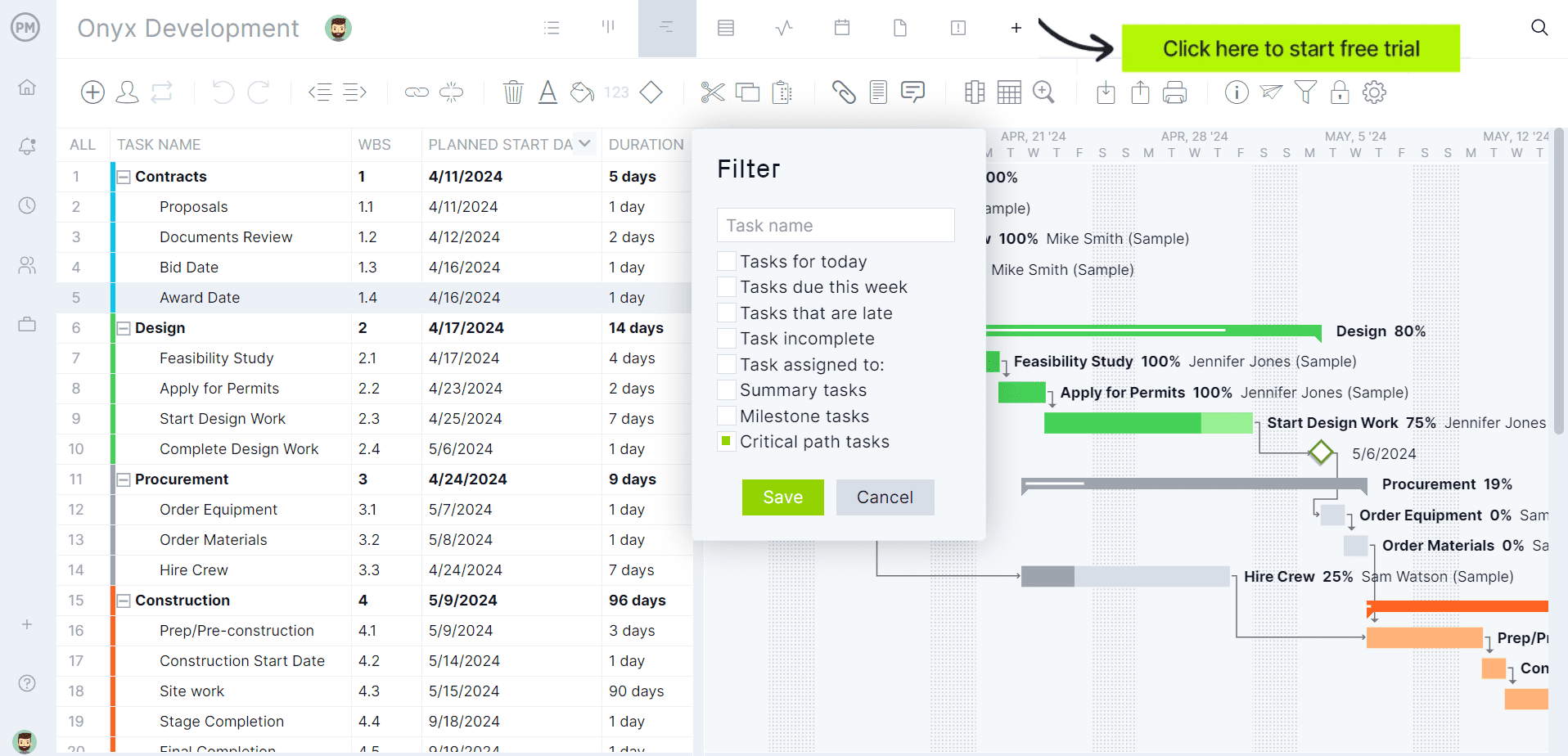
When you’re building a construction business plan, lean on ProjectManager’s diverse set of tools. It helps you organize strategy, forecast performance, manage risks and translate ideas into executable plans in one place. As a construction business plan must include a clear outline of how projects will be planned and executed, the Gantt chart is a powerful tool to help do so. Build detailed project schedules, define task dependencies and estimate durations of work. Get started with ProjectManager with a free 30-day trial.
What Is the Purpose of a Construction Business Plan?
The purpose of a construction business plan is to guide decision-making and reduce uncertainty. It helps owners evaluate opportunities, allocate resources and anticipate financial outcomes before committing capital. Lenders and investors rely on it to assess risk and credibility.
Internally, it aligns teams around priorities, milestones and controls, improving accountability while supporting sustainable growth in a competitive construction market and enabling clearer communication with partners, suppliers and regulators throughout the business lifecycle and strategic planning.
When to Make a Construction Business Plan
Most often, a construction business plan is created when starting a new construction business, as this is the point where decisions around services, pricing, staffing and financing have the greatest long-term impact. For new firms, the plan acts as a starting framework that turns an idea into an operational business.
In some cases, however, an existing construction company may also need a construction business plan. This typically happens during major changes, such as when two construction firms merge and must align operations, or when a business is restructured to address financial pressure, new markets or a shift in strategy.
What Should Be Included in a Construction Business Plan?
Now that there’s a basic understanding of what a construction business plan is and why it matters to construction companies, the next step is breaking it down into its key components. These sections work together to explain strategy, direction and execution in a clear, structured way.
Executive Summary
An executive summary is a concise overview of a business document that highlights key objectives, strategies and financial expectations. It allows readers to understand what a business does, how it operates and why it is viable without reading the plan.
In a construction business plan, the executive summary is essential because it frames the entire proposal for lenders, investors and partners. It communicates scope, market focus and financial logic upfront, helping decision-makers assess risk and opportunity before reviewing detailed sections, projections and operational plans that support long-term construction business growth.
Related: Executive Summary Template
Mission and Vision
A mission statement defines the core purpose of a construction company by explaining what it does, who it serves and how it delivers value. Within a construction business plan, it clarifies service focus, quality standards and operating principles, guiding daily decisions, project execution and relationships with clients, subcontractors, suppliers and internal teams across multiple project types and business stages consistently.
A vision statement describes the long-term direction a construction company aims to achieve. A construction business plan outlines growth ambitions, market position and future capabilities. It helps align strategic investments, talent development and service expansion, providing a shared picture of success that guides leadership decisions and keeps the business focused beyond short-term projects and evolving industry demands ahead.
Organizational Structure
An organizational structure defines how roles, responsibilities and reporting relationships are arranged within a company. A construction business plan shows how leadership, project delivery and support functions are coordinated to manage projects effectively, maintain accountability and achieve business goals.
- Owner or Managing Director – Sets strategic direction, oversees performance and holds final authority over major business decisions.
- Project Manager – Plans, coordinates and controls construction projects to ensure scope, schedule and budget alignment.
- Construction Manager – Oversees on-site operations, supervises crews and ensures work meets plans and quality standards.
- Estimator – Prepares cost estimates, analyzes bids and supports pricing decisions for prospective construction projects.
- Site Supervisor or Foreman – Manages daily site activities, labor coordination and compliance with safety requirements.
- Finance or Accounting Manager – Handles budgeting, cash flow management, invoicing and financial reporting for the business.
- Procurement or Contracts Manager – Manages subcontractor agreements, supplier relationships and material purchasing processes.
Products and Services
This section explains the specific construction services the company offers and the types of projects it undertakes. It should clarify whether the business focuses on residential, commercial or specialized construction, outline core capabilities and highlight any differentiators. A clear definition helps position the company in the market and sets realistic expectations for clients and partners.
Revenue Model
A revenue model explains how a business generates income and converts its activities into cash flow. It outlines primary revenue streams, pricing logic and payment mechanisms, helping stakeholders understand how the company sustains operations and achieves profitability over time.
The revenue model in a construction business plan typically shows how income is earned through projects, contracts or service types. It may outline fixed-price contracts, cost-plus arrangements or recurring services, while illustrating how project volume, margins and payment schedules affect overall revenue stability and growth.
Financial Projections
Financial projections are forward-looking estimates that forecast a business’s expected financial performance. They usually include income statements, cash flow forecasts and balance sheet projections, providing a structured view of future revenue, expenses and financial position.
For a construction business plan, financial projections usually show how project costs, labor expenses and material pricing impact profitability. They help demonstrate cash flow timing, funding needs and break-even points, allowing lenders and owners to assess financial feasibility under realistic construction workloads and market conditions.
Related: 5 Best Construction ERP Software: Key Features to Look for
Funding Requirements
Funding requirements describe the amount of capital a business needs to start, operate or expand. This section explains how much funding is required, when it is needed and the intended use of funds, helping lenders or investors evaluate financial needs and risk exposure.
In a construction business plan, funding requirements usually show capital needed for equipment, working capital, bonding, insurance and early project costs. They often outline timing gaps between expenses and payments, demonstrating how funding supports cash flow stability during project mobilization and growth phases.
Pricing Strategy
A pricing strategy explains how a business sets prices for its products or services. It considers costs, market conditions, competition and profit goals, showing how pricing decisions support revenue generation while remaining competitive and sustainable over time.
When it comes to construction companies, the pricing strategy usually shows how bids and fees are calculated. It may address labor rates, material markups, overhead recovery and profit margins, explaining how pricing aligns with contract types, risk levels and target markets.
Market Analysis
A market analysis section examines the industry environment in which a business operates to build an effective and realistic marketing strategy. To do so, market research should be conducted to identify target customers, demand trends, competitors and external factors that influence market opportunities, helping justify strategic and financial assumptions.
In a construction business plan, the market analysis usually shows local or regional demand, construction trends and competitive positioning. It may highlight customer segments, project types and regulatory conditions, supporting decisions about service focus, pricing and growth potential.
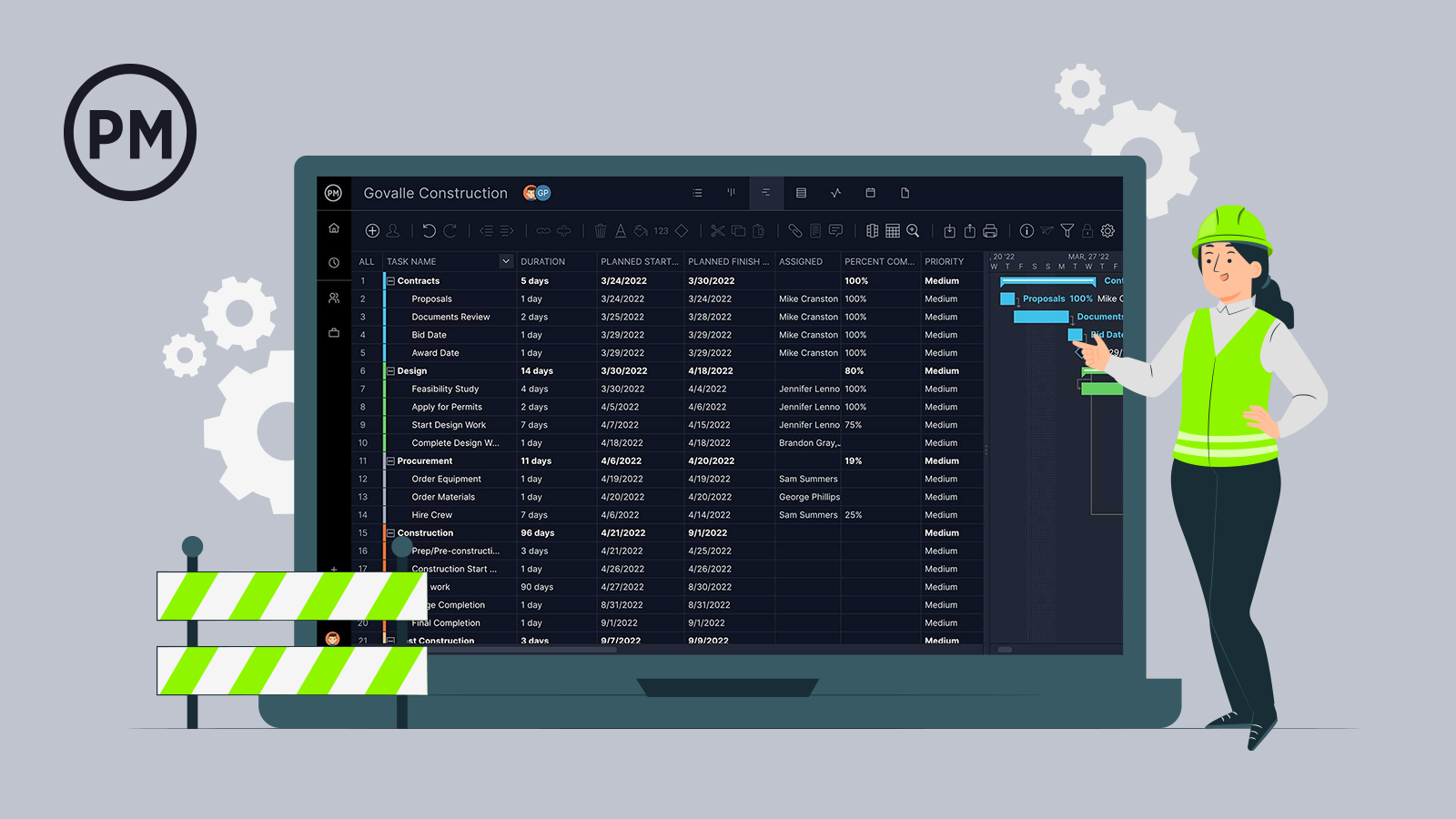
Get your free
Construction Schedule Template
Use this free Construction Schedule Template to manage your projects better.
Industry Overview
An industry overview section provides a high-level analysis of the broader industry in which a business operates. It describes market size, growth trends, regulatory factors and economic conditions, helping readers understand the external environment that influences strategy, risk and long-term viability.
The industry overview section of a construction business plan typically shows construction market trends, labor availability, material cost dynamics and regulatory requirements. This market research may reference residential, commercial or infrastructure sectors, setting context for demand levels, competitive pressure and the operating challenges specific to the construction industry.
Competitive Analysis
A competitive analysis section examines the businesses that compete within the same market. It identifies key competitors, compares offerings and evaluates strengths, weaknesses and positioning, helping shape the marketing strategy that differentiates itself and defends its market share.
For a construction business plan, the competitive analysis usually shows how the company compares to local or regional contractors. It may assess pricing approaches, service specialization, reputation, capacity and project experience, demonstrating how the business can compete effectively and win work in its target market.
Related: Competitive Analysis Template
Operations Plan
An operations plan explains how a business runs on a day-to-day basis. It outlines processes, resources, workflows and responsibilities, showing how products or services are delivered efficiently while maintaining quality, cost control and operational consistency.
It’s common for the operations plan to show how projects are executed from preconstruction through closeout. It may address scheduling, subcontractor coordination, equipment usage, safety procedures and quality control, demonstrating how the business manages complexity while meeting deadlines, budgets and contractual requirements.
Risks, Assumptions and Constraints
This section identifies factors that could affect business performance but are not fully controllable. It outlines potential risks, underlying assumptions and known constraints, helping readers understand uncertainty and the conditions on which projections and strategies depend.
Within a construction business plan, risks, assumptions and constraints usually show exposure to labor shortages, material price volatility and regulatory delays. Assumptions may include workload forecasts or payment timing, while constraints highlight limits related to capacity, financing, equipment or compliance obligations.
Related: 5 Best Construction Risk Management Software of 2026 (Free & Paid)
Related Construction Project Management Templates
We’ve created dozens of free construction project management templates for Word, Excel and Google Sheets. Here are some of them.
Construction Management Plan Template
This free construction management plan template for Word helps define the scope of work, timeline and budget, among other important project management elements.
Construction Budget Template
This construction budget template can be used to estimate construction costs such as labor, materials, equipment and compare them against actual costs to determine if a construction project is over or under budget.
Construction Schedule Template
This free construction schedule template allows you to open ProjectManager’s Gantt chart to experience how a robust project management software can help schedule the activities of a construction project, identify the critical path, task dependencies, allocate resources and much more.
How ProjectManager Helps Construction Companies
Construction companies of all sizes trust ProjectManager to help improve their construction business plan. When data updates across the software in real time, it’s easy to see how to make your business plan more compelling and actionable. Watch our brief video below to learn more about how we can support your construction projects.
Budget Tracking with Resource Management Tools
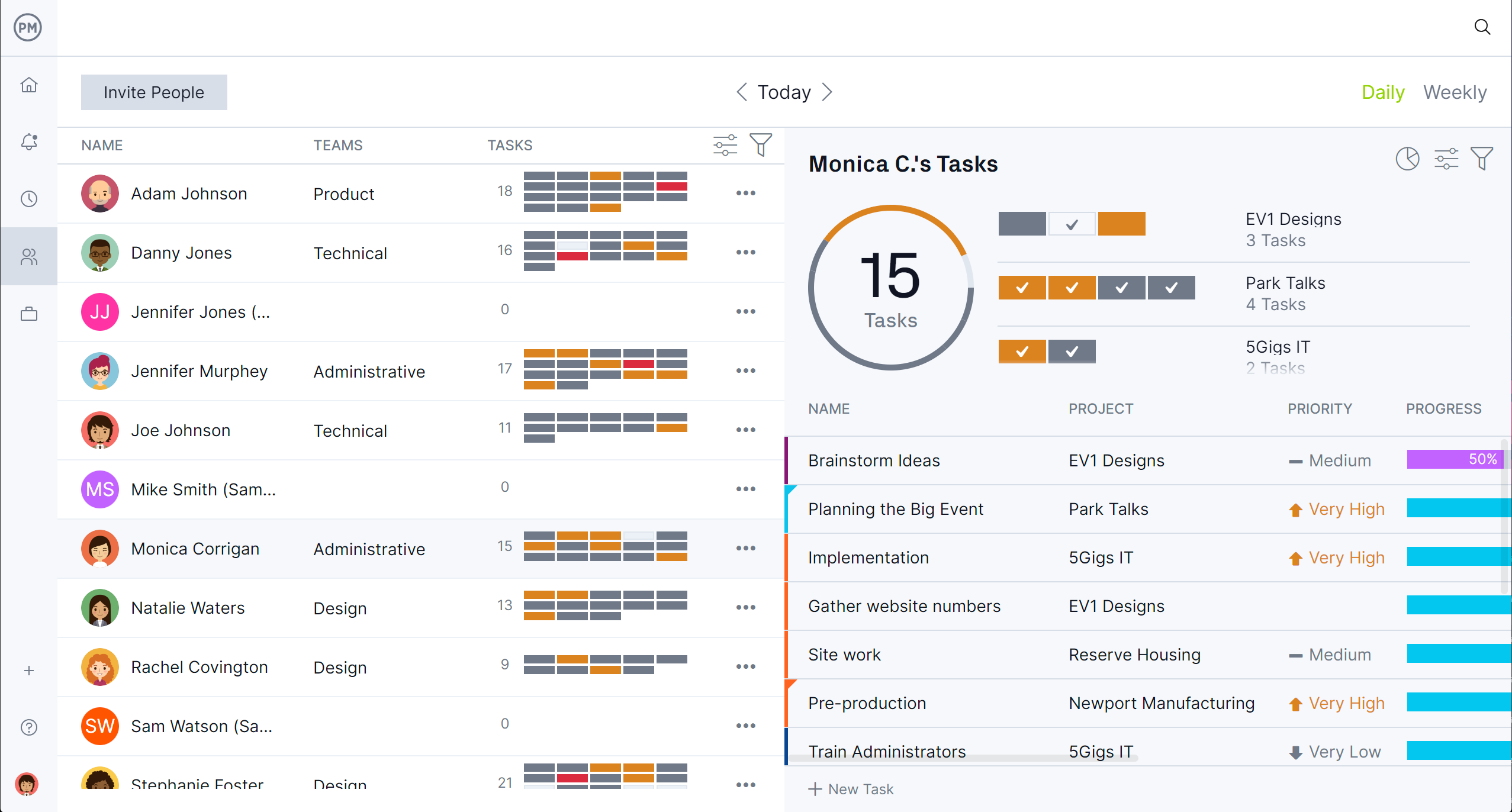
Accurate financial planning is central to any business plan. ProjectManager has built-in resource management tools that allow teams to track planned vs. actual costs alongside team workloads. Teams can also estimate labor, equipment and material costs at the task level to enhance credibility in financial projections.
Risk Identification and Management
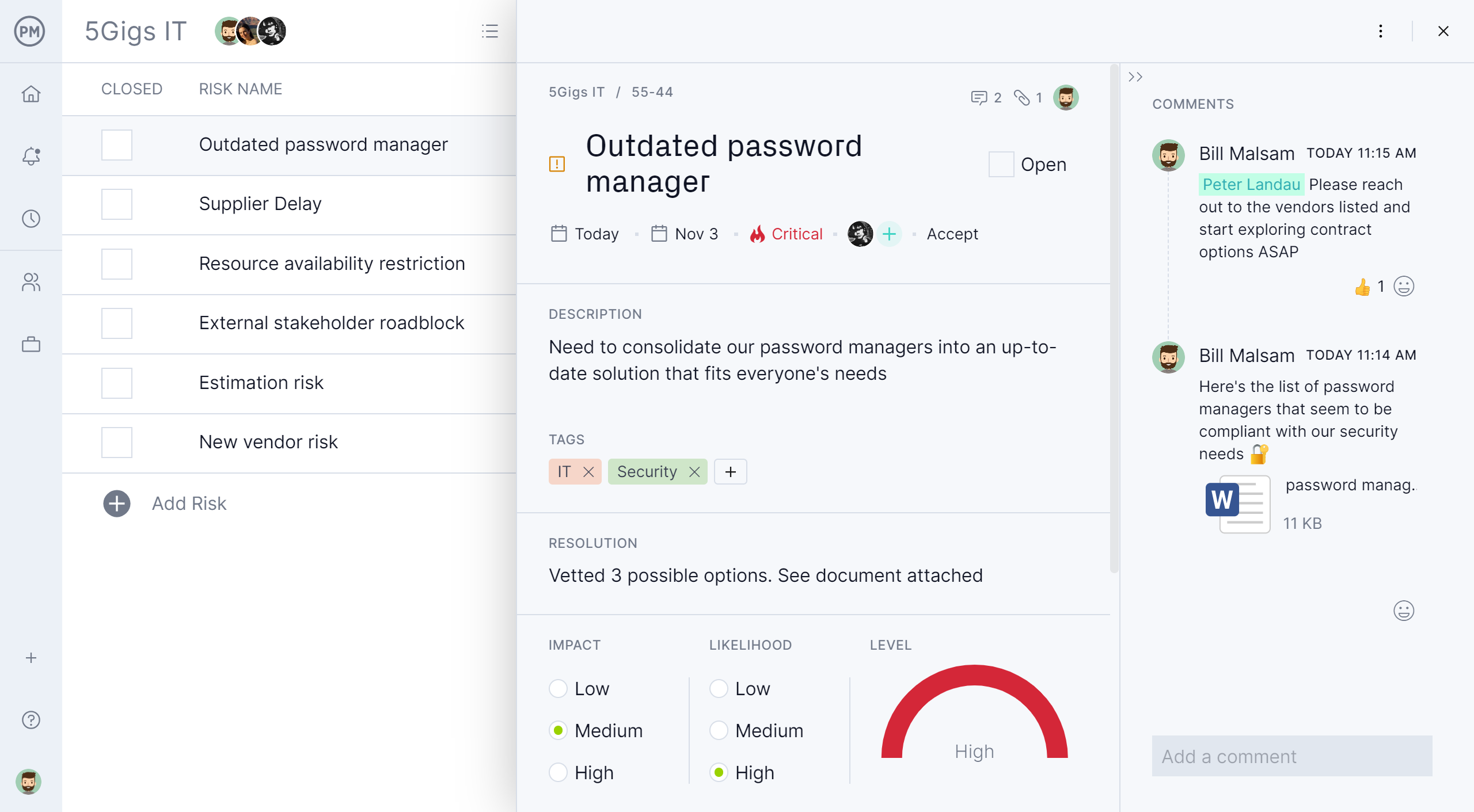
Investors and lenders want to see that you’ve thought through risks and mitigations. We help you capture and prioritize project risks, track mitigation plans and evaluate the impact on cost and schedule. Built-in RAID logs allow you to set a priority level, response plan, assignee and more. Use these tools to build a stronger risk management section of your business plan.
Related Construction Project Management Content
ProjectManager is online project and portfolio management software that connects teams, whether they’re in the office, on the job site or anywhere else. They can share files, comment at the task level and stay updated with email and in-app notifications. Get started with ProjectManager today for free.