

On a live job site, dozens of activities unfold at once, each affecting safety, cost and schedule. A construction site management plan brings order to that complexity by coordinating people, processes and physical space. It gives contractors a practical framework to anticipate risks, control daily operations and keep work progressing smoothly.
What Is a Construction Site Management Plan?
A construction site management plan is a formal document that outlines how a job site will be organized, controlled and monitored. It defines procedures for coordinating workers, equipment, materials and subcontractors while setting rules for safety, access, communication and compliance. By documenting responsibilities, workflows and controls, the plan establishes consistent standards that guide day-to-day decisions and support predictable, well-managed site operations across varying project scales and contractual environments from mobilization through closeout on active construction sites daily.
Functionally, the construction site plan is assembled from a collection of subsidiary plans, each governing a specific dimension of site activity. Together, these interconnected documents form a unified management system, ensuring logistics, safety, risk management, environmental controls and emergency responses operate in alignment rather than isolation throughout daily site operations.
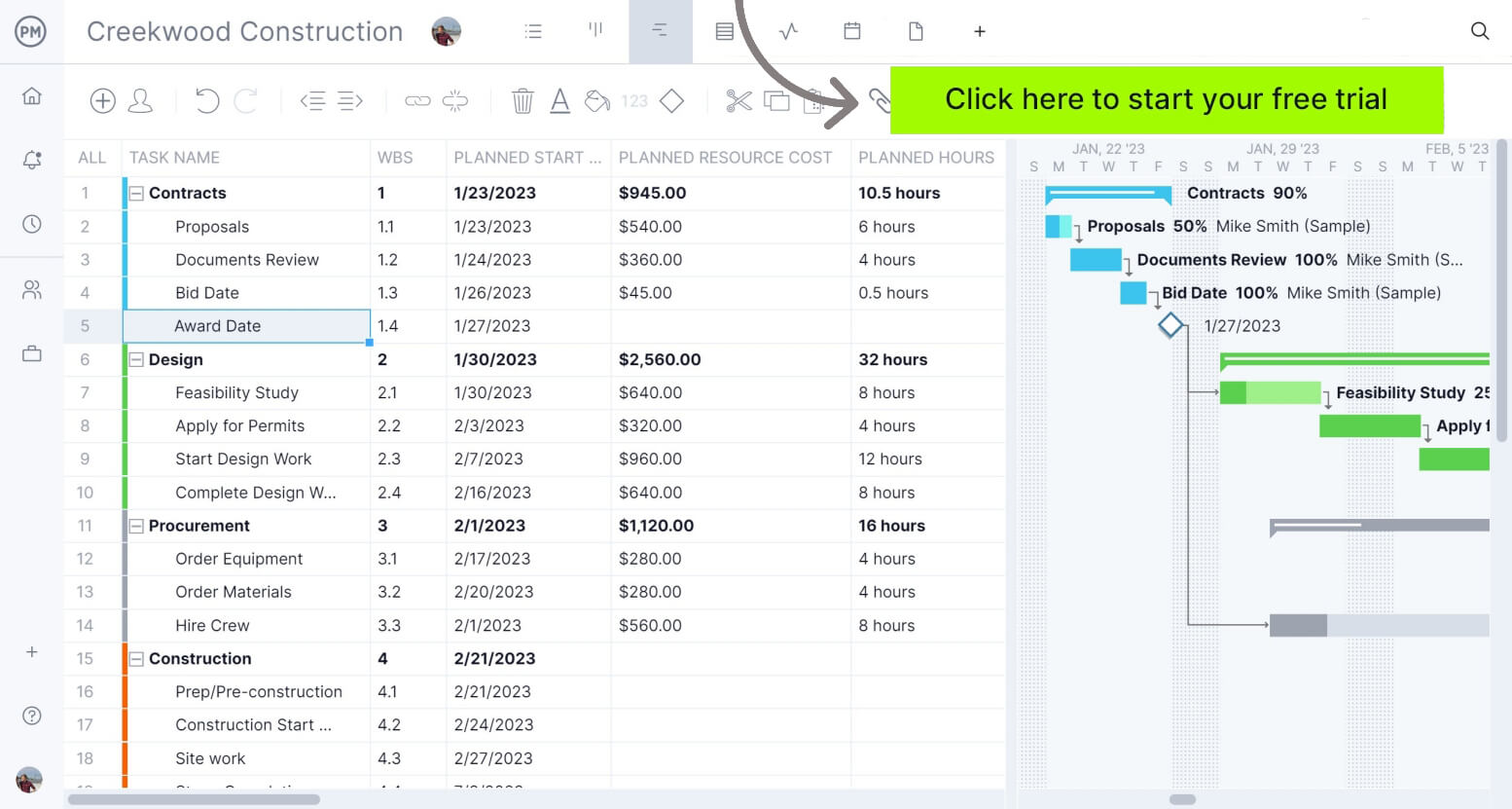
ProjectManager can turn static documents into a living, trackable system. From planning site activities, coordinating crews, controlling costs and managing risks, everyone is aligned in real time. The Gantt chart breaks projects into site-specific tasks where you can define task dependencies and critical paths. With built-in resource management, you can also assign crews, equipment and materials to tasks and ensure workloads are balanced. Get started by taking a free 30-day trial.
What Is the Purpose of a Construction Site Management Plan?
Without a unifying plan, daily site decisions become fragmented and reactive. The purpose of a construction site management plan is to integrate the many operational, project management, safety and environmental considerations that shape on-site work. It provides a single reference for coordinating movement, protecting workers, managing waste, controlling access and responding to incidents. By aligning these activities, the plan helps maintain efficiency, reduce risk and ensure the site functions safely and consistently each day under complex, changing construction conditions and regulatory requirements.
Who Makes the Construction Site Management Plan?
Creating a construction site management plan is a collaborative effort that unites strategic oversight and on-the-ground expertise. Each contributor shapes a different part of the plan, ensuring it reflects real site conditions, regulatory requirements and practical execution constraints.
- Main contractor or general contractor: Leads the development process by coordinating inputs, defining site-wide procedures and ensuring all subsidiary plans align with contract requirements, construction methods, sequencing and overall project objectives.
- Project manager: Integrates scheduling, budgeting, project scope and resource considerations into the plan, balancing operational feasibility with client expectations while ensuring the document supports efficient daily decision-making and change management.
- Health and safety manager: Contributes safety protocols, risk controls and emergency procedures, ensuring site operations comply with regulations and protect workers, visitors and the public throughout all construction phases.
- Site manager or superintendent: Provides practical, field-level input on layout, access, deliveries and workflows, translating planning assumptions into workable site arrangements that reflect actual conditions and constraints in the construction site plan.
- Environmental or compliance specialists: Define controls related to waste, noise, dust and environmental protection, ensuring the plan addresses regulatory obligations and minimizes environmental impact during construction activities.
- Design or engineering representatives: Advise on technical constraints, sequencing requirements and design intent, ensuring site management procedures support constructability, specification compliance and safe installation of permanent works.
- Logistics or procurement coordinators: Contribute delivery planning, supplier coordination and material flow strategies, helping align site access, storage capacity and scheduling with procurement timelines and constraints.
- Client or owner representatives: Review and influence plan requirements related to access, reporting, security and operational expectations, ensuring the construction site management plan aligns with stakeholder priorities and contractual oversight needs.
What Should Be Included in a Construction Site Management Plan?
Now that we’ve covered the basics of a construction site management plan, let’s dive deeper into each of its components for a better understanding of its scope.
Construction Site Logistics Plan
On active job sites, space, timing and movement are constant constraints. A construction site logistics plan defines how materials, equipment and personnel flow through the site, ensuring deliveries, storage and access are coordinated to support productivity, safety and sequencing without disrupting ongoing construction activities.
- Site layout planning: Defines placement of work zones, storage areas and access routes to optimize space usage.
- Material delivery scheduling: Coordinates delivery timing to match construction sequencing and minimize congestion or double handling.
- Storage and laydown areas: Identifies designated locations for materials based on size, handling needs and protection requirements.
- Equipment movement routes: Establishes safe, efficient paths for machinery and vehicles operating within the site.
- Loading and unloading zones: Specifies controlled areas for receiving and dispatching materials without interfering with work fronts.
- Vertical transportation planning: Addresses cranes, hoists or lifts required to move materials between site levels.
- Logistics coordination procedures: Defines communication and control processes for managing deliveries, changes and conflicts.
Related: 25 Free Excel Construction Templates
Construction Site Health & Safety Plan
Protecting workers and the public requires more than signage or training. A construction site health and safety plan establishes rules, controls and responsibilities that prevent accidents, manage hazards and ensure regulatory compliance. It defines how risks are identified, mitigated and monitored so that daily activities proceed safely while supporting productivity across changing site conditions and evolving demands throughout the project lifecycle.
- Hazard identification procedures: Establish processes to recognize, document and assess site-specific risks before work begins.
- Risk mitigation measures: Define controls such as PPE, barriers and methods to reduce hazard exposure.
- Safety training requirements: Specify inductions, certifications and ongoing instruction needed for workers and subcontractors onsite.
- Incident reporting procedures: Outline how accidents, near misses and unsafe conditions are reported and investigated.
- Emergency response planning: Define actions, contacts and evacuation steps for fires, injuries or other emergencies.
- Site safety inspections: Schedule regular checks to verify compliance, identify issues and enforce corrective actions.
- Roles and responsibilities: Assign safety duties to supervisors, workers and specialists to ensure accountability consistently.
Construction Site Waste Management Plan
Construction activities generate significant waste that affects costs, safety and environmental performance. A construction site waste management plan defines how materials are reduced, reused, segregated and disposed of responsibly. It sets procedures for handling waste streams efficiently, meeting regulations and keeping the site organized while minimizing environmental impact throughout project execution across all phases and work areas on construction sites.
- Waste classification categories: Define types of waste streams to support segregation, recycling and compliant disposal.
- On-site segregation procedures: Establish methods for separating materials at source to reduce contamination and costs.
- Recycling and reuse strategies: Identify opportunities to divert materials from landfill through reuse or recycling.
- Waste storage areas: Designate locations and containers that safely store waste without disrupting site operations.
- Licensed disposal methods: Specify approved transporters and facilities to ensure lawful waste removal and documentation.
- Regulatory compliance controls: Outline monitoring and records needed to meet environmental and local waste regulations.
- Performance tracking and reporting: Track volumes, costs and recycling rates to improve waste management outcomes.
Get your free
Construction Schedule Template
Use this free Construction Schedule Template to manage your projects better.
Construction Site Traffic Management Plan
Vehicle and pedestrian movement can quickly become a safety and efficiency risk on active sites. A construction site traffic management plan defines how people, deliveries and machinery move in and around the site, reducing collisions, congestion and disruptions. It coordinates access routes, controls interfaces with public roads and maintains safe circulation as site conditions and activities change.
- Vehicle access routes: Define approved entry and exit paths to control traffic flow and reduce on-site conflicts.
- Pedestrian walkways: Establish protected routes separating workers and visitors from vehicle movement zones.
- Delivery scheduling controls: Coordinate delivery times to prevent congestion and maintain safe traffic conditions.
- Traffic signage and barriers: Use visual controls to guide drivers, pedestrians and equipment operators safely.
- Interface with public roads: Manage access points where construction traffic interacts with surrounding road networks.
- Traffic marshals or spotters: Assign trained personnel to control vehicle movements during high-risk operations.
- Monitoring and adjustments: Review traffic arrangements regularly and adapt layouts as site activities evolve.
Construction Site Environmental Management Plan
Construction work can impact air, soil, water and surrounding communities if unmanaged. A construction site environmental management plan establishes controls to minimize environmental harm while ensuring regulatory compliance. It defines how impacts such as noise, dust and runoff are monitored and mitigated, supporting responsible construction practices throughout all phases of site activity.
- Environmental risk assessment: Identify site activities that may negatively impact environmental conditions or surrounding areas.
- Dust and air control measures: Define methods to limit airborne particles and maintain acceptable air quality.
- Noise and vibration management: Establish controls to reduce disturbance to workers, neighbors and sensitive areas.
- Water and runoff controls: Manage drainage, erosion and contamination to protect surface and groundwater resources.
- Material handling procedures: Specify storage and handling rules to prevent spills and environmental contamination.
- Monitoring and inspections: Conduct regular checks to ensure environmental controls remain effective and compliant.
- Incident response procedures: Define actions for addressing spills, breaches or unexpected environmental impacts.
Related: 5 Best Construction ERP Software: Key Features to Look for
Construction Site Security Plan
Unauthorized access and theft pose safety, financial and operational risks on construction sites. A construction site security plan defines measures to protect people, materials and equipment. It establishes access controls, monitoring procedures and response protocols that safeguard assets, deter incidents and maintain controlled site conditions throughout the construction period.
- Site access controls: Define entry points, credentials and authorization procedures for workers and visitors.
- Perimeter protection measures: Use fencing, gates and barriers to secure site boundaries effectively.
- Security personnel deployment: Assign guards or patrols to monitor activity and respond to incidents.
- Surveillance systems: Implement cameras or monitoring technology to deter theft and record site activity.
- Asset protection procedures: Establish controls for securing tools, equipment and high-value materials.
- Incident reporting protocols: Define how security breaches or suspicious activity are documented and addressed.
- Emergency coordination measures: Align security responses with emergency services and site response plans.
Construction Site Emergency Response Plan
Unexpected incidents can escalate quickly without clear direction and risk management guidelines. A construction site emergency response plan establishes structured actions for handling injuries, fires, evacuations and other critical events. It ensures workers know how to respond, who to contact and where to go, reducing confusion, limiting harm and supporting rapid, coordinated responses under high-pressure conditions across active construction environments.
- Emergency risk identification: Identify potential emergency scenarios specific to site activities, location and construction methods.
- Emergency contact information: List internal contacts, emergency services and escalation paths for rapid communication.
- Evacuation procedures: Define routes, assembly points and responsibilities for safely clearing the site.
- First aid and medical response: Establish treatment procedures, trained personnel and access to medical equipment onsite.
- Fire response measures: Outline detection, suppression methods and actions to control or contain fires.
- Roles and responsibilities: Assign emergency duties to supervisors, wardens and response personnel clearly.
- Training and drills: Schedule regular exercises to ensure workers understand procedures and respond effectively.
Construction Quality Management Plan
In construction projects, quality issues often surface late, when corrections are costly and disruptive. A construction quality management plan defines how quality assurance and quality control standards are established, work is inspected and defects are prevented. It provides a systematic approach to ensuring materials, workmanship and processes meet specifications, contractual requirements and regulatory expectations throughout construction activities and project delivery.
- Quality standards and specifications: Define applicable codes, drawings and performance criteria that construction work must meet.
- Inspection and testing procedures: Establish when and how inspections or tests are performed to verify compliance.
- Quality control checkpoints: Identify critical stages where work is reviewed before proceeding further.
- Roles and responsibilities: Assign accountability for inspections, approvals and quality-related decision-making.
- Nonconformance management: Define processes for documenting, correcting and approving deviations from specifications.
- Documentation and records: Specify reports, checklists and records required to demonstrate quality compliance.
- Continuous improvement processes: Use lessons learned and corrective actions to improve quality performance over time.
Free Construction Project Management Templates
We’ve created dozens of free construction project management templates for Excel, Word and Google Sheets. Here are some that can help when creating a construction site management plan.
Construction Budget Template
Organizes projected and actual construction costs into clear categories, helping teams plan budgets, track spending, control overruns and maintain financial visibility throughout all project phases from planning through final closeout.
Construction Management Plan Template
Provides a structured framework for coordinating site operations, responsibilities and controls, ensuring construction activities are planned, managed and executed consistently while aligning safety, logistics and compliance requirements across complex projects.
Construction Safety Plan Template
Defines procedures, responsibilities and controls to protect workers and the public, manage hazards and meet regulations, creating safer construction environments and reducing incidents across all site activities and daily operations.
ProjectManager Is Ideal for Construction Project Management
To execute a construction site management plan effectively, countless construction teams rely on ProjectManager. Our award-winning software coordinates people, schedules and costs in one platform. With real-time visibility, construction teams can better understand job site organization and demand. Having access to updated data at your fingertips makes it easier to support proactive decision-making, transforming site management from reactive problem-solving into controlled, predictable execution.
Connect the Schedule, Resources and Costs in the Gantt Chart
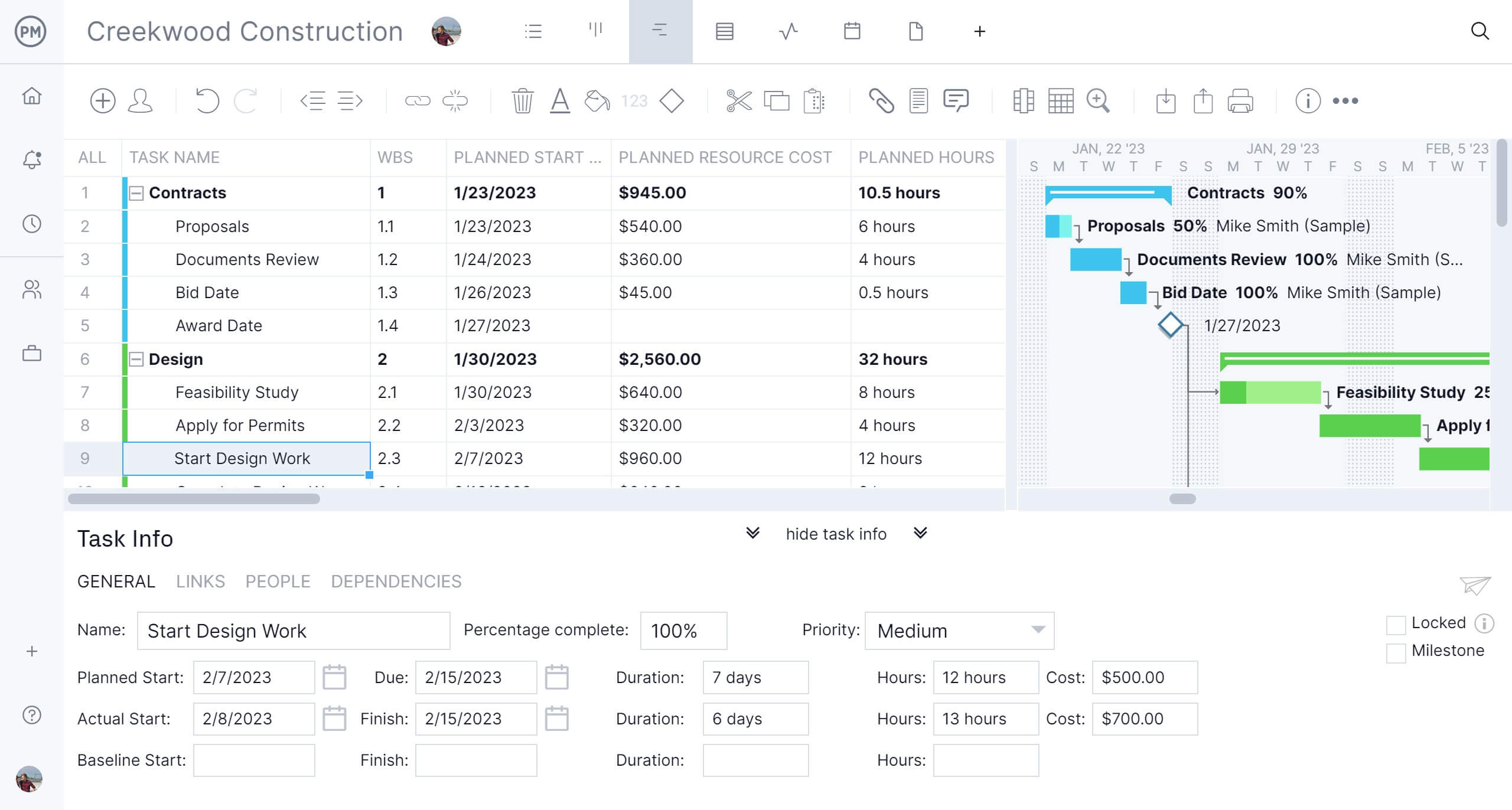
A Gantt chart lays out every construction activity on a timeline, from mobilization to closeout. Break work into clear phases and see how long each task should take. When you remove the ambiguity, it provides the entire team with a shared understanding of the plan.
Proactive Risk and Issue Management
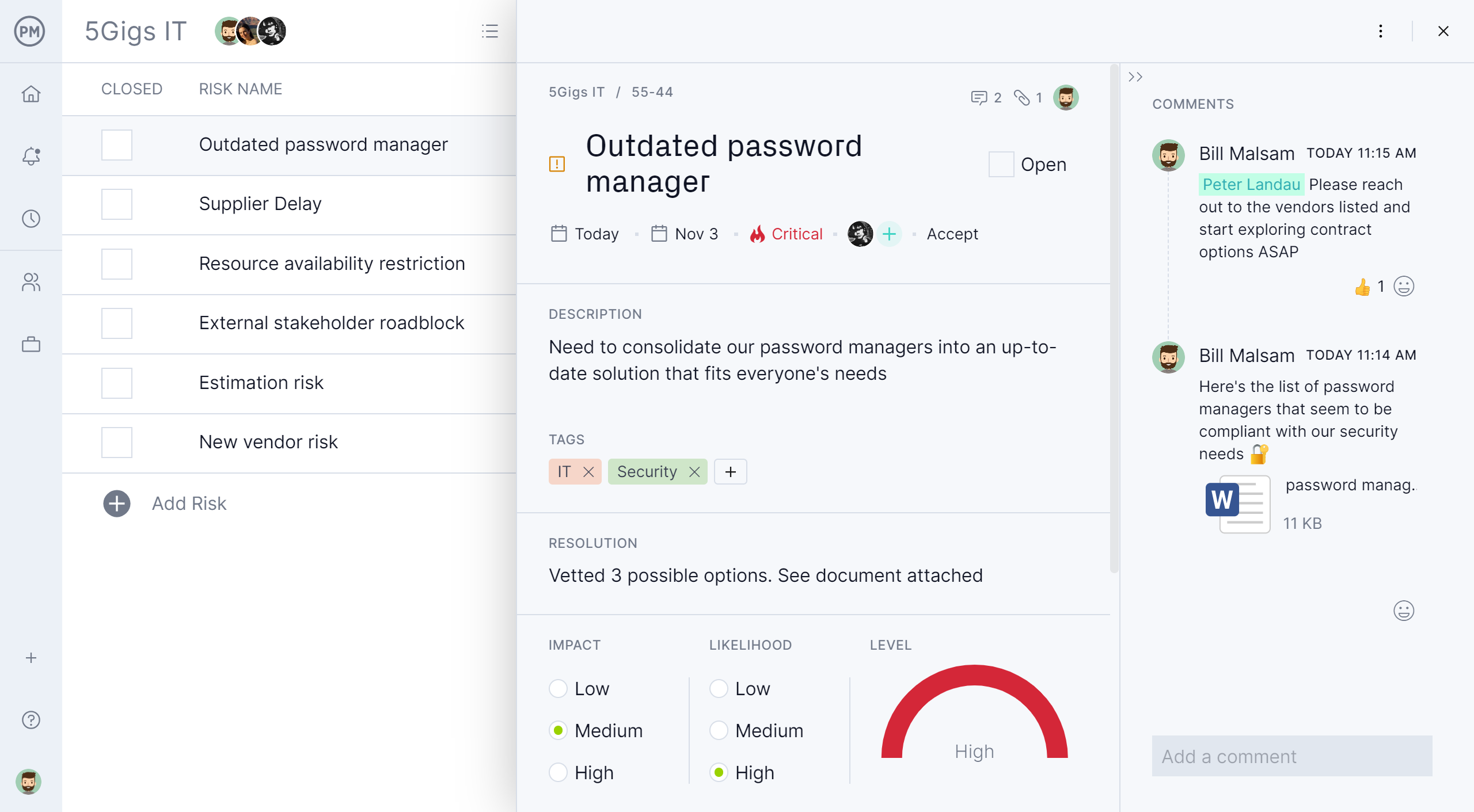
Risk and issue management is where many construction projects either stay under control or spiral into delays. ProjectManager helps provide a structured, real-time system to identify, track and respond to risks before they happen and after they occur. A built-in RAID log is the perfect place to tag team members, set a response plan and ensure everyone is aligned on how to take action.
Related Construction Project Management Content
ProjectManager is award-winning software that helps you plan, manage and track construction projects in real time. We empower teams on a collaborative platform with task and resource management features to keep everyone working together more productively. Get started with ProjectManager today for free.