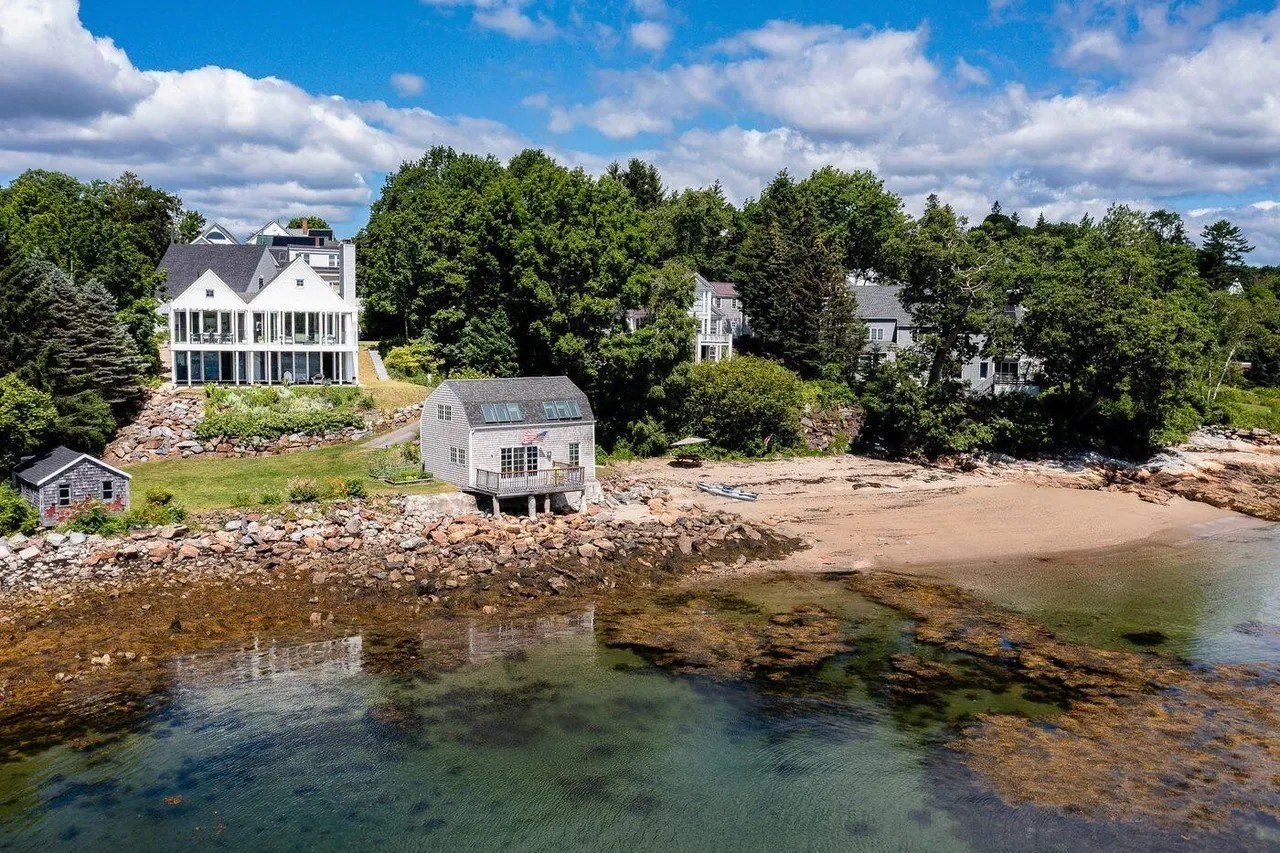
In June 1973, Vic and Marsha Steinglass moved from their Connecticut rental home to the first property they had ever purchased: one acre of waterfront land on the coast of Maine that was home to a small, ramshackle house from the 1940s and a boat repair shop overlooking the water.
They paid just $58,500 for the property—which is located in the harbor town of Rockport and was, despite its rundown appearance, destined to become a legacy for their family, one that is now on the market for $5.2 million.
At the time, the structures were in a state of dire disrepair, with Marsha recalling: “All the neighbors referred to it as ‘the outhouse on the beach.'”
But the young couple were thrilled with their new home, having sought out the property purely for its plum setting right on the water’s edge in one of the country’s most idyllic coastal towns.
“All we cared about was the location,” Marsha admits.
Having secured their dream location, they were confident that they could turn it into a dream dwelling with a little bit of elbow grease—and a lot of perseverance.
Today, the property, whimsically named “Duck Down,” features an architecturally celebrated home as well as a separate beach house—and is virtually unrecognizable from the abandoned shack that the Steinglasses purchased more than 50 years ago.


Far from being an easy fix and flip, the property that now stands at 1 Ship St. is a testament to Marsha and Vic’s resourcefulness, sacrifice, patience, wisdom, and foresight, one that they hope will serve as a lucrative source of wealth for their children and grandchildren.
The process was far from quick—and for the first few months, the couple lived inside the main structure, having done little more than a few aesthetic updates to make the dwelling livable.
Together, they painted, wallpapered, and cleaned the “rustic” abode, which they heated mostly by burning wood in the fireplace, while groceries were transported down the street on a sled when it snowed.
By the time their second son was born in 1979, they had begun the herculean project of turning the boat workshop overlooking the water into a three bedroom house that would be a better fit for their growing family. Vic and Marsha did almost all the work themselves, with a little input from a local architect.
However Vic, who is a veterinarian by trade, could only spend his limited spare time on the project, leaving Marsha to handle the day-to-day running of the renovation, while also caring for the kids.
“Each day when he returned from our veterinary hospital, he expected to see the entire building collapsed into a pile of lumber and glass,” Marsha says with a laugh.
The Steinglass boys were mostly raised in that renovated repair shop, which the couple did manage to turn into a picturesque waterfront family home, despite Vic’s humorous concerns about the structural integrity of the dwelling.
Meanwhile, the family began work on converting the original “outhouse on the beach” into a two-bedroom rental, and the property began to produce income for them.
When it came time for the sons to leave the nest, the property provided again: They sold the small portion of land where the rental house was located, and retained “the important parts of the property, like the beachfront,” says Marsha.


The profits from that land sale enabled them to put their sons through college, while also improving their own financial circumstances significantly.
By 2008, the Steinglasses were ready to realize their true dream for the property. Marsha had long been an admirer of the work of Hugh Newell Jacobsen, the architect noted for designing Jacqueline Kennedy Onassis‘ home in Martha’s Vineyard.
But it was Jacobsen’s design for a “Life Dream House,” which was featured in Life Magazine, that really piqued her interest—particularly because he noted that the structure could, theoretically, be built by any average American family.
Marsha had written to the architect when she first saw the article—and the two stayed in touch, so by the time she was in her 60s and had the means to build her own “dream” home, she reached out to Jacobsen to bring that vision to life.
Jacobson agreed to design the house they’d always longed for, set back from and above the beach house.
Completed in 2008, the simple, yet elegant, two-bedroom, 2.5-bathroom home with unobstructed views of the harbor has since been hailed as a near-perfect example of architectural excellence, featured in several leading design publications, including Architectural Digest and “American Modern Home,” a Rizzoli book penned by Jacobsen that featured Marsha and Vic’s dwelling on the cover.
Now, that property is on the market for the first time in its history, a decision that Marsha says came from the couple’s realization that they need to downsize—coupled with their desire to create true generational wealth for their children.


The decision to sell was also motivated, at least in part, by the soaring property taxes in Rockport, which Marsha admits are “devouring” their retirement savings, pushing them to cash out and reap what rewards they can before that nest egg dwindles.
While the listing does not include the fascinating tale behind the home’s creation, it does call attention to the architecural significance of the property, hailing it as a “premier waterfront residence with breathtaking views of the harbor, offering an impressive southeast panorama to Indian Island Lighthouse and beyond to Penobscot Bay and its islands.”
The home, which is known for its clean lines and a light-filled interior, features an open main floor plan with floor-to-ceiling windows and doors that flood the living spaces with sunlight.
The two bedrooms are conveniently located on the ground floor, and both have en-suite baths and walk-out patios overlooking the water.
A towering, vaulted ceiling soars over the great room, which opens to a light and bright dining area and a kitchen with a central island.
Wood and tile floors help keep the home crisp and clean, two fireplaces make it cozy and warm, and built-in bookcases that serve as design features add an air of simple sophistication.
In addition, there’s a pristine, three-bay garage with workshop space and a large, flexible second floor above.
The charming and cozy waterfront Beach House, originally the boat-repair shop, is also part of the deal. It now functions as a year-round home with an open main floor with a Pullman kitchen, a balcony with views of the harbor, plus two bedrooms and a bath on the second floor.
All of this is set in a glorious, naturally landscaped environment surrounded by terraced gardens, elegant stonework, and a private sandy beach unlike any other property on the harbor.