


When work starts moving fast and multiple teams are involved, mistakes can quietly slip through the cracks. A quality control plan gives structure to inspections, testing and approvals so deliverables meet expectations without constant rework or costly delays.
What Is a Quality Control Plan?
A quality control plan is a structured document that outlines the inspections, tests and acceptance criteria used to verify that project deliverables meet defined quality standards. It specifies what will be checked, how it will be measured, who is responsible and when control activities must occur during execution.
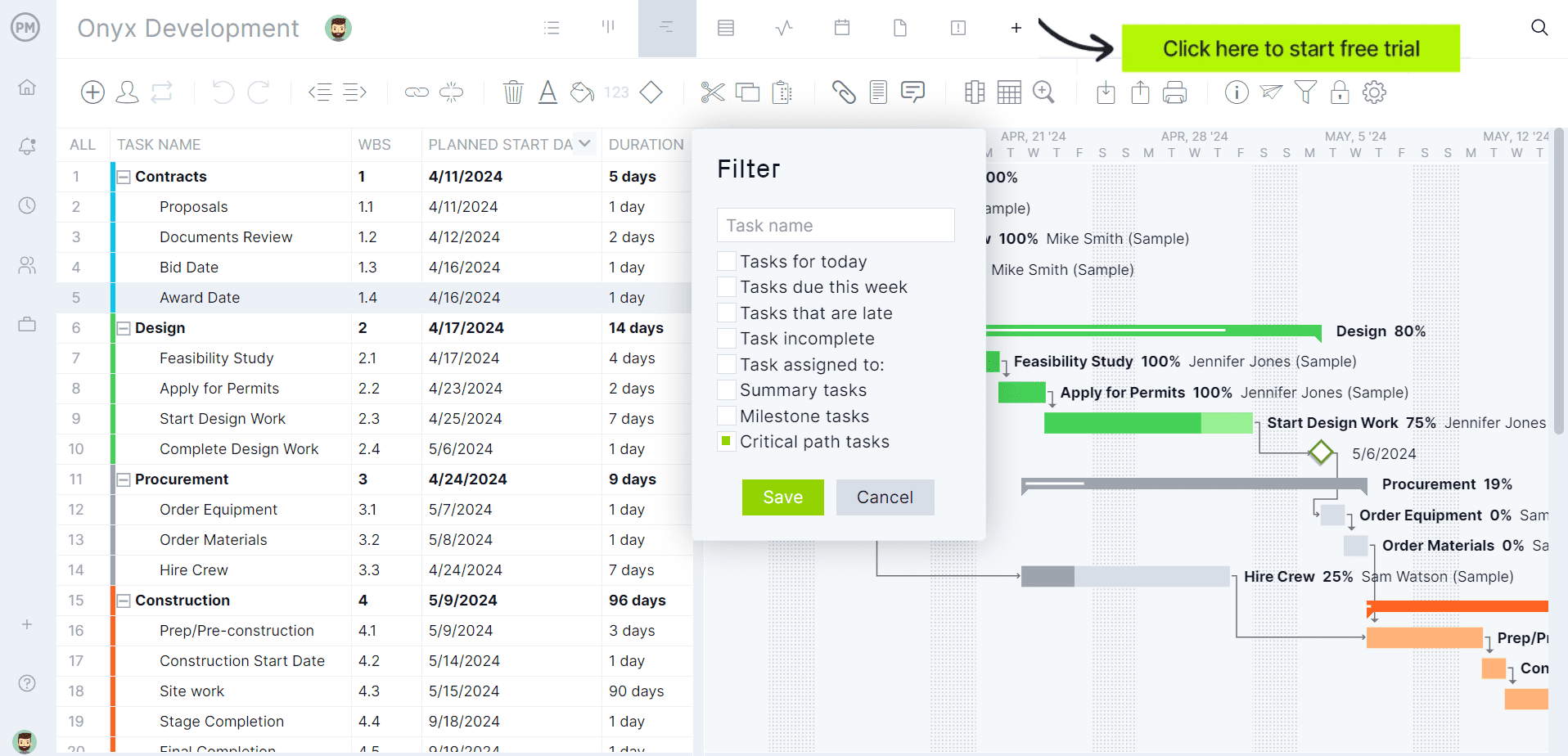
ProjectManager is award-winning project management software that gives organizations across industries the tools needed to ensure projects are completed on time, within budget and within scope. It allows project managers to create detailed project schedules, estimate costs, allocate resources, set budgets, track progress and compare estimated versus actual project outcomes using real-time dashboards and reports to quickly identify delays or cost overruns. Get started with ProjectManager for free today.
What Is the Purpose of a Quality Control Plan?
On active construction sites or shop floors, a quality control plan keeps execution disciplined by defining exactly how work will be inspected, tested and approved. Its main purpose is to ensure outputs meet requirements consistently while reducing rework, delays and disputes caused by unclear expectations.
- It establishes clear inspection checkpoints across the project timeline so issues are identified early before they escalate into costly delays or major defects.
- By defining acceptance criteria in advance, it removes ambiguity and helps teams understand exactly what “done right” looks like for each deliverable.
- It creates accountability by assigning responsibility for inspections, tests and approvals, ensuring nothing falls through the cracks during execution.
- It supports compliance with contractual requirements, industry standards and regulations by documenting how quality will be verified and controlled.
- It provides a record of inspections and test results, which helps resolve disputes and demonstrates that work met agreed quality expectations.
Who Needs a Quality Control Plan
Across industries where deliverables must meet defined standards, a quality control plan is used by teams that need consistent inspections, reliable outputs and documented verification processes to ensure work meets expectations.
- Construction project management teams rely on a quality control plan to manage site inspections, verify workmanship and ensure materials and installations meet project specifications and building codes.
- Manufacturing companies use a quality control plan to monitor production processes, perform product testing and maintain consistency across batches while reducing defects and waste.
- Engineering firms apply a quality control plan to validate technical outputs, confirm design compliance and ensure calculations, drawings and deliverables meet required standards.
- Pharmaceutical and healthcare organizations depend on a quality control plan to enforce strict testing protocols, ensure product safety and comply with regulatory requirements.
- Food and beverage producers implement a quality control plan to maintain hygiene standards, monitor production quality and ensure products meet safety and labeling regulations.
- Software and IT teams use a quality control plan to structure testing processes, identify defects and ensure applications meet performance, security and user requirements.
When to Make a Quality Control Plan
Before project execution begins, teams usually develop a quality control plan during project planning to define inspections, tests and acceptance criteria. As work progresses, it becomes a living document used to guide quality checks, adapt to changes, track results and ensure consistent compliance with requirements across the entire project lifecycle.
Get your free
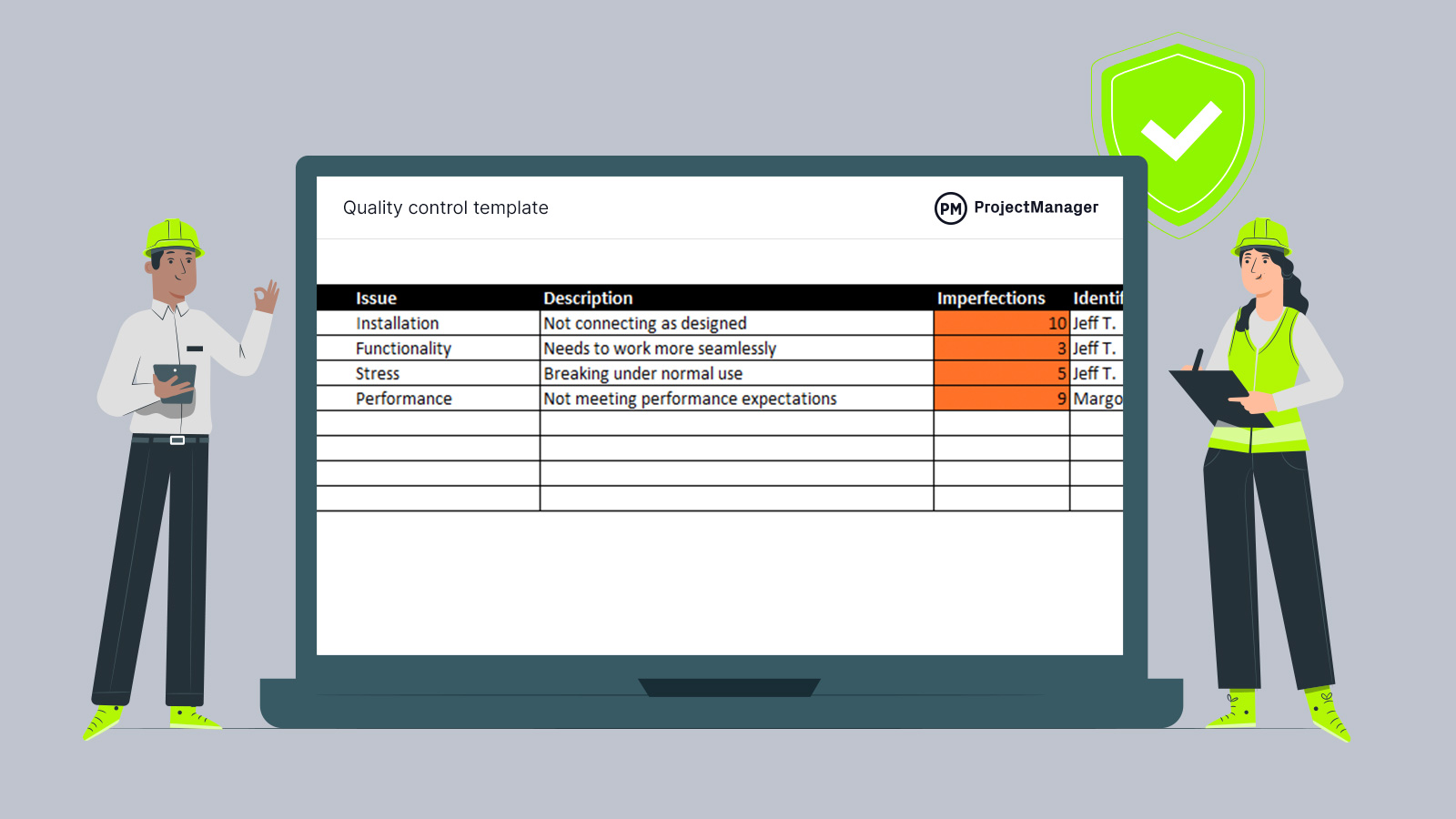
Quality Control Template
Use this free Quality Control Template for Excel to manage your projects better.
What Should Be Included in a Quality Control Plan?
Putting together a quality control plan isn’t about filling out a template—it’s about making sure every inspection, test and approval step is clearly defined before work begins. A thorough quality control plan document should cover how quality will be verified from start to finish, who is responsible and what standards must be met at each stage.
Quality Objectives and Standards
At the foundation, teams need to define what “acceptable quality” actually means. This section outlines the project requirements, specifications, codes and industry standards that deliverables must meet so there’s no confusion later.
Scope of Work and Deliverables
Clarity around what is being produced helps determine what needs to be inspected. This section lists key deliverables and work packages so quality control activities can be aligned with actual outputs, not assumptions.
Inspection and Test Plan (ITP)
The inspection and test plan is the core of the quality control plan. It details what inspections and tests will occur, when they happen in the project timeline and what methods will be used to verify quality at each checkpoint.
Acceptance Criteria
Rather than relying on subjective judgment, teams define measurable criteria for each deliverable. These benchmarks make it clear when work passes or fails, reducing disputes and rework.
Roles and Responsibilities
Quality doesn’t manage itself. This section assigns responsibility for inspections, approvals and documentation so everyone knows exactly who is accountable at each stage of execution.
Inspection Schedule and Checkpoints
Timing matters just as much as the inspection itself. By mapping quality checks to the project timeline, teams can catch issues early instead of discovering problems after work is completed.
Documentation and Reporting Procedures
Every inspection and test needs a record. This section defines how results are documented, stored and reported, creating a traceable history of quality performance throughout the project.
Non-Conformance and Defect Management
Not everything goes according to plan. When defects are identified, this section explains how issues are logged, investigated, corrected and verified to prevent them from recurring.
Tools, Equipment and Testing Methods
Reliable results depend on the right tools. This section lists the equipment, instruments and testing methods used to perform inspections and ensure accurate measurements.
Compliance and Regulatory Requirements
Many industries require strict adherence to regulations. This section ensures the quality control plan aligns with legal requirements, contractual obligations and relevant compliance standards.
Continuous Improvement and Feedback Loop
Over time, patterns start to emerge. By reviewing inspection data and defect trends, teams can refine processes, improve workflows and strengthen quality performance across future projects.
Quality Control Plan Example
The best way to understand how a quality control plan truly works is to take a look at a real-life quality control plan example.
Picture a construction firm launching a 200-unit apartment complex with structured parking, a gym and a pool, coordinating multiple trades under tight deadlines where inspections, approvals and rework must be tightly controlled to keep progress steady.
Quality standards and specifications
| Element | Description | Example |
| Applicable standards | Codes, regulations and project specifications that define acceptable quality | IBC codes, local building regulations, architectural drawings |
| Client requirements | Specific expectations defined in contracts and design documents | Finish quality, material brands, structural tolerances |
Scope of work and deliverables
| Deliverable | Description | Inspection Focus |
| Foundation | Concrete slab and structural base | Rebar placement, concrete strength tests |
| Framing | Structural framework of the building | Alignment, load-bearing compliance |
| MEP systems | Mechanical, electrical and plumbing installations | System functionality and code compliance |
Inspection and test plan (ITP)
| Activity | Inspection method | Timing |
| Concrete pouring | Slump test, cylinder testing | Before and after pour |
| Electrical wiring | Visual inspection and load testing | Before drywall installation |
| Plumbing systems | Pressure testing | Before system closure |
Acceptance criteria
| Item | Criteria | Pass condition |
| Concrete strength | Minimum PSI requirement | Meets or exceeds specified PSI |
| Electrical systems | Code compliance | Passes inspection with no violations |
Roles and responsibilities
| Role | Responsibility | Accountability |
| Project manager | Oversees quality processes | Ensures compliance with plan |
| QC inspector | Performs inspections and tests | Reports defects and verifies fixes |
Inspection schedule and checkpoints
| Phase | Checkpoint | Timing |
| Foundation | Rebar inspection | Before concrete pour |
| Framing | Structural alignment | After framing completion |
Quality Control Template
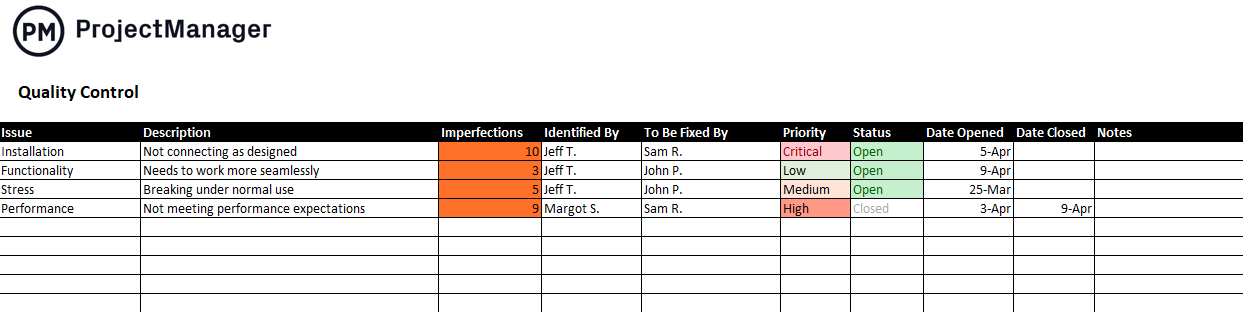
Our free quality control template is a customizable Excel tool that helps teams track defects, assign responsibility and manage resolution. It includes fields for issues, descriptions, severity levels, ownership, priority, status tracking, dates and notes to support structured quality control workflows.
ProjectManager Is an Award-Winning Project Management Software
ProjectManager is award-winning project management software designed to support projects from start to finish. It includes powerful features such as Gantt charts, timesheets, workload management charts and real-time dashboards and reports. The platform also offers unlimited cloud-based document storage and AI-driven insights to help teams ensure nothing falls through the cracks. Watch the video below to see how it works.
Related Quality Management Content
If you need a tool to help you manage projects from start to finish, then signup for our software now at ProjectManager. Our online software can help project managers plan, track and oversee projects as they unfold. Sign up for a free 30-day trial today!