One thing to start: Insurers are turning to private capital firms and hedge funds to cover billions of dollars’ worth of potential damages to data centres, as they struggle to offer sufficient coverage for sprawling AI investments.
And another: OpenAI has struck a deal to acquire TBPN, a technology-focused talk show popular in Silicon Valley, making an unexpected move into broadcasting after pledging to abandon “side quests” and focus on its core business.
Welcome to Due Diligence, your briefing on dealmaking, private equity and corporate finance. This article is an on-site version of the newsletter. Premium subscribers can sign up here to get the newsletter delivered every Tuesday to Friday. Standard subscribers can upgrade to Premium here, or explore all FT newsletters. Get in touch with us anytime: [email protected]
In today’s newsletter:
-
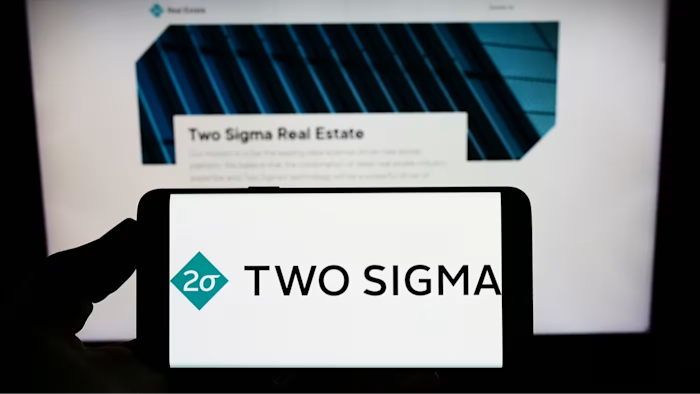
Two Sigma’s endless feud
-
How Peltz took on Unilever
-
The Blue Owl exodus marches on
Who’s in charge at Two Sigma?
Running a successful hedge fund is in itself an uphill battle: you have to contend with volatile markets, complex risk controls, expensive technological systems and demanding investors.
Yet the quant giant Two Sigma for years has been grappling with a problem of its own making. And this week, a new regulatory filing revealed that the quagmire has only deepened.
The hedge fund’s two founders John Overdeck and David Siegel have clashed for years, with the fighting becoming so extreme that the firm had to disclose it a few years ago as a “material risk”.
Yet in 2024, it appeared the founders had finally landed on a solution.
They each appointed a new co-chief executive to replace them, with both of those successors also sitting on the two-person management committee.
Sure, Overdeck and Siegel would stay on as co-chairs, but at least there would be fresh blood in charge of day-to-day operations.
Now it appears that fix was only a temporary bandage on what is really a flesh wound.
One of the new co-CEOs, ex-Lazard general counsel Scott Hoffman, quietly stepped down last month citing “ongoing governance challenges”.
But the problems by no means stop there. Already, Hoffman’s anointed replacement, Seth Platt, is trying to fire the other co-CEO, Carter Lyons.
Platt until very recently worked for Siegel’s family office, Shinrai Management, and even one of his new roles is under dispute. Siegel named him a member of the management committee but also as co-CEO, with the latter position contested.
Our friends at Alphaville described it as a “tragicomic battle”. As for the employees: “They must feel like children whose divorced parents are using custody as a way to continue their conflict,” writes Robin Wigglesworth.
Two Sigma has been able to keep up returns even through all the psycho-drama among the firm’s management.
But that doesn’t mean there aren’t material problems.
In the regulatory filing, the hedge fund disclosed the committee members have still not been able to agree on organisational structure, responsibilities for top executives and succession plans — essentially all of the same warnings the firm initially made in 2023.
Two Sigma warned that those impasses could affect the hedge fund’s ability to retain employees.
The ‘unbelievably pushy’ activist who finally broke up Unilever
Nelson Peltz has struck again.
The activist investor’s fingerprints are all over Unilever’s decision to break off its food business into a combined $66bn entity with US spice maker McCormick.
Peltz, whose investment fund Trian owns about 1 per cent of Unilever shares, had been gunning for a split for years and was “unbelievably pushy” in his efforts, one person familiar with the boardroom dynamics told the FT.
He also had the wisdom of experience.
The activist spurred burger chain Wendy’s to sell coffee chain Tim Hortons in 2006. The following year he lobbied Cadbury to sell off its drinks business and then in 2011 successfully pushed Kraft, which had acquired Cadbury, to spin off its international snacks business.
Peltz has “a piratical charm and a velvet glove”, former Cadbury chair Roger Carr previously told the FT. “But don’t mistake the iron fist.”
The activist brought his method to Unilever, which had in recent years sliced off parts of its business, including spreads, tea and ice cream.
But its previous chief executive, Hein Schumacher, was resistant to a full separation of food.
The dynamics shifted in 2023 when Ian Meakins was appointed chair, giving Peltz an ally in his efforts. Then, the board dismissed Schumacher in February last year.
Meakins appointed CEO Fernando Fernandez, who was a willing collaborator in the mission to sell off the food business.
Peltz has pulled off his feat — but other investors aren’t necessarily pleased. Even though a sale was expected, Unilever’s shares on Tuesday dropped 7 per cent after the announcement.
Peltz’s bet is that the slimmed-down beauty and personal care company will be able to grow faster and expand in higher-margin categories. But the mixed reaction to the deal raises the question of when investors can expect Unilever to become an exciting company again.
A new wave of fear grips private credit
In the middle of the trading day on Wednesday, Blue Owl shares took an unexpected leg lower. It was less than 24 hours after a deadline for investors in two of its private credit funds to decide whether to redeem.
Traders and private credit executives were girding for big numbers: they expected more than a third of investors to pull out of a tech-focused lending fund and at least 14 per cent to try to redeem from its marquee $20bn direct-lending fund.
The numbers Blue Owl reported on Thursday exceeded even those feared levels.
The newcomer to the private investment industry said nearly 22 per cent of investors had tried to redeem from its $20bn direct-lending fund. The tech-lending fund was hit with redemption requests above 40 per cent, caught up in AI’s wake.
In all, investors tried to redeem $5.4bn. Blue Owl, like its larger rivals, limited withdrawals to 5 per cent at both funds.
The exodus cuts to the broader concerns over the private credit sector, including the valuations of loans that rarely or never trade, as well as fears that the companies the industry financed may be running into strains. Exhibit A: the fact private equity firms have been struggling to offload an ageing portfolio.
Blue Owl shares fell more than 7 per cent in trading in New York on Thursday before recovering, ending the day 1.6 per cent lower.
Other large firms such as KKR, Ares and Apollo have also recently capped redemptions at credit funds amid an uptick in requests. In the first quarter, investors have attempted to pull roughly $19bn from direct lending funds.
Still, Blue Owl, which has grown rapidly to manage more than $300bn since its founding five years ago, is facing a bigger investor retreat than its largest rivals.
The cracks emerging in what was for years the hottest area on Wall Street now have Washington on alert. On Wednesday the US Treasury announced it would seek to meet with insurance regulators to understand the risks stemming from private credit.
Blue Owl’s co-president Craig Packer said he believed the uptick in redemptions reflected a “period of heightened negative sentiment toward the asset class”, adding that “underlying credit fundamentals across our portfolio have remained resilient”.
Even so, investors attempting to pull $5.4bn will be tough to construe as anything other than bad news.
Job moves
-
Former Federal Trade Commission chair Lina Khan will lead a new Center for Law and the Economy at Columbia University along with law professor Lev Menand.
-
Latham & Watkins has hired John McGaraghan as a data and technology transactions partner in the Bay Area. He joins from Wilson Sonsini Goodrich.
-
Partners Group has appointed Pete Zippelius as co-head of private equity health and life. He joins from Leonard Green & Partners.
-
CVC DIF has hired Enrico Del Prete as co-head of its value-add strategy in London. He joins from I Squared Capital.
-
City veteran Sir Ian Cheshire is the frontrunner to be the new chair of UK media and internet watchdog Ofcom, according to people familiar with the process.
Smart reads
Trading chaos The disruption wrought by the Iran war created ripe conditions for hugely profitable trades. But the world’s biggest energy traders struggled to exploit the opportunity in the early days of the conflict, the FT reports.
Out of style Major US brands such as Nike are floundering in China, the WSJ reports, a disappointment for companies that not-too-long ago were betting the country would be a growth area. Instead, Chinese consumers increasingly prefer domestic brands to American styles.
Revisionist history You might think Paris is the progenitor of all high fashion, but you’d be wrong. Many of the top designers today trace their heritage to a select group of Antwerp fashion pioneers, The New York Times writes.
News round-up
AA attracts interest from EQT as it prepares for £5bn sale (FT)
Investment trusts call for UK rule change to frustrate activist investors (FT)
Trump administration announces new tariffs on pharmaceuticals (FT)
Air France-KLM and Lufthansa battle for stake in Portugal’s flagship airline (FT)
Poolside hunts data centre partners after CoreWeave deal falls through (FT)
SpaceX targets more than $2tn valuation in IPO (Bloomberg)
Due Diligence is written by Arash Massoudi, Ivan Levingston, Ortenca Aliaj, Alexandra Heal and Robert Smith in London, James Fontanella-Khan, Sujeet Indap, Eric Platt, Antoine Gara, Amelia Pollard, Kaye Wiggins, Oliver Barnes, Tabby Kinder and Julia Rock in New York, George Hammond in San Francisco and Arjun Neil Alim in Hong Kong. Please send feedback to [email protected]