

Would-be homebuyers are seeing more homes to choose from, as the number of active homes on the market spiked across the country in December.
All four major U.S. regions saw increases, with the West and South still leading the way, even as growth in those regions has cooled since summer.
Inventory rose 14.4% in the West, 12.3% in the South, 11.1% in the Midwest, and 7.5% in the Northeast in the last 12 months, according to the Realtor.com® December 2025 Monthly Housing Trends report.
At the metro level, 48 of the 50 largest markets posted year-over-year inventory growth.
The sharpest increases were seen in Washington, DC, up 32.8%; Charlotte, NC, up 30.8%; Las Vegas, up 29.2%; Seattle, up 28.8%; and Raleigh, NC, up 26.7%.
Joel Berner, senior economist at Realtor.com®, says this is due to a slowing pace of sales. “Homes are spending longer on the market, so they’re building up in some of these areas. And then in some of these markets, new inventory is actually coming on at a higher pace than it was in 2024.”
According to Berner, a growing number of homeowners are putting their homes on the market, suggesting the “lock-in effect”—where low-rate mortgages keep people from moving—is beginning to weaken.
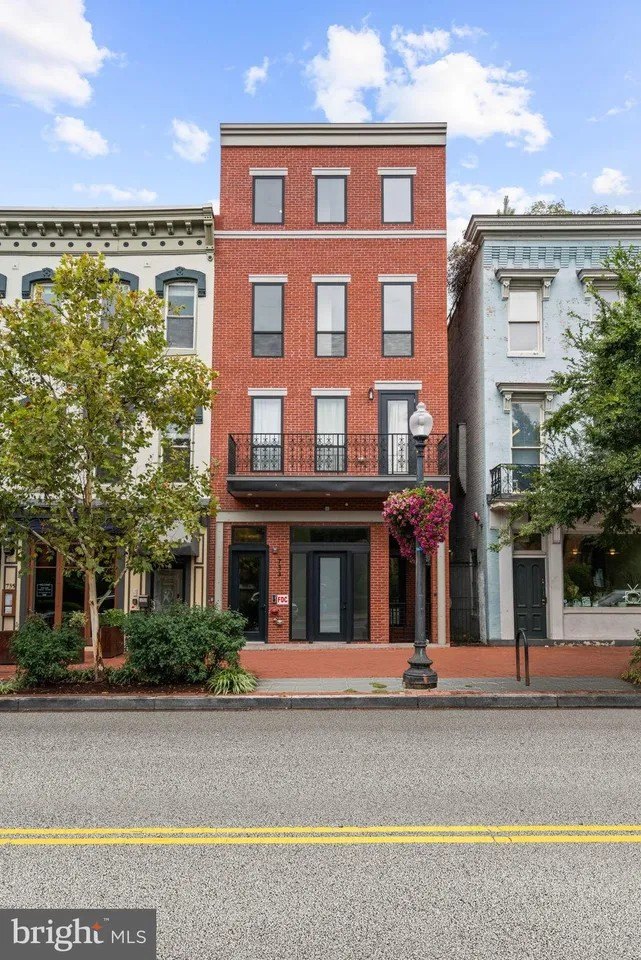
Washington, DC, is seeing a surge of homes for sale
Washington, DC, agent Scott MacDonald, president of Re/Max Gateway in Fairfax, VA, tells Realtor.com, “Our inventory levels were extremely low last year, so we had to increase to support our demand from homebuyers.”
Berner says, “DC is just experiencing a slowdown generally, and that’s what’s making homes pile up on the market more.”
“Some uncertainty among people who are employed by the federal government might be leading them to look to move,” Berner adds.
This flood of homes on the market “means sellers need to be more cognizant of condition and price to get their home sold, and that buyers can be a little bit more discerning and take their time when selecting their next home,” says MacDonald. “It is nowhere near a buyer’s market, but the good news is that buyers can get contingencies in their contracts again, which is good in my opinion.”

Other metros in the top five
A range of factors is driving inventory growth in the other metros in the top five, according to real estate professionals.
“Inventory in the Charlotte metro has grown due to a combination of increased new construction completions and more resale sellers coming to market after delaying moves during periods of rate ups and downs,” Brooke A. Sines, Charlotte real estate agent with Re/Max Grand Allure Home Group, tells Realtor.com.
“Many builders are delivering homes that were started when demand was stronger, while more homeowners are choosing to list as life changes take priority over lingering rate concerns.”
“Inventory is up because the market is normalizing after years of extremely low supply,” Robert Little, Las Vegas real estate agent with Re/Max Advantage, tells Realtor.com. “More homeowners are comfortable listing, and buyers have adjusted to interest rates. The key point is that this is healthy inventory, not distress.”
Little says rising inventory is a good thing for homebuyers.
“Buyers finally have options again,” he adds. “More inventory means less pressure, more choice, and better negotiating power.”

Seattle real estate agent Jessie Culbert Boucher of Compass, says that there’s more inventory there because sellers are finally getting off the bench.
“I think that sellers see a bit more opportunity to get what they need since rates are a bit lower than they were the year prior,” Boucher says. “People are getting more comfortable with seeing 6s and they’re feeling like that’s the new normal.”
Despite the increased inventory, Boucher says there is still pent-up demand in the Seattle market. “There is inventory, but it’s not what people are looking for and it’s not always the most desirable,” she says. “They want to see that iconic Seattle Craftsman in many cases, and we don’t see as much of that as we need.”
New construction is the dominant force behind Raleigh’s rising inventory, Berner says.
“There’s a lot of new inventory coming onto the market, just in homes coming into existence,” he says. “There’s more competition for sellers because you’re not only competing against your neighbor, you’re competing against builders in these new communities, too.”