


Construction schedules can look perfect on paper and still fall apart the moment crews hit the field. Workface planning helps close that gap by making sure the next chunk of work is truly ready before anyone shows up to the construction site. If you’re tired of construction delays and having to deal with construction scheduling issues, keep reading.
What Is Workface Planning In Construction?
Workface planning is a construction planning method that breaks the project scope into small, executable work packages and ensures each package is thoroughly planned and ready to be executed before crews start. It coordinates labor, materials, tools, drawings, permits, access and safety controls so field teams can complete tasks without waiting, rework or interruptions, improving productivity and schedule reliability.
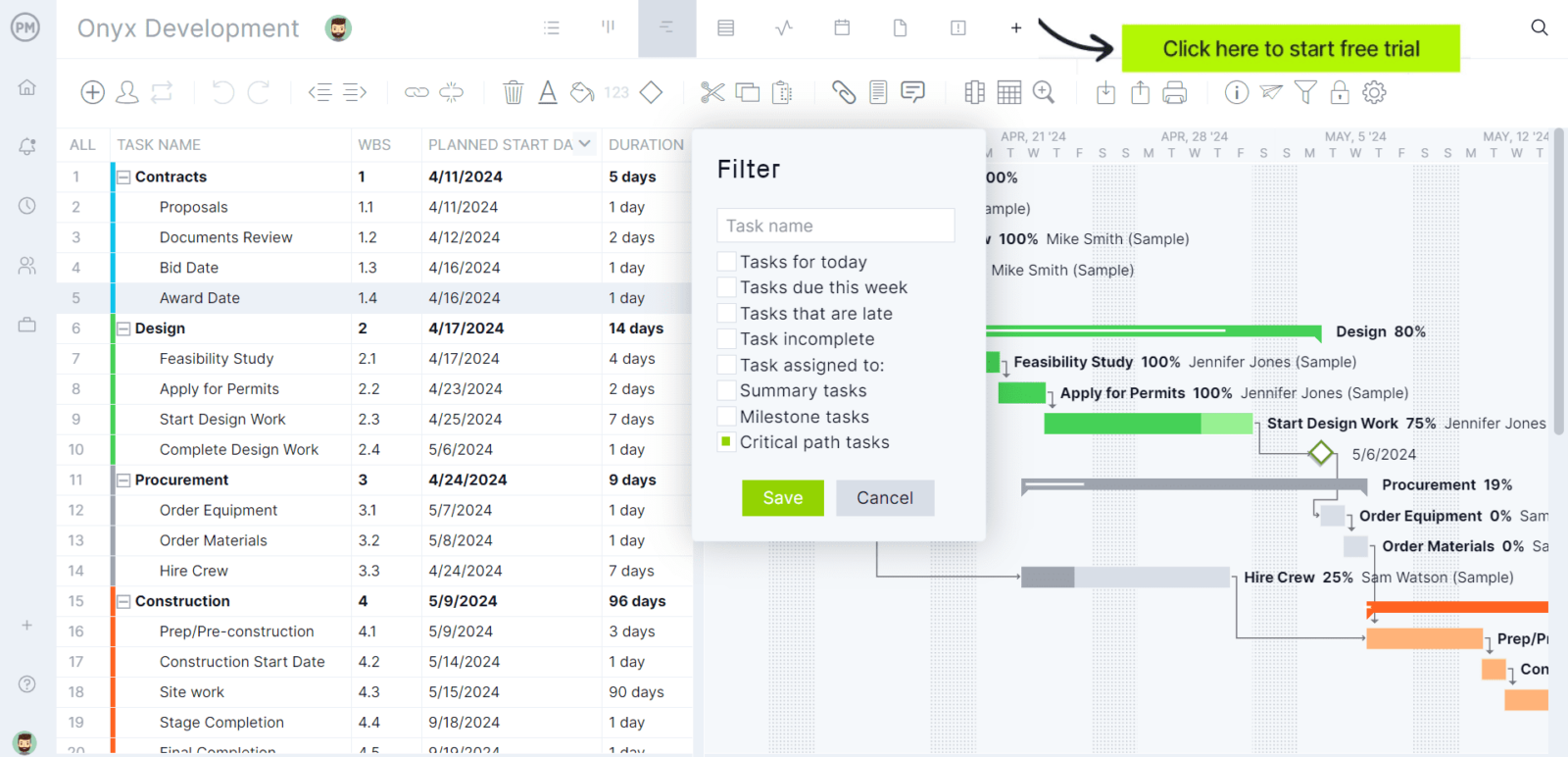
ProjectManager is an award-winning construction scheduling software designed for making detailed master construction schedules and lookahead schedules thanks to its powerful project planning, scheduling and monitoring features. With ProjectManager’s Gantt chart you can visualize task dependencies, identify critical path activities, allocate resources, track costs and compare estimates vs. actual project performance. Get started today for free.
When Should Workface Planning Be Done?
Workface planning should begin once the project has an approved schedule baseline and enough design information to define repeatable work packages, then continue throughout execution as conditions change in the construction site.
Practically speaking, teams start by building packages during preconstruction and early mobilization, then run a rolling construction lookahead schedule: each week they confirm constraints and readiness for the next 2–6 weeks of work. A common rhythm is locking the next two weeks of work packages in the weekly planning meeting, verifying materials, approvals and access, then issuing them to crews before the workweek starts.
What Is the Purpose of Workface Planning?
The core purpose of workface planning is to ensure construction crews can execute assigned tasks without delays, interruptions or missing information. It aligns field operations with the master construction schedule intent so labor hours are spent building, and there’s no idle time waiting for materials, clarifications, access or approvals.
- One objective is to eliminate productivity loss caused by incomplete architectural drawings, late material deliveries or unavailable equipment by verifying constraints before work is released to the field.
- Another purpose is to translate high-level construction schedule activities into clearly defined, crew-sized work packages that reflect actual site conditions and sequencing.
- It also strengthens coordination between engineering, procurement and construction teams so that design outputs and material commitments support field execution timing.
- Workface planning supports safer construction sites by confirming permits, safety controls and access requirements are in place before crews mobilize.
- Finally, it creates accountability by making work readiness visible, helping superintendents and project managers identify bottlenecks before they affect the overall schedule.
Get your free
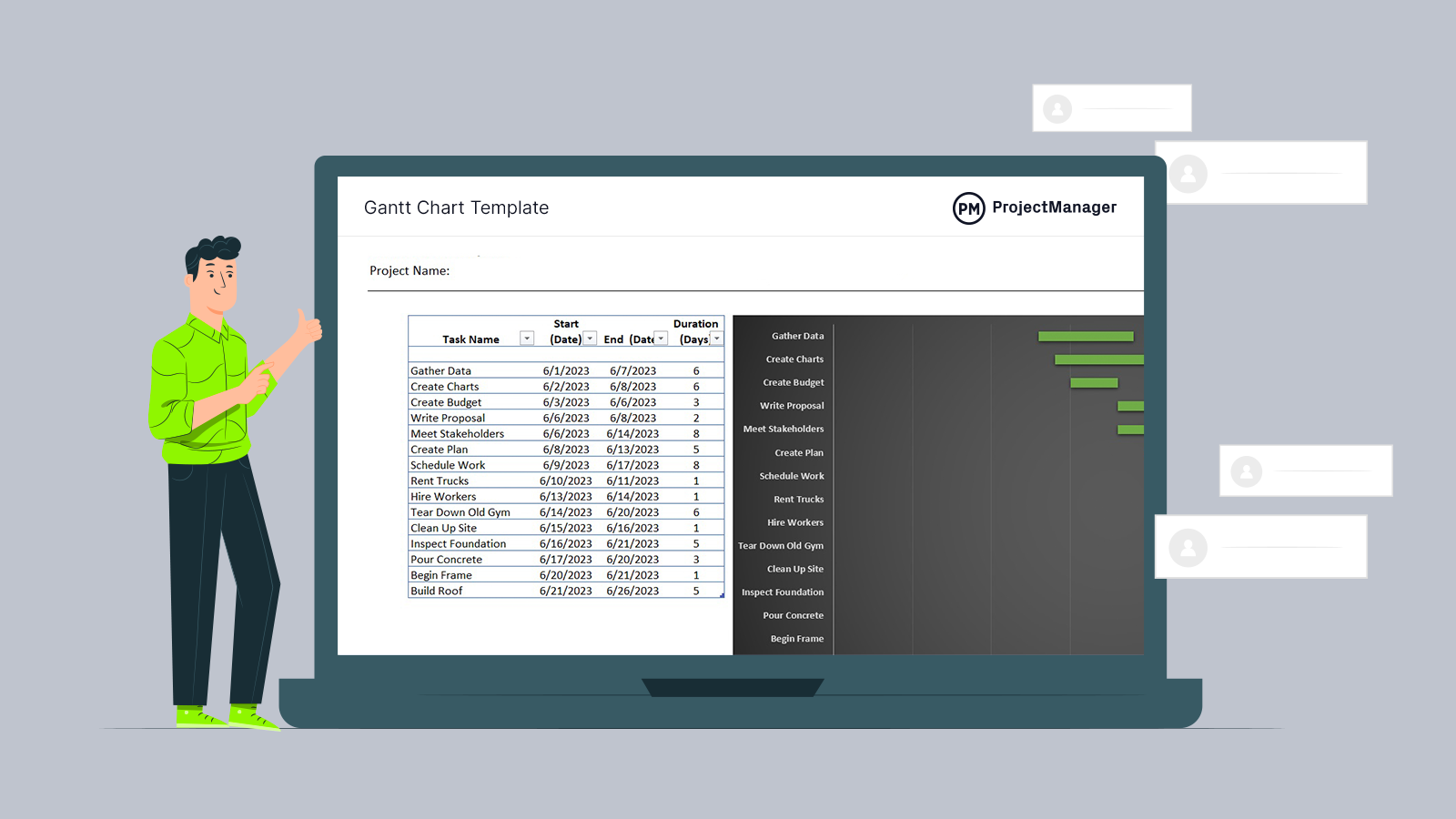
Gantt Chart Excel Template
Use this free Gantt Chart Excel Template for Excel to manage your projects better.
Benefits of Workface Planning In Construction Projects
On active construction sites, uncertainty causes delays, scope creep and cost overruns, all of which can greatly affect the initial construction plan and the project’s profitability.
Workface planning reduces that uncertainty by making short-term execution predictable and controlled. Field crews, superintendents, project managers and even owners benefit because labor productivity improves, schedule commitments stabilize and daily coordination becomes far less reactive.
- Crews spend more time installing work and less time waiting for clarifications, materials or equipment, which directly improves earned hours and cost performance.
- Superintendents gain clearer visibility into what is truly ready to build, allowing them to make faster decisions and adjust sequencing without chaos.
- Project managers see more reliable schedule performance because work packages are constraint-free before release, reducing slippage and cascading delays.
- Procurement and engineering teams receive earlier signals about upcoming needs, helping them prioritize submittals, deliveries and approvals in line with execution.
- Owners benefit from steadier progress reporting and fewer surprises, since short-term planning discipline supports milestone achievement and predictable handovers.
Who Performs Workface Planning for a Construction Project?
On most construction projects, accountability for workface planning sits with the construction manager or general contractor, since they control field execution and schedule performance. However, the process is rarely owned by one individual. It requires coordinated input from field supervision, engineering, procurement and planning teams to ensure work packages are truly ready for execution.
- Construction manager or general contractor leads the process, sets planning standards, approves work packages and ensures field execution aligns with schedule commitments.
- Superintendents break schedule activities into executable field tasks, confirm access, sequencing and crew availability, and validate real-world site readiness conditions.
- Project engineers verify drawings, specifications and technical details are complete, resolving RFIs and ensuring documentation supports planned work packages.
- Procurement managers confirm materials, equipment and subcontractor commitments match upcoming work packages, preventing release of work lacking required resources.
- Project schedulers align workface packages with the baseline schedule and lookahead plans, tracking progress and highlighting constraint risks early.
Workface Planning Process
Executing workface planning consistently requires a repeatable process that connects scheduling, engineering, procurement and field supervision into one disciplined short-term planning rhythm.
1. Break Down Schedule Activities Into Work Packages
Begin by using the project’s work breakdown structure (WBS) to understand how scope is organized, then translate those higher-level elements into crew-sized work packages. The WBS keeps scope boundaries clear and prevents gaps or duplication. From there, define specific quantities, work areas and sequencing so each package represents a complete, executable portion of construction.
2. Identify and Remove Constraints
Before releasing any work package, confirm everything required to perform it is available and approved. That means architectural drawings are issued for construction, materials are on site, equipment is ready, permits are cleared and access to the construction site is safe. If even one constraint is missing, productivity will suffer. Fix problems upstream so crews never show up unprepared.
3. Build the Short-Term Lookahead Plan
With constraint-free work packages defined, sequence them into a rolling lookahead schedule that typically covers two to six weeks. Align the plan with actual crew availability, subcontractor commitments and site logistics. This is where practical judgment matters: balance workload, avoid congestion in tight areas and prioritize tasks that protect critical construction milestones.
4. Issue and Communicate Work Packages to the Field
Once confirmed ready, formally release work packages to superintendents and foremen before the workweek begins. Review the scope of work, quantities, drawings and safety requirements in a focused planning meeting. Clear communication prevents confusion and rework. Field leaders should understand exactly what is expected, where it happens and how success will be measured.
5. Monitor Execution and Capture Feedback
After work starts, track actual progress against the planned quantities and durations. Walk the job, talk to foremen and identify where assumptions did not match reality. Capture lessons about access, productivity and sequencing. Use that feedback to improve the next set of work packages, tightening control and steadily increasing field efficiency.
ProjectManager Is Ideal for Construction Scheduling
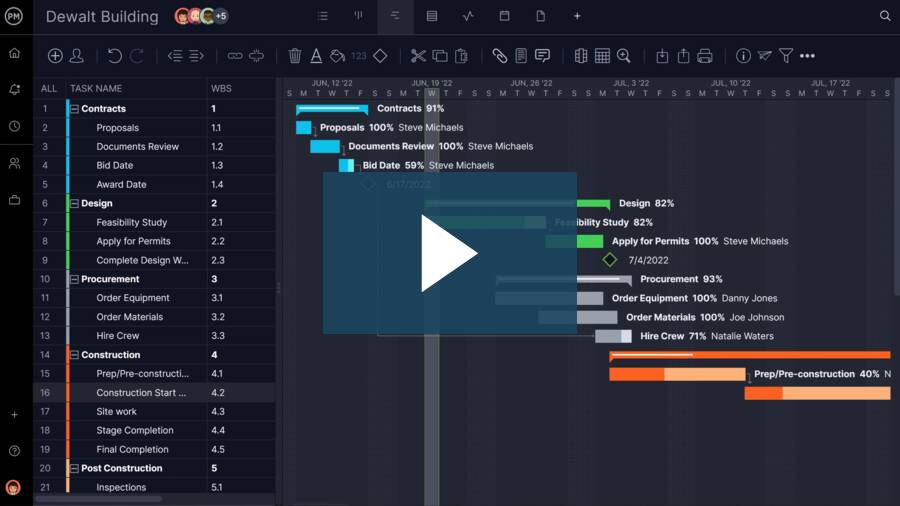
ProjectManager is an award-winning construction project management software equipped with powerful planning, scheduling and tracking features that allow teams to create detailed construction schedules, set baselines, identify risks and compare planned and actual performance to quickly catch delays and cost overruns before they threaten the project. Watch the video below to learn more!
Free Related Construction Project Management Templates
ProjectManager offers a library of construction project management templates, ebooks and videos designed to support planning, scheduling and cost control. Below are free Excel and Word templates to help organize scope, structure work and manage construction schedules effectively.
Work Breakdown Structure
This free work breakdown structure template helps organize project scope into deliverables, tasks and subtasks using a structured task list and visual tree diagram, allowing teams to assign ownership, track dependencies, manage costs and clearly define construction scope boundaries.
Construction Scope of Work Template
Use this construction scope of work template to define deliverables, responsibilities, timelines, resources and costs in one structured document, helping prevent scope creep, clarify accountability and align stakeholders before and during project execution.
Gantt Chart Template
This free Gantt chart template for Excel allows construction teams to list tasks, assign dates, calculate durations and visualize schedules with a stacked bar chart, making it easier to track progress, manage priorities and identify potential delays.
Related Construction Scheduling Content
Our content library features over 100 construction blogs, templates, ebooks and other types of content to help construction project managers better understand the many moving parts that must be managed to deliver successful construction projects. Here are some of them.
ProjectManager is online project management software with the tools you need for construction project management. Our features make planning, monitoring and reporting on your project more efficient and effective. Being online means our software is accessible everywhere and at any time. Plus, the data you get is more accurate because it’s updated immediately. Try ProjectManager for free with this 30-day trial offer.