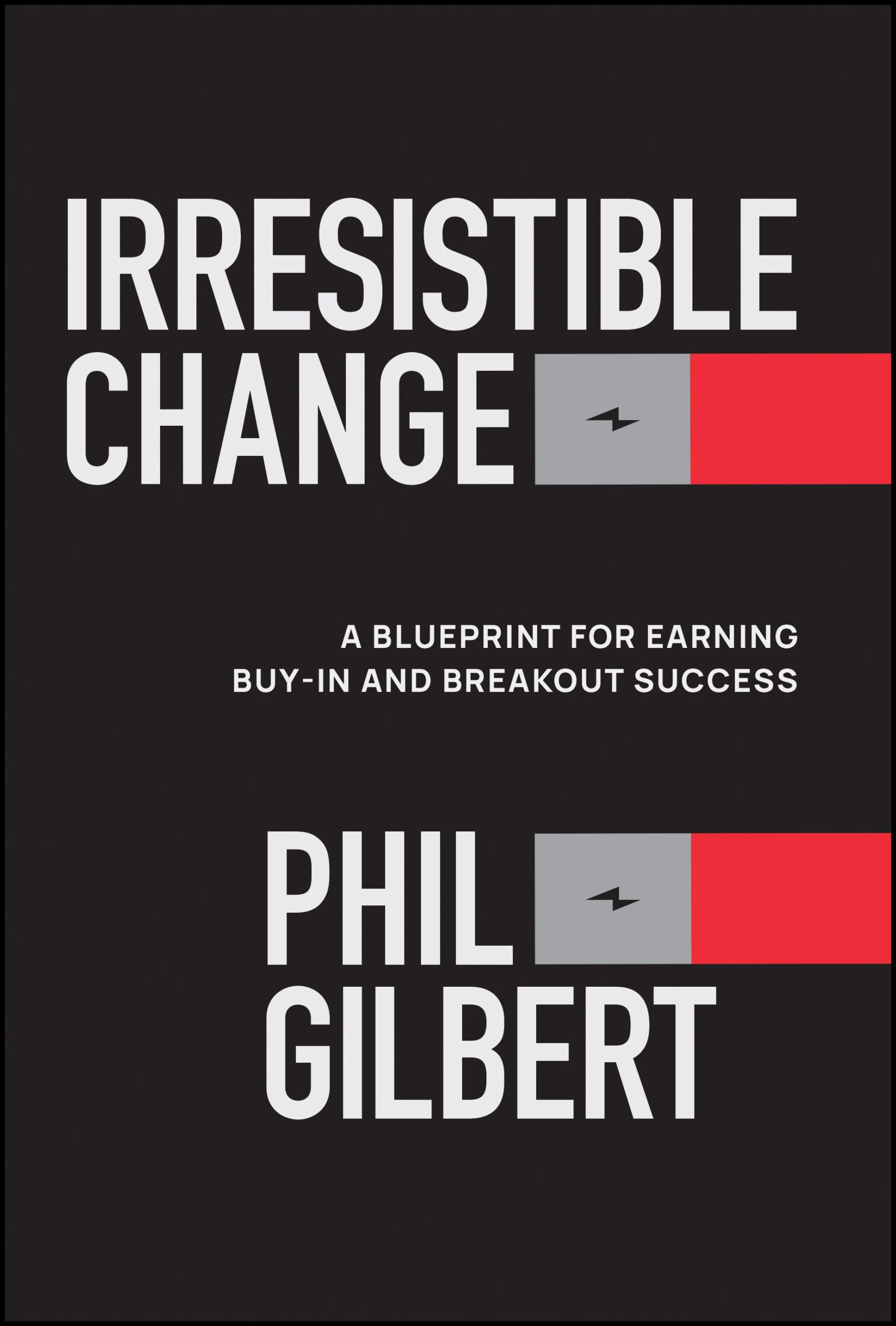
This is an adapted excerpt from the introduction to Irresistible Change: A Blueprint for Earning Buy-In and Breakout Success by Phil Gilbert.
If ever there is a misnomer, it’s change management. It rarely causes change and it’s almost always mismanaged.
Why? The answer seems obvious to me: almost all leaders desiring change are businesspeople, but they never run their change initiatives like businesses.
Change should be regarded as a high-value-add product that deserves the same levels of resource support and operational rigor as any of your top-performing products. This means clear ownership, strategic leadership, and, above all, profit-and-loss accountability. Only when you treat change with this level of structure and discipline will you set it up for success.
In this model, change is your product, your organization is the marketplace, and its teams are your customers.
Change as a product must also be packaged and presented as a premium offering. No one values economy-class change. Only a platinum-tier solution will spark the excitement and customer demand required to drive widespread adoption of change, and have it stick.
That was my experience while leading IBM’s global transformation beginning in 2012, my colleagues and I helped thousands of interdisciplinary teams at IBM become more entrepreneurial, more agile, and more customer-focused.
For all those thousands of teams, we never had to mandate change, never had to beg anyone to join. In fact, we made the teams pay for our services. One-by-one, these IBM project teams utterly transformed their way of working because the entire design and execution of the program was based on delighting them and adding value at every touchpoint.
Those changes have stuck; they’ve become the cultural core for how IBM does business today.
#mc_embed_signup{background:#fff; false;clear:left; font:14px Helvetica,Arial,sans-serif; width: 600px;}
/* Add your own Mailchimp form style overrides in your site stylesheet or in this style block.
We recommend moving this block and the preceding CSS link to the HEAD of your HTML file. */
Sign Up for The Start Newsletter
(function($) {window.fnames = new Array(); window.ftypes = new Array();fnames[0]=’EMAIL’;ftypes[0]=’email’;fnames[1]=’FNAME’;ftypes[1]=’text’;fnames[2]=’LNAME’;ftypes[2]=’text’;fnames[3]=’ADDRESS’;ftypes[3]=’address’;fnames[4]=’PHONE’;ftypes[4]=’phone’;fnames[5]=’MMERGE5′;ftypes[5]=’text’;}(jQuery));var $mcj = jQuery.noConflict(true);
For IBM’s global workforce of almost 400,000 people across 170 countries, we introduced radically different skills, practices, tools, and work environments. For another quarter million outside IBM, we provided learning tools and achievement certifications that enabled IBM clients to work more closely and productively with the company. Through Harvard Business School’s executive education program, countless others have since received certificates informed by our original change program.
The business results have been astonishing. IBM reduced overall product time-to-market by 50 percent. The company reduced the average time project teams needed to align on initial requirements by 75 percent and cut the time required for product development and testing by one-third. Employee engagement soared across virtually every level of the company (which I felt was the program’s most important strategic achievement). We created a program of irresistible change, one that people inside and outside IBM chose to opt into and benefit from.
Although it took us years to achieve these changes among the hundreds of thousands of IBM employees around the world, what made the crucial difference was the groundwork we laid in year one. During our third quarter, when we were still working with our first seven “customers,” we could already see how our program was poised for self-sustaining long-term success.
All change is hard. Change at scale is even harder. But the hardest challenge of all is making change at scale that sticks. Looking back today, long after I and most of my original core team have moved on, I get the most satisfaction from knowing how profoundly our changes stuck and flourished at IBM. The new ways of working we introduced in 2012 have since become so deeply rooted in IBM culture that they now constitute IBM’s everyday approach to product development, client service, and innovation.
Look at the Status Quo with Disdain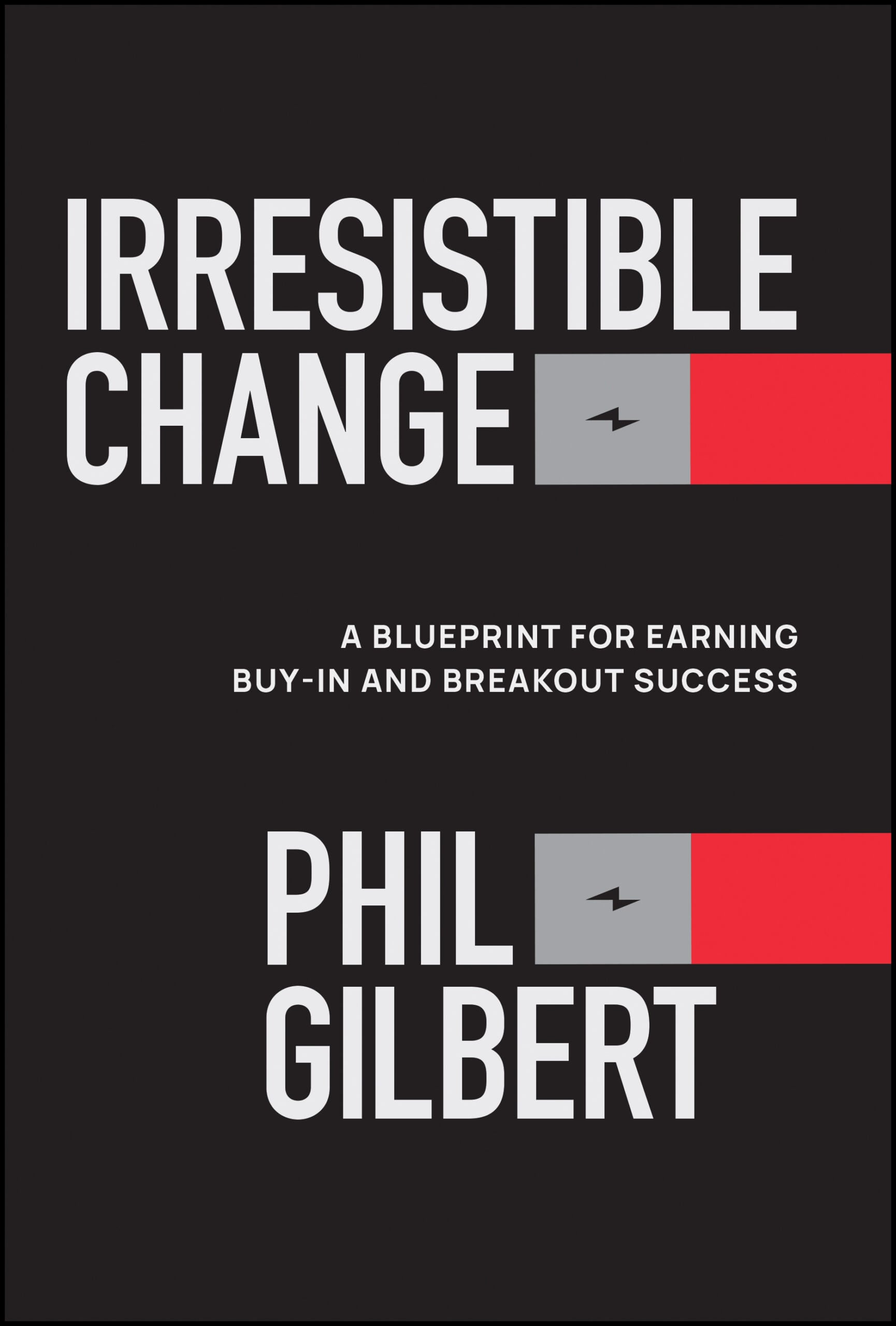
The present is far more fragile than we often realize. Technology is an ever-present disruptor that has a way of commoditizing what once felt unique, driving a kind of Moore’s law-like acceleration into every corner of our daily workflows. Accepting this reality opens the door to a powerful truth: market leadership tomorrow will be determined by your ability to embrace and direct change today.
Change is inevitable—that much is clear. But what sets great organizations apart is the intentionality and speed with which they navigate change. Contentment with the way you work in the present is a setup for disaster in the future. A much healthier approach was once expressed to me this way: “We must always look at the status quo with disdain.”
Organizations that adopt this mindset at scale in the coming years will be the true winners—in the marketplace, within their communities, and even on the battlefield. In every type of industry, companies must use this disdain for the status quo to cultivate cultures of curiosity, innovation, and adaptability. Over time, these organizations will develop something far more valuable and powerful: an institutional predisposition–almost an instinct—for provoking continuous meaningful change.
Through our change program, we rediscovered and unleashed an entrepreneurial spirit that had been buried at IBM over the decades. Everything we achieved at IBM was just a prototype, a proof of concept for what comes next. What began more than a decade ago is now a sturdy template that I hope others will build on and make their own at any organization, of any size.
This adapted introduction from Irresistible Change: A Blueprint for Earning Buy-In and Breakout Success by Phil Gilbert is excerpted with permission from the publisher, Wiley. Copyright © 2025 by John Wiley & Sons, Inc. All rights reserved.
Verizon Small Business Digital Ready
Find free courses, mentorship, networking and grants created just for small businesses.

The post Think of Change as a Product: Lessons from IBM appeared first on StartupNation.