


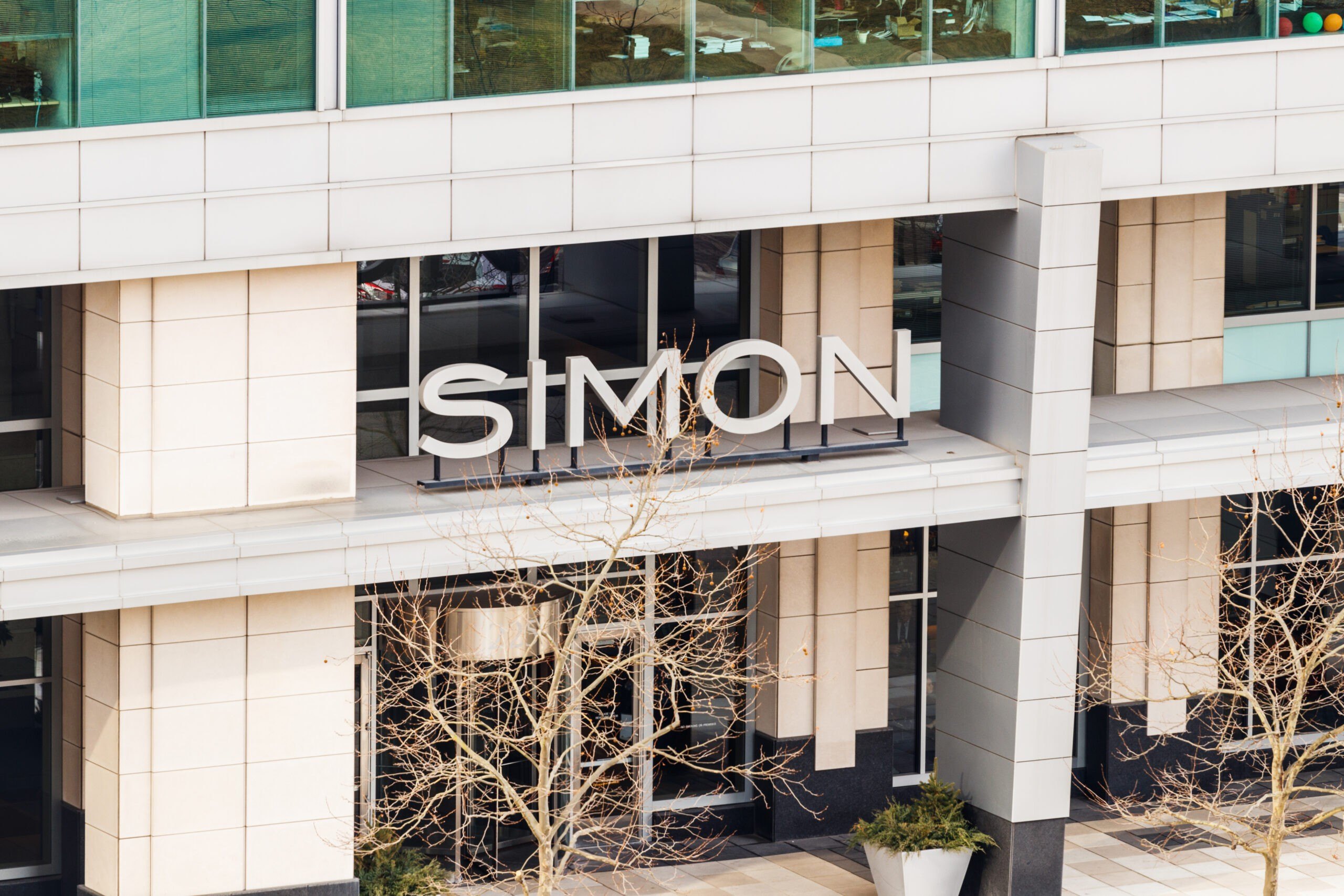
David Simon, CEO of Simon Property Group—the largest mall owner in the country—died Sunday at age 64.
He’d been diagnosed with pancreatic cancer in 2024—and, according to a press release, Simon passed away peacefully surrounded by his family.
“Our family is deeply grateful for the tremendous outpouring of love and support we have received from across the globe,” the Simon family said in a statement.
“Our beloved husband, father, grandfather and brother poured his heart and soul into building Simon Property Group. He was most proud of his family, his wife of over 40 years Jackie, and their five children: Eli, Rebecca, Hannah, Sam, and Noah, and seven grandchildren. We ask for privacy as we grieve our great loss.”
Simon’s empire spanned 206 malls in 37 states, including 60 Premium Outlets.
His portfolio included 17 high-end malls such as the Beverly Center in California; Stanford Shopping Center in Palo Alto, CA; and The Mall at Short Hills in New Jersey.


In suburban areas, Simon Malls serve as economic and social anchors, concentrating retail activity, attracting shoppers and businesses, and driving surrounding development. They have shaped consumer behavior through destination shopping and often become community hubs.
The strategy has proven highly successful. Simon’s family ranks No. 38 on Forbes magazine’s list of the richest American families, with an estimated net worth of $11.6 billion.
Simon’s board announced that, effective Monday, Eli Simon—one of David Simon’s five children—will serve as chief executive officer and president.
“The board expresses its full confidence in Eli’s leadership skills and abilities to guide the company forward,” the press release stated. “The board is also confident with the forward vision, strength, depth, and capability of the executive management team that Eli will lead, and which he has garnered their unwavering respect and support.”
Larry Glasscock, nonexecutive chairman of the board, issued the following statement on behalf of the company’s board of directors: “David Simon was, quite simply, the finest leader in the history of the retail real estate industry. His extraordinary intellect, his relentless drive for excellence, and his unmatched strategic vision transformed a privately held family business into an esteemed global institution—creating billions of dollars in value for shareholders along the way.”
Glasscock continued, “David’s legacy transcends financial performance. He was a leader of uncommon integrity, fierce loyalty, and deep personal conviction. He inspired everyone around him to reach higher, think bigger, and never settle. He set the standard—not just for our company, but for an entire industry.”
Simon’s success story
David Simon was a graduate of The Indiana University Kelley School of Business and Columbia University’s Graduate School of Business.
After several years as an investment banker on Wall Street, he moved back to Indianapolis in 1990 to work for his father and uncle’s retail-development business, Melvin Simon & Associates.
In 1993, at just 31, he led the company’s initial public offering on the New York Stock Exchange, raising nearly $1 billion in what was then the largest real estate stock offering ever.
Since the IPO, investors in Simon Property Group have seen total returns surpass 4,500%, a testament to his leadership.
In 1995, at just 33, David Simon was named CEO, making him one of the youngest leaders of a major public company in America.
Even as malls declined and retailers went bankrupt, Simon leaned in—investing heavily in his properties and helping acquire distressed brands like Aéropostale, Brooks Brothers, Eddie Bauer, Forever 21, JCPenney, Lucky Brand, and Nautica.
At the time of his passing, Simon Property Group controlled more than 200 million square feet of real estate spanning North America, Europe, and Asia, generating billions of dollars each year.

Simon was also a generous philanthropist. Through the David E. Simon and Jacqueline S. Simon Charitable Foundation, he donated millions to causes spanning higher education, health care, arts and culture, and initiatives supporting Judaism.