


California‘s wildfire challenges have quickly risen in recent years, and could grow yet more if the state doesn’t prepare, according to a report.
A report from the Terner Center for Housing Innovation at UC Berkley estimates that wildfire could cause $5 billion a year in losses to owner-occupied homes in the state by 2047. That’s 85% above the already historic average in recent years, a projection the report attributes to climate change.
And for some cities, that insurance premiums could significantly increase as insurance carriers expect ever-greater annual expected losses.
California is still reeling from the catastrophic Eaton and Palisades fires of early 2025, which destroyed 16,000 structures, including 12,000 homes, causing upward of $131 billion in property and capital losses. But years of severely damaging wildfires have exacerbated the state’s home insurance crisis, which is especially acute as thousands of homes are at high wildfire risk.
Zack Subin, an assistant professor at the University of San Fransisco, who was a part of the study, told Realtor.com there are ways for Californians to prepare.
“We do have solutions, and it’s likely, I think, that there’s a kind of cost savings to be had at the macro scale if we were to invest in broad changes,” Subin said. “But that’s not going to come cheaply, either.”
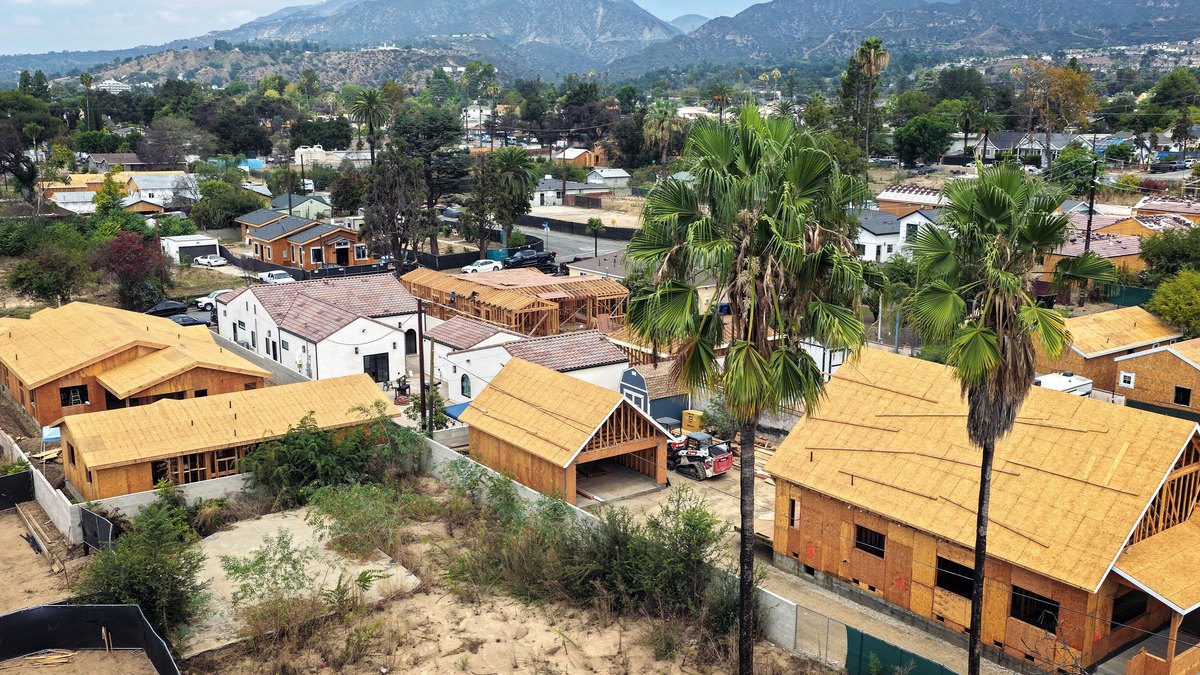
California has enacted some reforms. For instance, it’s recently passed a law to codify protections for smoke-damaged homes. It’s also expedited rebuilding with factory housing and other innovative techniques. But, Subin said, state leaders should learn from some of those lessons and prepare the state for more damaging fires down the road.
“We’re not going to get to every home, it’s just too much money we’re looking at,” Subin said. “Having public decisions to make hard choices and prioritizing will be really critical.”
Creeping fire
The Terner Center broke down the state’s census tracts looking at their climate conditions in 2011. Based on predicted future climate conditions, it estimated expected annual wildfire losses in 2047.
A model like this looks at potential impacts over time. So it’s not saying that every year would bring very damaging fires. But some years could see few to no major damaging wildfires, and some years could see multiple.
Terner Center’s model found many regions of the state would see more severe wildfire losses, including many parts of San Diego County and Southern California. In some of these census tracts, tens of millions of dollars a year in wildfire losses could become the norm. Many other parts of the state could see increases in potential losses, too.
The state has begun to react in some ways. For instance, it recently announced a plan to share common problems, including wildfire and extreme heat mitigation, with government planners in France. Gov. Gavin Newson said such information sharing agreements produce “practical solutions and cooperation.”
The state also recently opened a modernized and up-sized command center to help coordinate natural disasters. It says it has increased the staff there to 64 people from 54. And the legislature recently approved funding a 73-person incident response team to help quickly react to emergencies.
What can California do?
The center offered a set of solutions to help prevent major wildfire disruptions.
Among them, scaling up local and regional governance for wildfire risk reduction. The Terner Center says “governance fragmentation” has been a major problem for wildfire response. Communities facing the highest wildfire risk are often the least organized or prepared to undertake pre-disaster risk reduction.
The center also recommended more extensive state planning for wildfire prevention. That might mean more concentration of resources to support homes most at risk of wildfire damage. It could mean new funding and financing mechanics, which would ensure that support doesn’t just flow to the most affulent communities.
Terner Center also recommended incorporating more wildfire risk data into policy and planning. There are some sources, such as Cal Fire’s Wildfire Hazard Severity Zones. But better research on where wildfires could next strike is still years away.
Insurance companies have some models of their own, but they aren’t public. The state could buy some, or develop its own. These kinds of reports also help the state direct resources to prevention and planning.
And, California must confront its insurance strategy. For instance, one recent legislation authorized a grant program that would enable homeowners to afford fire-safe roofs and other “hardening” measures. But these programs don’t meet the scale they need.