Post Preview
- Understanding AI-Driven PPC Campaigns
- Exploring Performance-Based PPC Campaigns
- Key Differences Between AI and Performance-Based PPC
- Pros and Cons of AI-Driven PPC
- Pros and Cons of Performance-Based PPC
- Choosing the Right Approach for Your Business
- Future Trends in Local PPC Advertising
- Conclusion
In the ever-evolving landscape of digital marketing, local businesses are constantly searching for the most effective ways to boost their online visibility and foster deeper customer relationships. Two strategies that often stand out are AI-driven Pay-Per-Click (PPC) campaigns and the more traditional performance-based PPC campaigns. By exploring the unique advantages and potential drawbacks of each, businesses can better tailor their approach to maximize results. When considering how to streamline campaign management and achieve optimal results, many turn to local service PPC management for expert guidance.
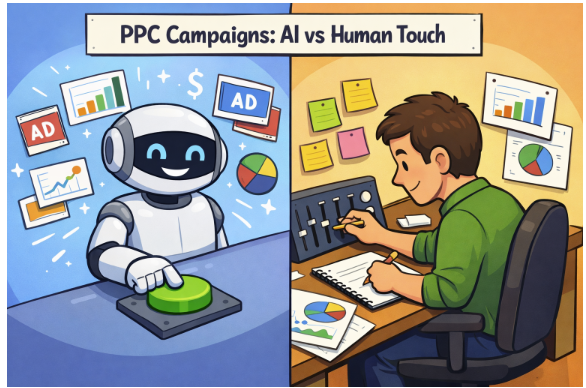
Understanding the distinctions between these two PPC models is essential in today’s hyper-competitive digital environment. AI technologies bring automation and data-driven insights, freeing up time for higher-level strategy, while traditional performance-based PPC relies on hands-on optimization. Knowing when and how to leverage each approach can help businesses remain agile and efficient in their marketing efforts.
Given the intricacies of these PPC methods, it’s crucial to recognize that a campaign’s success is not solely determined by technology. The right balance of strategy, oversight, and technology often distinguishes top-performing campaigns from underperforming ones.
For local businesses aiming for sustained growth, making sense of the latest trends and methodologies in PPC can be challenging but worthwhile. Whether you are considering automation for efficiency or manual management for complete control, informed decision-making starts with a clear understanding of both options.
Understanding AI-Driven PPC Campaigns
AI-driven PPC campaigns harness machine learning to manage and optimize online advertising. These platforms analyze vast datasets to learn what combinations of ad copy, placements, and bidding strategies generate the best outcomes. AI can refine campaigns in real time, making adjustments to increase conversions or lower costs, which can be particularly beneficial for local businesses with limited manpower.
By automating tasks such as keyword selection, budget allocation, and ad scheduling, AI-driven campaigns reduce the day-to-day management burden and potentially deliver more consistent results. According to Search Engine Journal, AI-powered tools can now recognize customer intent, predict click-through rates, and adjust spend in ways that would be nearly impossible to replicate manually.
Exploring Performance-Based PPC Campaigns
Performance-based PPC relies on hands-on management from marketers who use their expertise to select keywords, craft ad copy, set bids, and interpret campaign data. This traditional model allows for greater oversight and customization but is heavily dependent on the advertiser’s skill and availability. Routine monitoring and tuning are essential for continued success, as ad performance can fluctuate frequently with market conditions.
Manual control lets advertisers quickly respond to new opportunities or challenges. This can be ideal for local businesses that wish to maintain close alignment between their advertising and brand voice, or for those operating in stable industries where trends are easier to anticipate. However, it can become resource-intensive when managing campaigns across multiple platforms or locations.
Key Differences Between AI and Performance-Based PPC
- Automation vs. Manual Control: AI platforms handle routine campaign decisions automatically, while manual PPC centers on individual expertise and oversight.
- Data Processing: AI can sift through large data volumes to detect patterns much faster than humans, often uncovering insights that would otherwise go unnoticed.
- Adaptability: AI adapts to performance shifts in real time. Manual campaigns may lag as they depend on periodic analysis and reaction to data.
Pros and Cons of AI-Driven PPC
Pros:
- Efficiency: Automation reduces the time and human effort required to manage multiple campaigns.
- Scalability: AI works across numerous channels simultaneously without a drop in performance, supporting business growth.
- Data-Driven Decisions: Leveraging large-scale data leads to more accurate targeting and can improve return on investment.
Cons:
- Lack of Human Insight: AI might overlook subtle branding elements or emotional triggers that resonate with target audiences.
- Dependence on Data Quality: Incomplete or poor-quality data can mislead AI systems, affecting campaign results.
- Limited Transparency: Some platforms provide minimal insight into why specific decisions are made, limiting learning opportunities for advertisers.
Pros and Cons of Performance-Based PPC
Pros:
- Control: Full oversight of every aspect of your campaign, from creative to targeting.
- Flexibility: Immediate tweaks in response to evolving business goals or market shifts.
- Brand Alignment: Hands-on management ensures messaging stays tightly aligned with your unique brand identity.
Cons:
- Time-Consuming: Continuous monitoring and manual adjustments require a significant time commitment.
- Limited Scalability: As campaigns multiply, so do the demands on your resources and attention.
- Potential for Human Error: Relying on gut instinct or incomplete information can lead to missteps that automated, data-first systems might avoid.
Choosing the Right Approach for Your Business
When deciding between AI-driven and performance-based PPC, local businesses should assess factors like available resources, industry pace, and campaign complexity. Larger organizations running campaigns at scale may benefit from AI’s efficiency and reach, while smaller businesses or those in stable, well-known markets might prefer the accuracy and direct involvement of manual management. Budgetary considerations also matter; AI may require a higher initial investment, but it can yield savings through greater efficiency and improved outcomes over time.
For further tips on balancing digital strategies with business needs, consult resources such as Forbes’ guide to AI in marketing.
Future Trends in Local PPC Advertising
The presence of AI in local PPC is set to rise, introducing more sophisticated targeting, deeper analysis, and streamlined campaign management. Nonetheless, the human touch remains indispensable, particularly for creative direction, unique brand positioning, and strategic decision-making. A hybrid approach, leveraging AI for data and automation while retaining human oversight for nuanced decisions, will likely dominate in the years ahead.
Businesses that stay adaptive, experimenting with new platforms and refining their strategies based on evolving toolsets, are best positioned to thrive. Keeping an eye on changes in advertising technology and staying informed will be key to maintaining a competitive edge in local markets.
Conclusion
AI-driven and performance-based PPC campaigns both offer vital tools for local businesses aiming to increase their customer base and revenue. By weighing the benefits and limitations of each and aligning the strategy with their unique business objectives, local businesses can implement PPC solutions that deliver the best return on investment and help sustain long-term growth.