


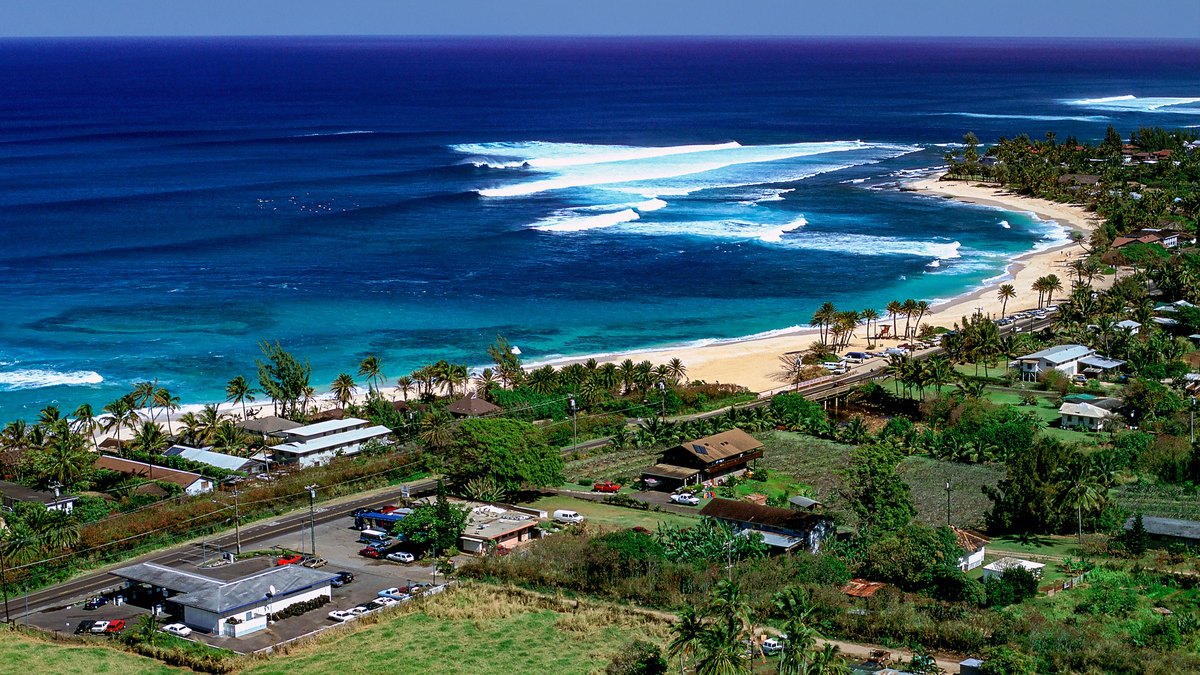
What was supposed to be a routine permit hearing for seven new homes on Oahu’s North Shore devolved into a bitter clash, with neighbors alleging unpermitted construction, threatened ancestral burial sites, and tainted runoff one blames for giving local children boils.
“It’s a disgrace to the community,” Carla Lenhoff, who lives on the same residential lane as the proposed development, told Honolulu planners. “It’s a disgrace to the ocean. It’s a disgrace to your neighbors.”
At the center of the Nov. 20 town hall was homeowner Linda Donoso and Malaekahana LLC’s application for a Special Management Area permit on Mālaekahana Bay—a quiet stretch of coastline lined with beachfront homes between Kahuku and Lāʻie.
According to the public hearing notice, the permit would cover construction of seven new homes on Condominium Property Regime (CPR) Units 2 through 8, with the existing home retained on CPR Unit 1. The request also includes installation of six individual wastewater systems and utility connections, plus driveways, walkways, fencing, rock walls, and other site improvements.
The property is divided into eight separately owned condominium units, but Honolulu treats them as a single lot for zoning purposes.
Donoso said she took on the cost of pursuing a coastal permit covering seven additional homes because the other owners were unwilling to pay.
Donoso, who has lived on Unit 1 since 2016, acquired Unit 6 two years later.

“I am not a developer, I am building a home for my family. In order for me to build on this property, a legal CPR, I have to apply for an SMA permit,” Donoso told Realtor.com® ahead of the hearing.
“It will benefit all the lot owners. But in order for me to build, I have to pay for this SMA because no one else is.”
Donoso, who lost her husband to COVID-19 and wants her family nearby, told Realtor.com that there was no existing home on that lot, but one of those homes was already standing, unfinished, on a unit owned by her son, Allen Graham.
Michael Marchak, the city planner reviewing the application, confirmed that an August citation for building without a permit remained open.
‘All of this should be put on hold’
Neighbors weren’t swayed by Donoso’s description of the project.
“Are we just going to short-term rent it out to as many people as possible?” Lenhoff asked.
While Kahuku remains mostly residential, it sits along Oahu’s popular North Shore tourism corridor, where an estimated 12,100 visitors were present on a typical day in 2024, according to Hawaii state tourism research.
For Naomi Fiatoa-Holani, who raised six children along the same lane and was baptized in the bay, the prospect of additional vacation rentals hit close to home.
“We purposely live there for the serenity and the culture of that area,” she told planners.
In fact, short-term vacation rentals are already prohibited in the area. City zoning rules bar owners from renting out the homes for stays of fewer than 30 consecutive days, regardless of the coastal permit.
And Donoso had previously been cited over short-term rental advertising.
The city cited her home on Unit 1 in December 2023 over an ad offering stays under 30 days. Donoso acknowledged renting to vacationers, but insists she stopped accepting bookings after that notice.
A second citation followed in April 2024 over a recurring ad. Both cases are now marked corrected and closed by the city, and at the hearing, Donoso disputed that she had resumed renting out her property.
She also rejected the suggestion that the proposed development would become an outpost for tourists. Her son owned Unit 2, she told planners, and her grandson had recently bought Unit 4.
“It isn’t going to be a vacation rental community,” she said.
But neighbors questioned whether they could trust the applicants to follow the rules when construction on Graham’s home on Unit 2 had already begun without a permit.
Honolulu’s Aug. 13 violation notice documented the unpermitted construction of a two-story structure. Neighbors alleged that work continued even after crews were told to stop, though city officials did not establish whether that was the case at the hearing.
“They’re still building,” Lenhoff told planners, adding that she had submitted photographs.
That incident was particularly troubling to residents because of the significance of the ground on which the home stands.
“That’s precious to us,” Fiatoa-Holani said of the sand along the bay. “That’s where our kūpuna are buried.”
In Native Hawaiian tradition, ancestral remains, known as iwi kūpuna, are sacred, representing an enduring spiritual connection between the land, the deceased, and their living descendants.
And in 2018, human remains were discovered during construction of two homes in a neighboring three-home development, according to draft minutes of the Oahu Island Burial Council.
No one at the hearing reported finding remains on Graham’s unit, nor had archaeologists found cultural resources during an earlier investigation of the property—but that investigation had its limits.
The archaeologists dug six test trenches in 2021, none on Graham’s unit. The applicants’ own filing acknowledges that the State Historic Preservation Division considered the findings insufficient to rule out impacts to buried cultural resources.
The agency requested on-site archaeological monitoring during ground-disturbing work, noting that the area’s sandy soils are known to contain human remains.
Graham maintained that work on his house had involved little new excavation. He said sand used behind a retaining wall came from an earlier driveway excavation.
“We didn’t go deep below the surface,” he said.
But when public testimony ended, Marchak asked whether anyone had monitored construction on Unit 2 for archaeological finds.
Donoso said the family had tried to arrange it.
“We couldn’t get it done till January,” she said.
‘Where is this wastewater going?’
Neighbors also raised concerns about water quality, describing floodwater they feared was carrying contaminants from the property onto their shared lane.
Fiatoa-Holani described watching water and debris wash down the road her children walked to collect the mail. She believed the flooding had made local children sick, and that wading through the water had given them boils.
“The boils wouldn’t go away,” she said.
Other residents also complained about runoff, though Fiatoa-Holani was the only one who reported children developing boils.
Donoso disputed the allegations.
“It was completely dry during the rain,” she said, adding that her grandchildren had never developed any symptoms.
The permit application likewise maintains that the property’s permeable sandy soil would keep stormwater on-site, with dry wells proposed to help manage drainage.
But beyond the dispute over flooding was another question: Could the property accommodate wastewater from eight homes?
The plans call for six wastewater systems, with Units 3 and 4 sharing one and Units 7 and 8 sharing another. Donoso said her son had already replaced an old cesspool on Unit 2 with a septic system.
Lenhoff challenged whether the parcel had enough land for the six proposed systems; and in his final questions to the applicants, Marchak raised the same issue.
Under state rules, six systems would require 60,000 square feet of land. The property originally measured 64,033 square feet, but a 2015 certified shoreline survey documented 6,229 square feet lost to erosion.
That leaves 57,804 square feet in the application’s calculations—2,196 square feet short of the stated requirement.
When Marchak asked whether the wastewater plans had been submitted to the state Department of Health, Roy Irei, the applicants’ engineer, said he had discussed the proposal with officials but had yet to submit it for approval.
What happens next for the seven-home plan?
Kahuku resident Evelyn Lane had a more immediate request for the unfinished house already standing behind Donoso’s home.
“They should tear down the unpermitted building that they built, and I don’t know why that wasn’t brought up in this discussion,” Lane told planners.
Three days later, Hawaii News Now was interviewing Lenhoff about the project when Donoso stepped in.
“So you guys want to fight, you guys will have a fight,” Donoso told the neighbors. The station reported that the argument lasted roughly 20 minutes and ended after police were called.
Donoso told the station her son hadn’t known he needed a building permit and that the house was “already done by the time he was notified.”
The October application anticipates construction beginning in early 2027, with work on Donoso’s own home scheduled for the fourth quarter of that year. The full project is expected to take approximately five years after permits are approved.
First, however, the City Council must decide whether to grant the coastal permit.
Under Honolulu law, planners have 45 days after the hearing to send their recommendation to the City Council, unless the applicant agrees to an extension. Residents will have another opportunity to testify when the City Council takes up the proposal, though no date has been announced.