

Have you ever thought about selling print-on-demand products on Etsy, but wondered how people actually make money doing it? Today, I’m sharing an interview with Heather from Heather Studio, a former MRI technologist who started an Etsy print-on-demand shop after her hours at the hospital were cut. She went about six weeks without a sale….
Have you ever thought about selling print-on-demand products on Etsy, but wondered how people actually make money doing it?
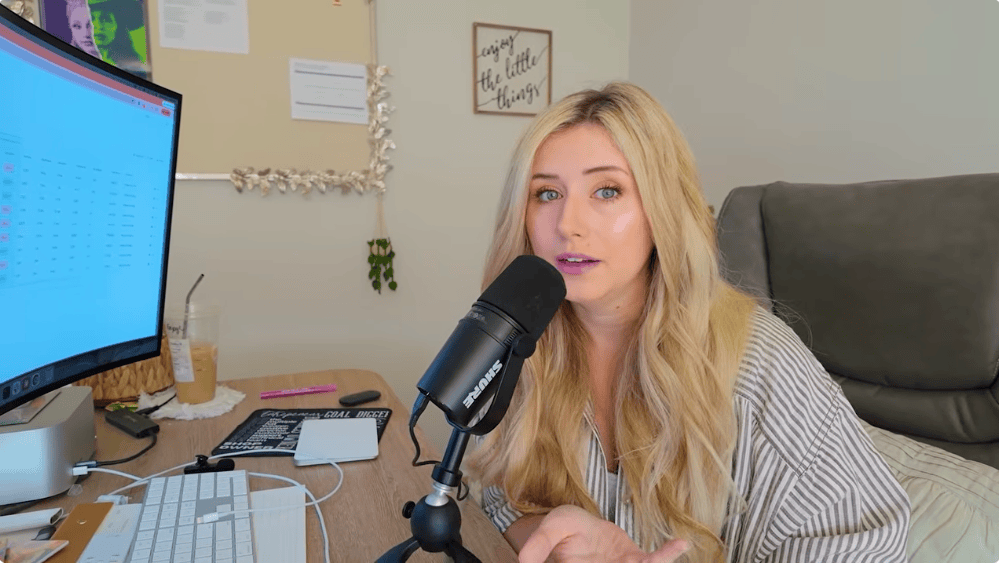
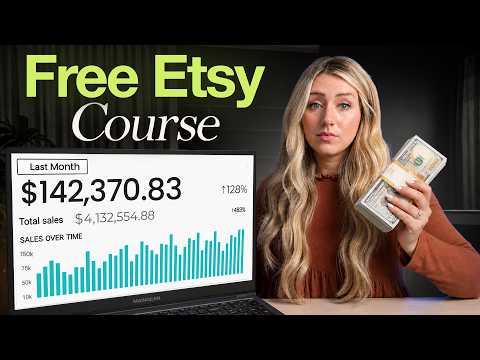
Today, I’m sharing an interview with Heather from Heather Studio, a former MRI technologist who started an Etsy print-on-demand shop after her hours at the hospital were cut. She went about six weeks without a sale. But she kept working on her shop, and it went on to make around $250,000 in revenue during its first year.
Here’s what you’ll learn in this interview:
- What print-on-demand is and how it works with an Etsy shop
- How Heather chooses products, niches, and designs to try
- What her $250,000 in first-year revenue looked like after business expenses
- What she would do if she were starting a new Etsy shop today
And more!
Note: If you’re interested in trying print-on-demand yourself, you can check out Printify here. You can add your designs to products like shirts, sweatshirts, and mugs without buying inventory upfront. When a customer places an order, a print provider makes the product and ships it for you.
How I Made $250,000 in Revenue in My First Year Selling Print-on-Demand on Etsy
If you’ve been interested in selling print-on-demand, but you want to better understand how it all works before getting started, then this interview is for you.
Related content:
1. Tell us a little about yourself! What were you doing before you started selling print-on-demand products, and what made you decide to try it?
I was an MRI technologist prior to starting my online business. During the first year of my career, I purchased my first home and then the pandemic happened. Radiology departments had shortened hours at this time and I was almost laid off.
Luckily, I wasn’t and had a reduction of hours up to 50% some weeks. This led me to look online for a second job and I discovered side hustles like Amazon KDP and Etsy.
Then I found the world of print on demand and was fascinated!
2. What do you like about print-on-demand? Is it worth it?
I love print on demand because it gives the average person the ability to quick start a physical business model without any inventory or large investments and has a high scalability in going from 0 sales to hundreds without having to hire a team.
It’s not like brick-and-mortar stores or other business models that you’d typically need thousands to start. It is 1000% (not a typo, 1000 I’d say haha!!) worth it to begin and try. This is a rare business opportunity that has little risk and high reward.
The largest risk is your time and comparably (to other business models) small money to start.
I’ve seen a lot of sellers from YouTube comments and my programs give this a good 3 to 6 months of learning and building a shop to have a new income stream or even quit their jobs the following year. Every journey in business is unique and not everyone’s results will look the same but I’ve seen a lot of sellers start from scratch and build profitable businesses on repeat.
3. What is print-on-demand, and how does it work with an Etsy shop? Can you walk us through what happens from the time you create a design to when a customer receives an order?
Print on demand is a business model fulfillment system where you sign up with a print on demand company (I recommend Printify) and when an order comes through, the print company’s providers (typically individual print warehouses) will print, pack and ship out the product.
As the storefront, you pay the production fees and shipping, but the difference between fees and what the customer pays is your profit without ever having to touch the products you sell physically.
4. Do you need to know how to draw or use design software? How did you make your first designs?
Not at all!
Design software like Kittl, Canva and other softwares make the process of designing easy for beginners and people who may categorize themselves as not ‘techy’.
A lot of software now have AI assistance that can go a long way for new sellers but I recommend using it with caution and ethics when designing, considering some models can use IP of others online or real artists.
I personally still manually create my designs but use AI image generation tools for graphics or shapes if needed. I show this in my YouTube tutorials so that sellers and business owners are design conscious and learn how to create their own instead of having AI do everything.

5. What kinds of products do you sell, and how do you decide which designs and niches are worth trying?
I sell products from apparel to home decor. Primarily, I’ve sold the Comfort Colors 1717 custom tshirt, Gildan 18000 crewneck sweatshirt and phone cases in my shops.
I decide my niches first, research marketplaces in the niches and then create designs that will be scalable to phrases per niches.
Designs worth trying right now are pattern overlays over font/text, monochrome designs (same color for whole design), tall serif font text-based designs and whimsy humor (toads, goose, feral raccoons).
Niches I recommend is based on individual business owners since I find the microniches and relatable niches are most profitable.
You can easily find your ‘niche’ by asking yourself three questions:
- What do you identify as in your life for your family, work and other aspects of your life? Examples are being a mother, a lawyer and also a cat lover.
- Do you have any hobbies outside of work or passions?
- What events have happened in your life or milestones of others can you think of recently or in the past years? Examples are friends getting married, sister had a baby, got a new pet, etc.
The answers to these questions typically provide 5+ niches per seller that anyone can take and figure out phrases, graphics and design styles to start with.
6. Your original shop made around $250,000 in revenue during its first year. How much of that was profit after product costs, Etsy fees, advertising, and other expenses?
Per my books, I had over a 30% profit margin prior to Uncle Sam’s taxes (gross profit margin).
I also sold a bit on Shopify the first year with a gross profit of $100K.
I made $50K/year as a new MRI technologist in Indiana so this was an incredible amount of money for me, recently out of school and able to save/pay off debt.
7. Can you walk us through the numbers for a typical product? What would you charge, what would it cost to make and ship, and about how much would you keep?
One of my first bestseller products was a Bella Canvas 3001 and I can give a breakdown of this.
I did not offer free shipping and here’s the breakdown:
Production fees (with Printify Premium): $9.04
Shipping fee: $3.99
Retail value: $19.99
Etsy fees: 0.20 (listing fee) and transaction fee of 6.5% ($16.99 x .065 = 1.11), processing
fee (3%, 0.03 x 16.99 = $0 .51)
Total fees approximately $1.82 + 9.04 = 10.86
If you offer free shipping, that’d be $3.99 additionally, so $5.91
Profit = $9.13/shirt without free shipping
$5.13 if offering free shipping
8. How do customers find your products?
Etsy organic search, social media (Facebook, Pinterest, Instagram) and Etsy ads.
9. You now keep your active shops private. Can you share why you do this?
My first shop I had to abandon due to so many people copying the designs and selling as their own.
With print on demand and AI, this business model is so easily replicated that some people see success and think that the only route is to do exactly what someone else is doing.
I do not share my current active shops to protect my income stream.
10. Without sharing anything you’d rather keep private, what does your print-on-demand business look like today? What’s a normal monthly revenue and profit range, and what types of items do you sell?
I sell tech accessories and sweatshirts still in my shop.
I have $1K to $2K revenue months and a few hundred in profit per month.
I’ve worked primarily on other people’s shops now and have not aggressively pursued my own shop since switching over to teaching print on demand.
11. You also ran a Shopify store that made around $35,000 in six months. Why did you decide to close the Shopify store and focus on Etsy?
I closed it because I was working 12-hour shifts at the hospital and my Shopify shop I ran Facebook ads plus social media marketing that was a beast in itself to work within.
Etsy was much more passive and brought in over 80% of my profit so I closed the Shopify store due to the amount of time I spent on Shopify versus Etsy compared to profit.
12. If you had to start a brand-new Etsy print-on-demand shop today, what would you do during your first 30 days?
I would open up an Etsy shop on day 1.
I think the most common mistake I see is many people think they need a full product to start or know everything. I like to describe owning an Etsy and print on demand business like a work-in-progress painting. You need to paint in layers and can’t just have a complete painting in one sitting.
Once you create a listing, the process becomes faster.
Every listing is adding strokes to your painting so you have to create and learn as you go.
Many people want to have the ‘perfect’ listing and that’s just not possible if you’ve never listed or created a design.
Mistakes, failure and time create experience. No one begins their job they work now by themselves on day 1, and it’s the same for a business.
Business is trial and error, that’s why print on demand is such a pro because the risk is minimal per listing you create (0.20 cents).
13. With so many sellers on Etsy now, do you think a beginner can still succeed with print-on-demand? What would they need to do differently today?
Yes, and of course!
I have been teaching Etsy and print on demand for 4, going on 5 years, and EVERY year sellers go from a new shop to 5 and 6 figures (even 7 figures!).
My website has testimonials from the years I’ve been teaching and it’s not an unfathomable thing if you have the willpower and ambition to make this work.
14. Where can readers find you and learn more about your course?
My website www.heatherstudio.com and YouTube channel @itsheatherstudio are where I have free tutorials and courses. I also have paid resources for those who want more help and to dive deeper into topics.
If you opened a print-on-demand Etsy shop, what would you sell?