


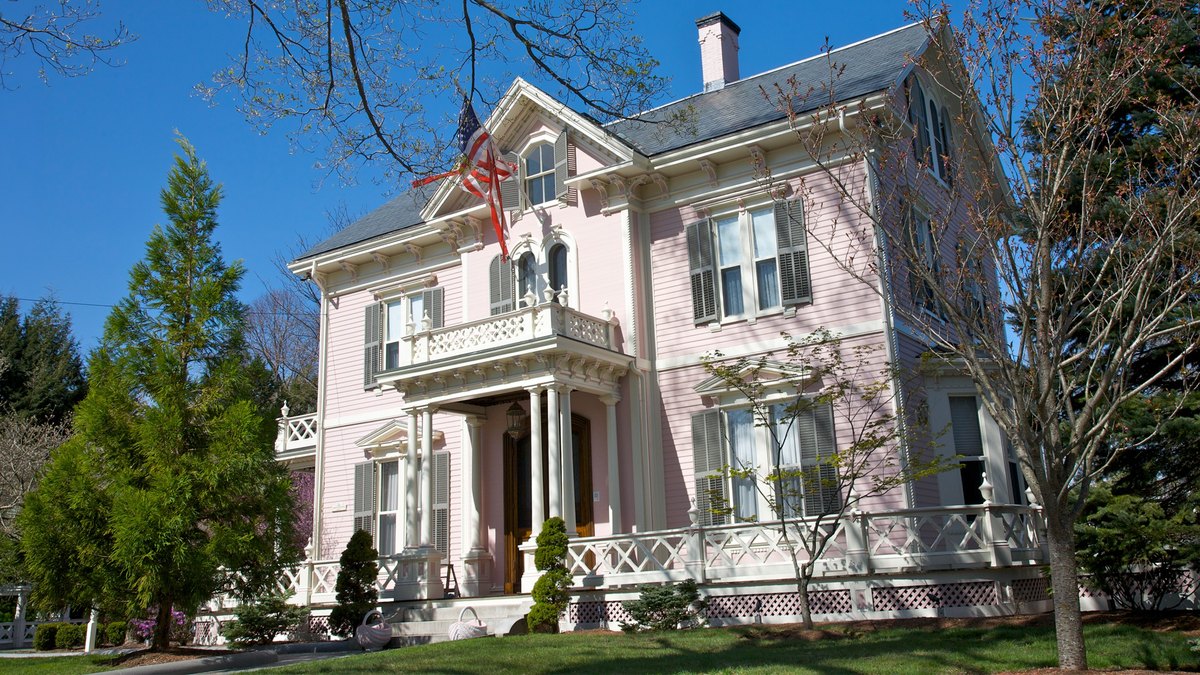
While Italianate architecture might not be immediately recognizable to those without a design degree, anyone who has taken a stroll through San Francisco, Cincinnati, or Brooklyn will no doubt be familiar with the beloved home style—even if they couldn’t name it.
Inspired by the romantic, Renaissance-era villas and estates in Italy, the design trend has been around for centuries. However, its arrival in the U.S. was, in fact, a rather late chapter in its story.
Despite it’s Italian-inspired name, the style originated in England, where designers began incorporating dramatic European influences into their home builds as a kind of rebellion against the rigid, formal housing styles of the 19th century.
In essence, Italianate architecture was designed to look like a painting come to life—creating a sense of whimsy and romance that quickly gained popularity when it arrived on U.S. soil, brought over by early settlers from England and Europe.
Meaning “something like in Italy,” the Italianate aesthetic transformed rapidly growing U.S. cities with its unmistakable drama and luxury.
From their soaring heights to their intricate craftsmanship, these homes capture the hearts of modern buyers looking for a piece of architectural history.
What are the most distinctive elements of an Italianate home?
Italianate homes aren’t known for their modesty. Featuring low-pitched roofs, wide overhanging eaves, and large decorative wooden or cast-iron support brackets, this design radiates luxury.
Between two and four stories tall, Italianates commonly feature towering, narrow arched windows, complete with elaborate crowns and decorative trim and pediments. Bay windows are also generally incorporated.
A square central tower, cupola, or belvedere only intensifies the height of the design, matched with luxurious entryways that feature a tall, arched front door set under a single-story columned porch. Corbels and quoins throughout the structure add to the romanticism.
Italianate homes are extremely versatile, traditionally built of wood, stone, or brick, and featuring U-shaped, L-shaped, or rectangular floor plans.
When was the first Italianate home designed?
The first Italianate home was designed by British architect John Nash in Shropshire, England, in 1802. Named Cronkhill, this villa was inspired by Tuscan farmhouses and paintings of the Roman countryside.
Cronkhill features white stucco, arched windows, and towers. Currently a private, tenanted building located on the National Trust’s Attingham Park estate, the dwelling is open to the public approximately eight days per year and offers guided tours.
The Italianate style expanded in Britain in the 1830s under architect Sir Charles Berry’s influence. After studying 16th-century palazzos during his Mediterranean grand tour, Berry returned to England, where he began incorporating Italian Renaissance gardens with terraces, fountains, statues, and parterres, and other palazzo-style designs such as grand proportions and central courtyards.
However, the Italianate design truly got its moment when it became a dominant residential style in the United States from 1840 to 1885.
U.S. architect Andrew Jackson Downing is credited with popularizing the style with his 1850 book “The Architecture of Country Houses,” which provided blueprints to rapidly build Italianate homes across growing cities such as New York City, Boston, and San Francisco.
Italianate homes moved away from the traditional architecture of the time, including the formal Greek Revival style. Fueled by both the Picturesque and Romanticism movements, the Italianate design embraced a more flexible, asymmetrical floor plan that embodied luxury and romance and came in the form of grand estates and modest, suburban housing.
In New York specifically, the rise of Italianate style came around the same time as the popularity of using brownstone as an affordable building material. Builders began to construct brownstones across New York City, especially in Brooklyn. They added intricate, elaborate Italianate features, including carved ornamental patterns and leafy brackets.
The Panic of 1873 resulted in a severe economic depression and halted construction across the U.S. As the economy recovered, the Italianate fell out of favor as another Victorian architecture, the Queen Anne style, began to emerge.
Where are the best places to find Italianate homes?
With appearances stretching from the Northeast and Midwest to the South, and California, Italianate homes are concentrated in Boston, New York, San Francisco, New Orleans, and Cincinnati—cities whose populations boomed in the mid-19th century.
How have Italianate homes changed over the years?
The delicate, decorative elements wrapping the exterior of surviving Italianate houses have been carefully preserved over the years, as many of the original homes were demolished to make way for multifamily apartments when the style fell out of fashion.
For an Italianate home to be liveable, extensive maintenance is required. From updating outdated plumbing and electrical grids to restoring the deteriorating exterior, the upkeep of an Italianate can be costly.
While not much has changed on the surface of an Italianate home, the inside has been modernized to include an open floor plan to maximize the space and natural lighting. By removing the dwelling’s traditional compartmentalized rooms, the commonly cramped layout transforms into a spacious blueprint with kitchens that naturally flow into the living and dining areas.
Exchanging the Italianate’s typical dark, hardwood floors with tile, concrete, or even a lighter stain is another common update. Modernizing kitchens and bathrooms, and adding ductwork and floor heating for more temperature control is also frequent.
Why do people buy Italianate homes?
Italianate homes are popular for their versatility and aesthetic appeal.
This design gives buyers the essence of living in a Renaissance-era Italian villa without actually moving to Italy. Additionally, Italianates can be found in a variety of settings, from their mold as a luxurious country estate to a more modest suburban-style home.
Many Italianates constructed outside of metros are built on a large amount of land to emphasize the style’s focus on natural landscaping and beauty, with many Italianate constructions including at least one Italian Renaissance garden.
The Italianate’s intricate design and decor, along with its flexible layout and abundant natural lighting, make this style of home unmatched if a buyer is willing to look past the maintenance investment that is required to preserve the natural beauty and history of the home.
Get real estate news in your inbox