


Today’s luxury real estate is not defined by a single price tag but takes a variety of forms mostly dependent on location, stretching from spacious, stately estates nestled in the Deep South to ultraexclusive oceanfront compounds in California’s priciest ZIP code.
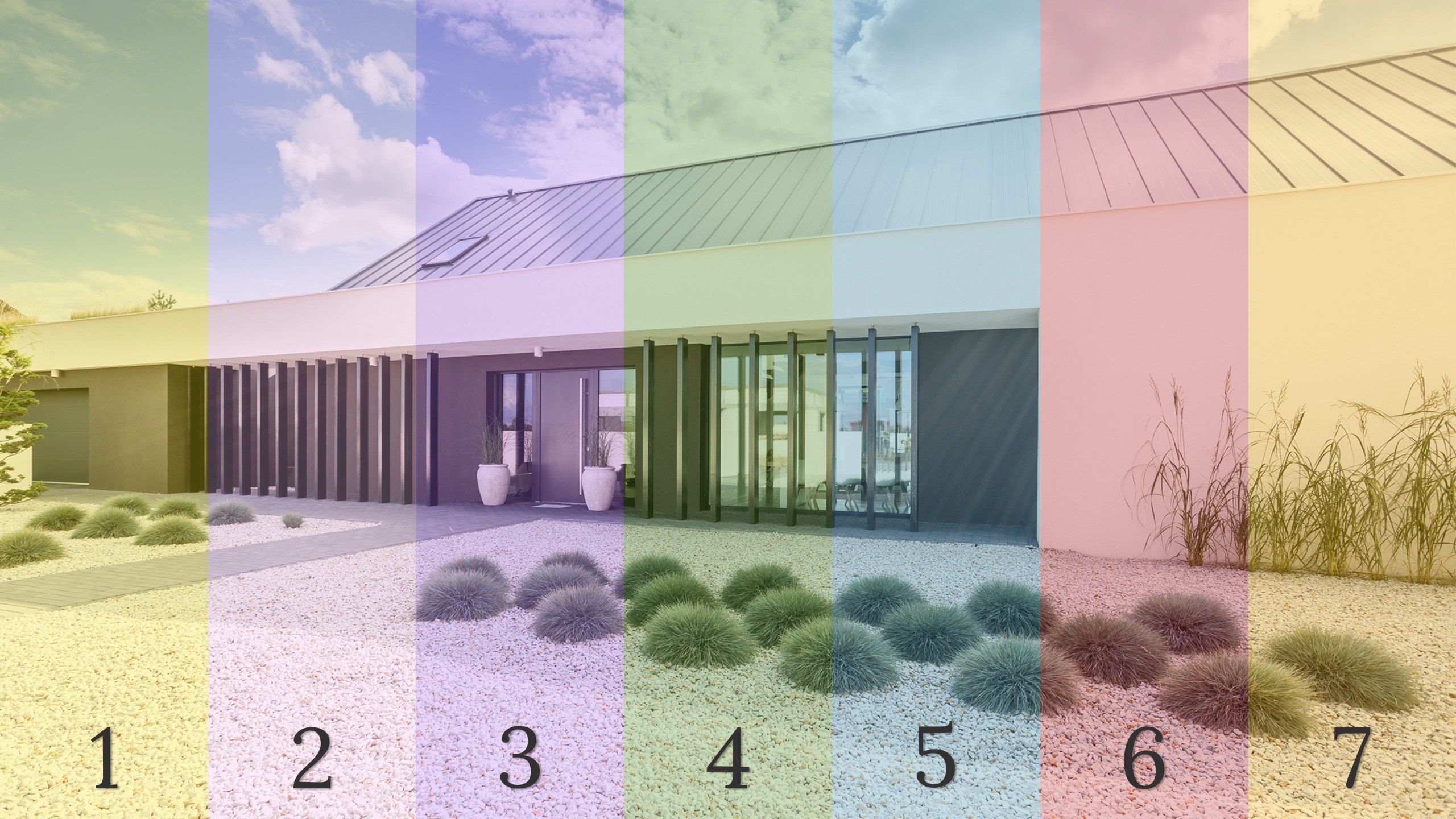
Inspired by a viral YouTube and TikTok trend that uses a tiered ranking system to evaluate everything from rappers to NFL quarterbacks, a new Realtor.com® economic resesearch team report breaks down premium housing into the “The 7 Levels of Luxury Real Estate.”
According to Realtor.com senior economist Anthony Smith, the analysis highlights a clear shift in the market: The classic million-dollar asking price is no longer the defining benchmark for luxury.
For context, a $1 million budget can secure a high-end home in Pittsburgh, whereas in San Jose, CA—one of the nation’s most expensive markets—that sum won’t even cover a median-priced property, let alone a premium one.
To establish a baseline, economists began by evaluating three distinct market segments: the top 10% (entry-level luxury), the top 5% (high-end real estate), and the top 1% (ultra-luxury housing).
However, Smith points out that within each of these broad tiers there are multiple layers of luxury defined by a complex mix of local factors, including square footage, regional employment engines, proximity to water or other desirable amenities, and land availability.
At the national level, a typical entry-level luxury home was priced at $1.28 million in May, roughly three times the U.S. median listing price of $430,000. Moving up the ladder, the high-end luxury bracket kicked off at $2 million last month, while the ultra-luxury threshold began at $5.57 million.
Level 1—space play
The introductory level of luxury is what Smith calls “space play”—a dynamic typically found in relatively small regional hubs, such as Huntsville, AL, and Chattanooga, TN. In these markets, buyers can find sprawling properties featuring high-end finishes for under $1 million, but they generally have to sacrifice access to big-city amenities.
“In short, you get more for your money and higher-end finishes, but there is a trade-off,” explains Smith.
A common trait for this level of luxury is the presence of one or two major employers, such as a large university, a hospital system, or a military base. These anchors establish a reliable base of high-income households that fuels steady demand for luxury listings.
For example, Huntsville, where the top 10% of the market starts at just $759,000, is home to multiple aerospace and defense contractors employing a cadre of well-paid engineers. In this market, a $1 million to $2 million budget easily buys a home topping 4,300 square feet—a fraction of what a comparable footprint would command in a larger and more established metro.
Level 2—emerging markets
Climbing one level up, emerging markets, many of them scattered around the South and West, also offer significant square footage for a reasonable price. However, what separates these luxury enclaves from their “space play” counterparts is that they heavily benefit from turbocharged economic growth, often driven by the presence of corporate headquarters, or tourism.
According to Smith, increasingly in-demand destinations like Fayetteville, AR, Colorado Springs, CO, and Durham, NC, boast significant surges in million-dollar listings over the last five years, with a large share of them being new-construction homes intentionally built to meet growing demand from affluent buyers.
Fayetteville is a perfect example of this dynamic. The city’s largest employer is the University of Arkansas, but nearby Bentonville, AR, is home to corporate giants like Walmart and Tyson Foods.
“Buyers are discovering they can enjoy a vibrant university town, nationally recognized arts and culinary amenities, outdoor recreation and proximity to the economic engine of the Fayetteville metro area while acquiring a level of luxury that’s increasingly unattainable in many larger U.S. markets,” Michelle Dearing, an agent at Engle & Völkers Bentonville, tells Realtor.com. “The opportunity has put the Fayetteville metro squarely on the national luxury radar.”
Dearing says that today’s luxury buyer in the Fayetteville metro wants a home that offers an elevated lifestyle without sacrificing convenience. The most sought-after properties tend to be custom homes on acreage, estates with views of the Ozark Mountains, golf-course residences, and walkable properties near the downtown areas.
“Buyers increasingly seek experiences and lifestyle, not just square footage,” she adds.
Level 3—established metros
Established metros occupy the third level of luxury. These are markets with high name recognition, such as Atlanta, Las Vegas, and Phoenix, which offer affluent buyers access to big-city amenities, legacy neighborhoods, and ample space, but often at a premium compared with the first two levels.
These metros have plenty of million-dollar listings to choose from, but luxury can still be secured for below the seven-figure mark, especially for those willing to look just outside the city center.
According to Smith, the defining characteristic of Level 3 areas is that luxury does not feel detached from the broader market. The gap between the median home and the entry-level luxury benchmark is typically narrow.
For instance, Atlanta’s top 10% of the market starts at $994,000, or roughly double the local median.
Level 4—access trade-off and rapid growth
Some of the nation’s largest and most expensive metros, including New York City, Los Angeles, and Miami, occupy the fourth level of luxury. In these markets, Smith says homebuyers should expect to make a trade-off between space and access to top economic hubs.
At this level, shoppers start to factor the cost of living, quality of life, and lengths of commute into their purchasing decisions.
Notably, these top-dollar coastal destinations also draw international investors, second-home buyers, and short-term visitors, all of which combine to put upward pressure on prices by keeping demand elevated at all times.
New York boasts the deepest luxury inventory in the U.S., with more than 34% of all listings being $1 million or higher.
A buyer wishing to gain entry into the luxury tier of the market has to bring to the table a minimum of $2.9 million, while the top 1% starts at nearly $15 million.
Level 5—intentional destination
At Level 5, the luxury markets are less about commercial activity and employment, and more about natural beauty, picturesque getaways, vacation hot spots, and tony retirement destinations favored by the wealthy set.
In Westchester County, NY, the top commuter-luxury market in the Hudson Valley, seven-figure homes are flying off the market due to consistent demand fueled by scarcity of buildable land and low turnover of ownership in existing homes.
Another notable area in this category is Key West, FL, a community with around 80,000 inhabitants that boasts more million-dollar listings than most major metros, with an impressive luxury entry price of $4.8 million.
Level 6—pure luxury
Level 6 is occupied by geographically isolated enclaves, from islands to mountain ranges, where at least half of the entire housing market consists of million-dollar properties.
In other words, in a place like Hailey, ID, where 53% of listings top $1 million and the top 10% of the market starts at nearly $9 million, the typical home is a luxury home.
In these rarified markets, including Jackson, WY, and Napa County, CA, buyers with outsized budgets can secure plenty of space, breathtaking views, as well as access to world-class amenities.
Wealth protection, estate planning, and state tax exemptions, such as Wyoming’s Dynasty Trust, often dictate buying patterns.
Level 7—elite ultraluxury
Markets belonging to Level 7 are in a league of their own, boasting some of the highest real estate prices not only in the U.S. but the globe.
Many of these hyper-exclusive, one-of-a-kind enclaves, such as Fisher Island, FL, and, Beverly Hills, CA, are found within larger metros belonging to lower levels, while others like Aspen, CO, are stand-alone bastions of supreme luxury.
These markets operate with virtually no standard comparables, targeting an international pool of buyers made up of just a few thousand multimillionaires and billionaires.
Dubbed the “Pacific Riviera,” Newport Coast, CA, stands out as the nation’s most expensive ZIP code as of January, with a median of $12.50 million and homes averaging over 5,100 square feet. At the pinnacle of the local market, listings start at $66 million.
Get real estate news in your inbox