


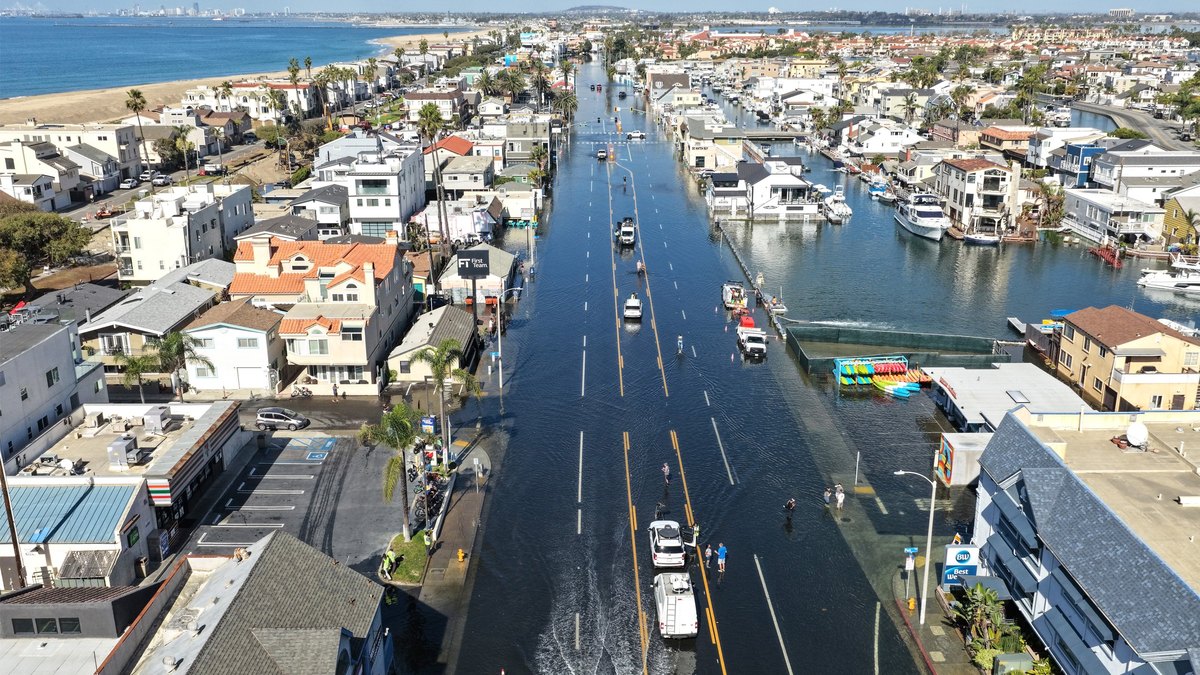
Hurricane season may be coming to a close, but extreme flooding is hitting both coasts hard in the final days of October.
California and Florida are being hit hardest, with some communities seeing flooding like they’ve never seen before at this time of year.
In Southern California, video showed floodwaters reaching the doorsteps of multimillion-dollar homes. San Diego’s tide gauge reached 8.14 feet, according to AccuWeather, nearly 1.5 feet above the predicted level and just over an inch below the reported record of 8.26 feet.
In Florida, neighborhoods such as Fort Lauderdale have been inundated with floodwaters, Tuesday “torturing” residents down to Miami, according to ABC’s chief meteorologist Ginger Zee.
And the cause of all of this flooding mayhem? Exceptionally high tides, dubbed by meteorologists as king tides.
What are king tides?
The king tide is the highest predicted high tide of the year at a coastal location, according to the EPA.
They are “normal occurrence … happen once or twice every year” in coastal areas. They can occur when the orbits and alignment of the Earth, moon, and sun combine to produce the greatest tidal effects of the year.
According to AccuWeather, the hunter’s moon reached its full phase on Sunday evening on the West Coast and shortly after midnight Monday in the East. Full moons enhance tides as the sun, Earth, and moon align, but winds and other ocean conditions can raise water levels even higher.
A coastal flood warning and/or advisory was in effect on Monday for the entire Southeast U.S. coast, from the Florida Keys to North Carolina’s Outer Banks. Meanwhile, California’s high tide on Oct. 26 brought the highest coastal water levels in over a century of recordkeeping to both San Diego and Los Angeles, according to preliminary data from NOAA.
Then came Tuesday. “I’ve neverseen this before,” Zee said while reporting on Good Morning America.
“A lot of times you hear that in weather and you’re like, ‘well, yeah, actually I have,’ as far as statistics go, but when it comes to these King Tides and records breaking, it’s true.”
She explained that the unprecedented King Tides are causing record-breaking coastal flooding along both the East and West Coasts, with coastal flood alerts remaining active from California’s Bay Area down to San Diego, while typically safe roads in Fort Lauderdale are also experiencing unusual inundation.
Furthermore, communities from the Outer Banks to Daytona face ongoing beach erosion threats, with new rain and high surf advisories compounding the clear-sky tidal flooding in Florida
How the king tides will impact Florida next
Coastal flood warnings remain in effect through Wednesday evening for coastal Broward and Miami-Dade counties.
Areas such as Miami, Jacksonville, and Daytona Beach have already been severely impacted by the tides—but the worst may be on the way.
Meteorologists forecasted that Tuesday would see the worst before conditions begin to gradually improve, especially in already heavily impacted areas like Fort Lauderdale. With clear skies overhead, many thought they were in the clear—but as roads started flooding under sunny skies, homeowners were moved into action.
How the king tides will impact California next
Unlike on the Southeast coast, king tides on the West Coast are driven by astronomical factors, but also the seasonal changes in water temperatures. This means that the warmer ocean waters due to the current Super El Niño is playing its part in this.
Coastal flood advisories and warnings are in effect from San Francisco south to San Diego, with the latter looking at a warning in effect through Friday.
The National Weather Service warned that late-morning high tides could inundate homes, businesses, and critical infrastructure, close roads, and cause shoreline erosion.
It’s startling news, given a new California state climate assessment warns that without intervention, up to 75% of the state’s beaches could disappear by 2100.
In Long Beach, residents reported flooding along Bayshore Beach, Naples, and the peninsula, according to the Los Angeles Times.
Nancy Pinckert, a resident of Naples, spoke to the outlet and shared video of water leaking through the base of a seawall onto a walkway.
The seawall has already taken a hammering, both from these king tides and swells from Tropical Storm Rachel earlier this month. One more push could cause water to breach—which for California will likely be Nov. 24–26, 2026.
That’s when the next major statewide king tide periods are scheduled, according to meteorologists.
Get real estate news in your inbox