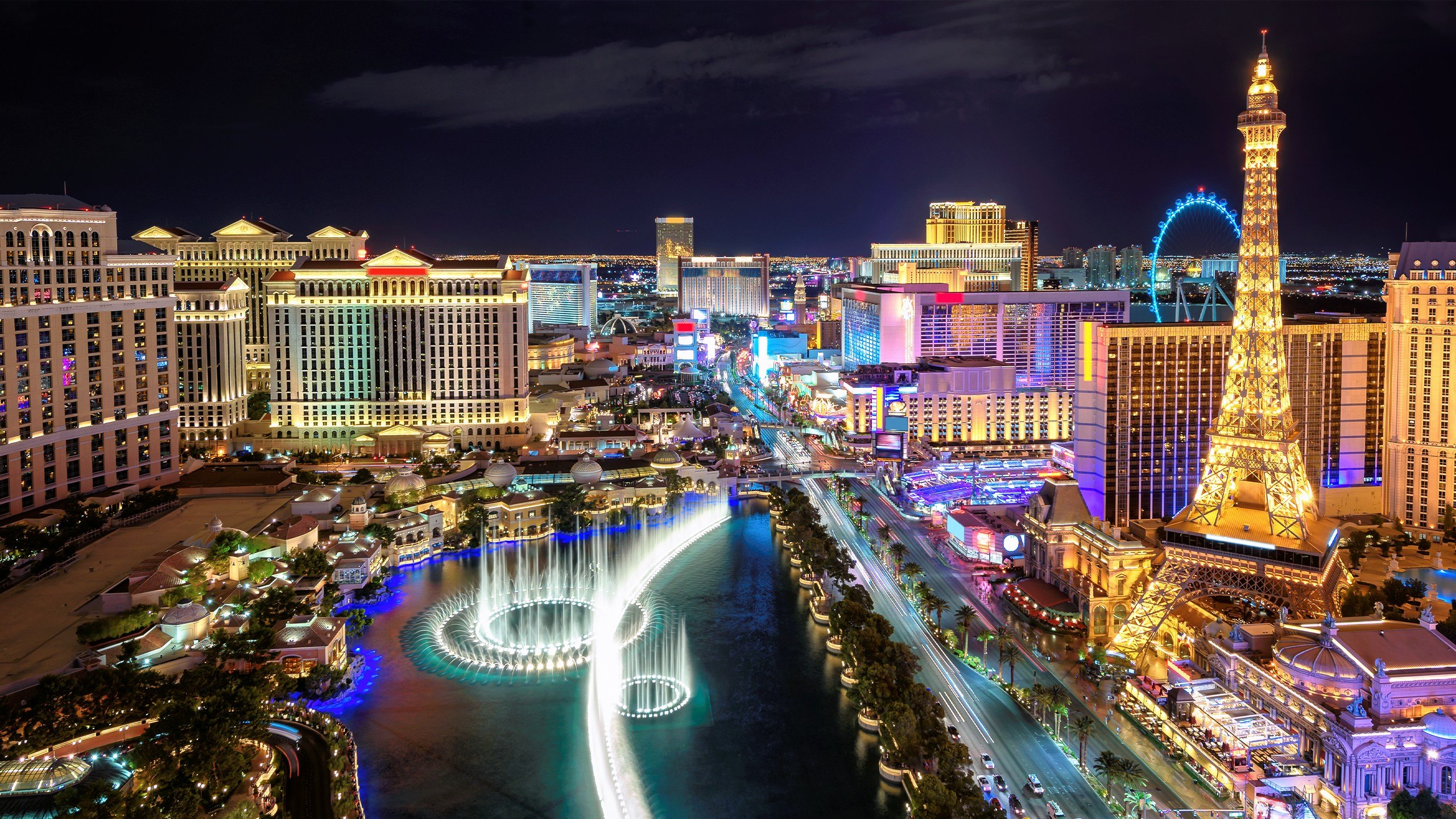
For decades, Las Vegas was synonymous with penny slots, cheap buffets, and quickie weddings, but now the city is placing a high-stakes bet on luring the ultra-wealthy with premium amenities, exclusive experiences, and luxury real estate.
A report from Realtor.com® released Friday highlights Sin City’s dramatic evolution, as the once-humble Sun Belt retiree haven enters its elite era.
This shift is already luring the deep-pocketed set, with billionaire internet entrepreneur and Zillow co-founder Rich Burton recently announcing his move from Seattle to Las Vegas, as the Las Vegas Review-Journal reported this week.
He is just the latest in a series of ultra-high-net-worth transplants to Vegas, among them 82-year-old billionaire and lifelong Los Angeles resident Don Hankey, who in January left California, citing the state’s proposed wealth tax.
Hankey, who purchased a record-setting $21 million penthouse condominium in The Summit Club overlooking the desert, told Forbes that he felt like he was not wanted in his home state following the introduction of the controversial 5% levy on California’s richest residents.
Focus shifts to ‘whales’ and high stakes
With visitor volume and convention attendance still modestly down compared with pre-pandemic levels, Vegas has shifted its focus from average tourists to deep-pocketed heavyweights—a strategy that is paying off for the local economy.
The Strip’s casinos generated close to $9 billion in gross gaming revenue last year, up nearly 34% from 2019. Although historically a large share of that revenue was fueled by sheer volume, with millions of tourists cycling cash through slot machines, the financial engine is increasingly driven by high-stakes pit games like blackjack, craps, roulette, and baccarat, where standard wagers can reach $50,000 per hand.
Vetted ultra-wealthy players, dubbed “whales,” are known to wager $100,000 to $200,000 per hand in baccarat in private gaming villas, typically buying in for millions of dollars at a time.
“Las Vegas is not currently chasing the historic volume play,” explains Realtor.com senior economist Anthony Smith. “Prices are up across the board, and the city is intentionally targeting higher-value customers.”
Beyond the casino floor, Las Vegas is increasingly catering to the tastes, interests, and budgets of its most affluent visitors and residents by elevating its lifestyle, shopping, and entertainment offerings.
The Formula 1 Las Vegas Grand Prix is a prime example of this strategic shift. Even standing-room-only general admission passes run just over $800, while packages featuring VIP hospitality, multiday hotel stays, and access to team suites reach into the $30,000 range.
At the extreme end, resorts are offering eye-popping “mega-packages,” such as Resorts World’s $888,000 race experience, and Caesars Palace’s “Emperor Package” priced at $5 million, which includes
a five-night stay at the sprawling Nobu Sky Villa for 12 guests, Pit Lane access, transportation in a chauffeured Rolls Royce, a 24-hour personal butler, and a private, multicourse dinner hosted by Michelin-starred chef Nobu Matsuhisa.
Real estate market shifts toward the elites
The Las Vegas real estate market has not been sleeping on this trend and has similarly pivoted toward elite buyers, leaving its reputation as a relatively affordable Sun Belt enclave in the rearview mirror.
“The shift is definitely visible,” Tania Jhayem, a real estate agent at Keller Williams The Marketplace‘s luxury division in Las Vegas, tells Realtor.com. “Developers aren’t just building larger homes. They’re creating lifestyle-driven communities that appeal to affluent buyers who intend to live here full-time rather than simply own a second home. We’re seeing more guard-gated neighborhoods with custom estates, wellness-focused amenities, larger lots, and homes designed around indoor-outdoor living.”
The median listing price in the metro has surged to $474,900 as of May 2026, up from $319,700 in 2019 and outpacing national gains.
The luxury tier has followed a similar path, with the price of the typical entry-level high-end property, defined as the top 10% of the market, surging to $1.2 million in May, up from just $752,891 in December 2019—putting it less than $80 shy of the national luxury threshold.
At the highest end of the spectrum, Vegas exceeds national benchmarks, with homes in the top 5% starting at $2.05 million, and properties in the top 1% commanding at least $5.9 million.
Despite these rising prices, luxury buyers in Vegas get significantly more home for their money than in nearly any comparable market.
In the $1 million to $2 million price range, a typical listing offers 4,625 square feet, or roughly 56% more space than the national luxury median.
“A few years ago, that budget could often purchase one of the premier homes in many neighborhoods,” notes Jhayem. “Today, it’s increasingly the entry point into luxury rather than the top end. Homes that once felt exceptional at that price are now competing with newer construction, higher-end finishes, and increasingly sophisticated buyer expectations.”
The agent warns that Las Vegas could eventually face more competition from other luxury markets if home prices rise faster than the lifestyle and amenities buyers receive in return. However, as long as the city elevates its dining, sports, healthcare, education, and luxury retail sectors, it should continue justifying higher price points.
“I think the biggest story isn’t simply that luxury prices are increasing,” she adds. “It’s that Las Vegas is evolving from a destination known primarily for tourism into a city that’s increasingly competing for affluent long-term residents.”
California-to-Vegas pipeline
This value proposition is particularly attractive for buyers from ultra-expensive metros like Los Angeles or San Jose, CA, where a similar budget would get them less than 2,000 square feet.
Perhaps unsurprisingly, Los Angeles and San Jose together accounted for nearly a third of all out-of-state interest in Las Vegas listings at the start of the year.
The appeal is obvious: an entry-level luxury home in L.A. comes with a price tag of $4.19 million, nearly double Vegas’ 10% threshold.
A buyer selling a median priced home in Los Angeles, which in May was $1.1 million, can enter the top echelon of the Las Vegas luxury market with plenty of equity to spare.
Besides comparatively lower prices, Nevada has no state income tax, no estate tax, and no inheritance tax, which are critical considerations for high-net-worth buyers.
For someone moving from California, which has a top marginal income rate tax topping 13%, the savings in the Silver State add up quickly. On top of that, California’s controversial wealth tax proposal threatening the assets of the state’s 200 billionaires has only highlighted the disparity.
“I’m seeing interest from buyers relocating for tax advantages, business opportunities, retirement, and lifestyle from states across the country,” says Jhayem. “Las Vegas has also become more attractive to entrepreneurs, executives, remote professionals, and investors who recognize that the city offers amenities typically associated with much more expensive luxury markets.”
The California-to-Las Vegas pipeline is expected to accelerate further in 2029 upon the completion of the Brightline West high-speed rail project, putting passengers from Southern California within a two-hour ride of the Vegas Strip.
“For California buyers who are not ready to fully relocate, it positions Las Vegas as a viable second-home or weekend destination with commutable access,” says Smith.
Interestingly, this luxury migration isn’t entirely one-way: High-end Las Vegas home shoppers are somewhat more likely to look for properties outside their city this year compared with last, though that shift has been minimal so far, even with high-profile names like Mark Wahlberg and Perez Hilton recently decamping for Florida.
Get real estate news in your inbox