

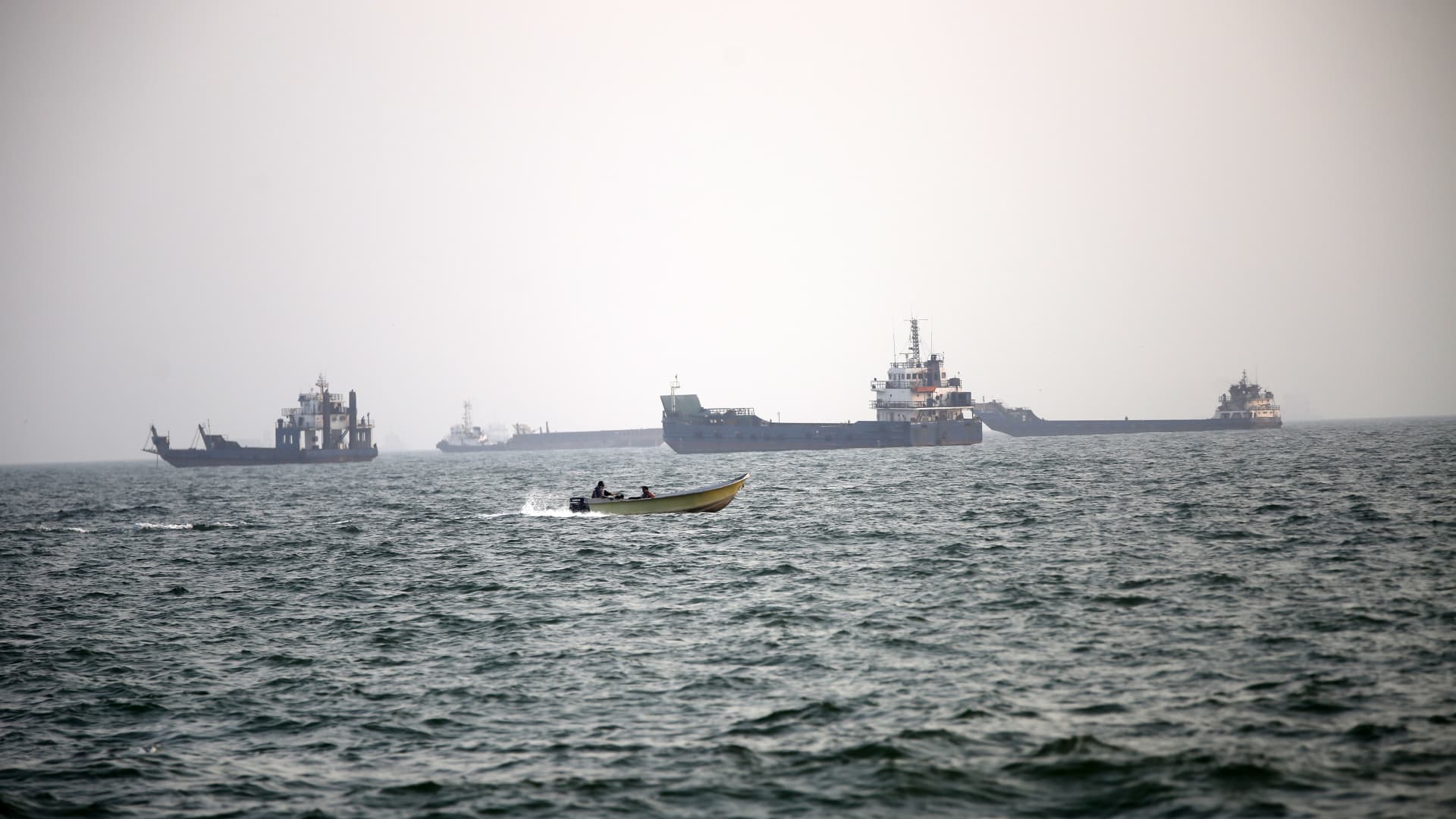
Numerous merchant ships belonging to Iran and other countries remain at anchor in the Strait of Hormuz in Bandar Abbas, Iran, on Sept. 8, 2026.
Fatemeh Bahrami | Anadolu | Getty Images
Crude oil prices fell Wednesday after the International Energy Agency’s member states agreed to prioritize the release of diesel stocks in an effort to address surging fuel prices.
Brent crude futures, the international benchmark, lost 38 cents to close at $100.20 a barrel. U.S. West Texas Intermediate futures fell $1.16 to settle at $88.28 per barrel.
IEA members agreed to support “the prioritisation of the release of diesel stocks, to the extent possible, given the current tightness in diesel markets,” the organization’s director Fatih Birol said in a statement.
IEA members have deployed about 325 million barrels of oil under the March emergency action plan to address the supply disruption triggered by the Iran war, Birol said. This leaves about 100 million barrels that have not been released under the March plan, Birol said.
The member states still have emergency stocks equivalent to 1.1 billion barrels including more than 200 million barrels of diesel, Birol said. The IEA is “ready to release more of these stocks to the market if and when required,” he said.
The IEA meeting and statement comes after the G7 nations agreed Friday to release diesel stocks under pressure from the Trump administration. It is still unclear, however, how much diesel will be deployed.

Brent
Oil prices were higher earlier in the session after Iran-backed Houthi militants in Yemen launched fresh strikes on Saudi Arabia, raising concerns that the rebound of oil exports from the Middle East is vulnerable.
Oil pumped through the East-West pipeline had reached 5.8 million barrels as of Tuesday morning, according to Saudi Energy Minister Prince Abdulaziz bin Salman. It was closed in early September after sustaining damage in a drone attack.
But the Saudi aviation authority reportedly said Tuesday that the country’s airports in Jazan and Najran were targeted in two attacks, amid growing hostilities between the Houthis and the kingdom.
Iran’s move to step up attacks on tankers which are transiting through the Strait of Hormuz has also led to renewed worries over oil supplies among traders.
wti
Naeem Aslam, chief investment officer of Zaye Capital Markets, said Tuesday that oil remains “caught between improving physical supply and persistent geopolitical risk.”
“The sustained ability of the Houthis in Yemen to target oil facilities hundreds of kilometers from the border keeps the risks of a renewed large-scale crude supply disruption present and high, and these risks could worsen if the Houthis feel the need to apply more pressure as a result of losing more territory,” said Samer Hasn, senior market analyst at forex trading platform XS.com.