


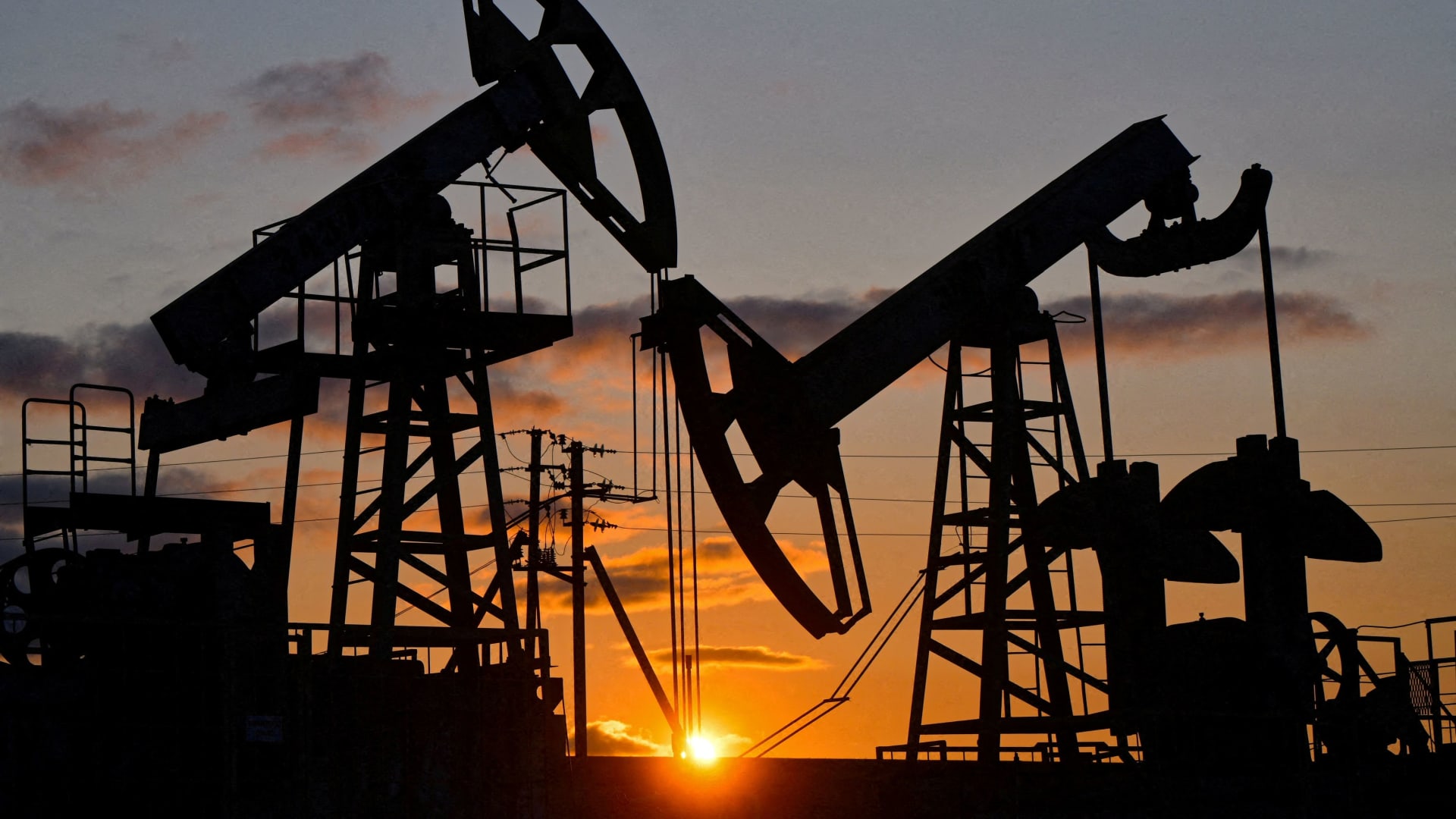
Alexander Manzyuk | Reuters
U.S. crude oil prices rose more than 4% Tuesday on reports that President Donald Trump is dissatisfied with Iran’s proposal to reopen the Strait of Hormuz.
West Texas Intermediate futures jumped more than 4% to $100.62 per barrel by 7:46 a.m. ET. International benchmark Brent futures advanced about 3% to $111.68.
Trump told his advisors that he is not satisfied with Iran’s proposal to open the strait and end the war, multiple people briefed on the matter told The New York Times. It was not clear why exactly the president did not like Iran’s offer, according to the Times.
Iran has offered offered to reopen the strait if the U.S. lifts its naval blockade. But Tehran wants leave discussions on its nuclear program to a later date.
Secretary of State Marco Rubio was skeptical of Iran’s proposal in an interview with Fox News on Monday. Rubio said Tehran is willing to reopen the strait to traffic as long as its still in control of the sea lane.
Secretary of State Marco Rubio in a Fox News interview earlier Monday appeared to pour cold water on any Iranian proposal to clear the strategically vital strait.
“That’s not opening the straits. Those are international waterways. They cannot normalize, nor can we tolerate them trying to normalize, a system in which the Iranians decide who gets to use an international waterway and how much you have to pay them to use it,” Rubio said.

U.S. oil prices since the start of the year
Energy flows through the Strait of Hormuz — which carries about a fifth of the world’s oil and liquefied natural gas — remain severely disrupted, with roughly 20 million barrels per day of crude, fuels and petrochemicals affected, according to Andy Lipow, president of Lipow Oil Associates.
Even if hostilities ended immediately, a return to normal market conditions would take months, Lipow said, citing the need to clear mines, ease tanker congestion and gradually restart production and refining.
Factoring in shipping and distribution lags, he estimated it would take at least four to six months for oil markets to stabilize, with prices likely to remain elevated in the interim as inventories approach critical levels.
“The longer the conflict goes on, the higher the price, especially as inventories are drawn down to critical operating levels. If the conflict ended tomorrow, crude oil prices are estimated to drop $10 per barrel,” he added.
Absent any new negotiations, the WTI crude oil price will drift back up to $100, with the Brent Crude going over $110, Lipow said.