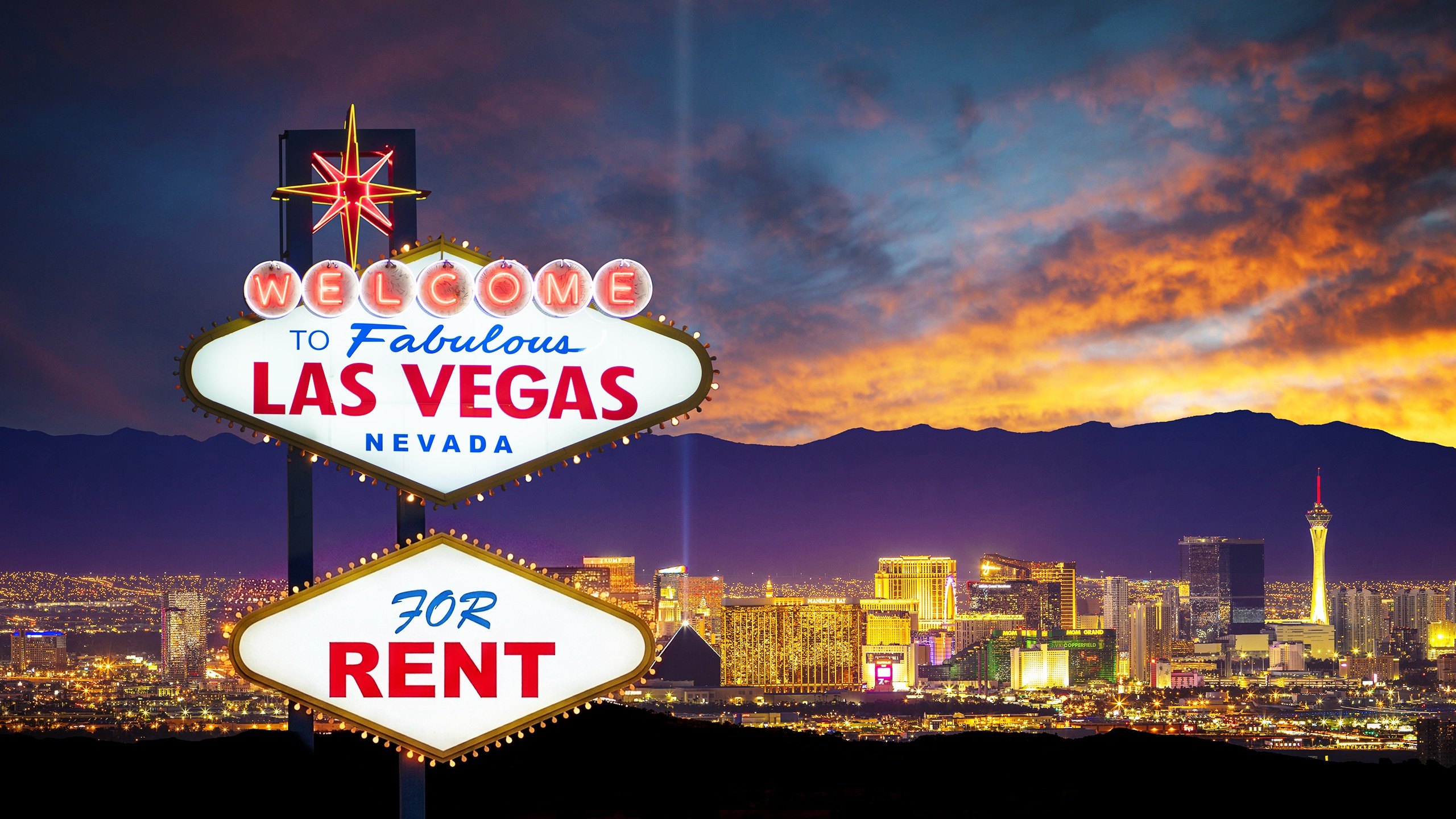
To the outside world, Las Vegas might be just a weekend getaway, but to locals, it’s home—and right now, those residents are proving to be the nation’s most loyal renters.
The latest Realtor.com® rent report reveals that during the first three months of 2026, Vegas residents accounted for 70% of online rental listing views within the metro. That marks the greatest share of local engagement across the 50 largest U.S. markets.
In May, the median asking rent in Las Vegas was $1,447, down over 2% compared to a year ago.
Tania Jhayem, a real estate agent at Keller Williams The Marketplace‘s luxury division in Las Vegas, says the metro’s popularity among local tenants should come as no surprise.
“Las Vegas is no longer viewed primarily as a transient city where people come and go,” she tells Realtor.com. “Instead, we’re seeing stronger long-term commitment from residents who view Southern Nevada as home.”
The Vegas market’s long-term value
Just 30% of rental listing views in Vegas came from outside the metro from January through March—a metric that also aligns with the evolution of the local housing market, Jhayem says.
“Many people already know what the city offers, and those who were considering a move here may have already made that decision over the past several years,” she notes.
According to Jhayem, solid economic fundamentals, led by relative affordability, are what keep locals firmly rooted in Vegas.
“Affordability is still a major advantage compared to many coastal markets, particularly California, even though housing costs have increased significantly over the past several years,” explains the agent. “We’re also seeing a more diversified economy than Las Vegas had historically, with continued growth in healthcare, logistics, technology, professional services, sports, and entertainment.”
Lifestyle advantages also play an important role, with the bustling metro offering residents access to world-class entertainment along the Strip, as well as outdoor recreation.
“For many renters, remaining in Las Vegas is simply more practical than relocating to a higher-cost market,” says Jhayem.
Additionally, the agent suggests that the local rental market is inadvertently benefiting from today’s high borrowing costs.
“While mortgage rates remain elevated, some renters who may have otherwise purchased a home are choosing to renew leases and remain in place until financing becomes more favorable, which contributes to higher renter retention,” she adds.
The latest report from Las Vegas Realtors® released last week shows that home sales in May were down 1% year over year, while the share of single-family properties listed without any offer increased more than 2% compared to the same period in 2025.
At the same time, the median price of existing single-family homes climbed to a record high of $490,000 in May.
Overall, the latest trends observed in the Vegas housing market suggest that demand remains healthy, according to Jhayem.
“Even when affordability challenges exist, people are choosing to stay in the market rather than leave it,” she stresses. “That creates stability for both the rental and ownership sectors and indicates confidence in the region’s long-term economic prospects. It’s also a sign that many residents still believe Las Vegas offers a strong value proposition compared to other major metropolitan areas in the Western United States.”
Looking ahead, the Keller Williams agent expects Vegas to generate strong renter demand beyond the local pool.
“The region continues to benefit from population growth, business investment, and a relatively affordable cost of living compared to many competing Western markets,” she points out. “While it may not currently be leading in out-of-metro renter interest, it remains one of the country’s most resilient and desirable rental markets.”
Las Vegas is emblematic of several Sun Belt rental markets commanding loyalty from the locals.
In the first quarter of 2026, nearly 67% of online views in Austin, TX, came from within the metro, followed by San Antonio, TX (65.1%), Houston (64.6%), and San Diego (64.3%).
“Beyond the draw of warm weather, softening rents and strong local job anchors work together to create a powerful gravitational pull—giving residents in these markets little reason to look anywhere else,” says Realtor.com economist Jiayi Xu.
The San Francisco paradox
The San Francisco market has emerged as something of an anomaly based on the latest report, recording one of the largest gains in local tenant retention alongside a massive surge in out-of-town demand.
At the start of the year, rental demand from locals reached 55%, up from 45% six years ago. During the same period, online traffic from out-of-market renters spiked from 43.1% to 64.1%.
While these findings seem contradictory at first glance, the apparent paradox can be explained when analyzing how the different tenant pools have shifted.
San Francisco’s total pool of local renters has shrunk since 2020, largely due to the AI boom that has minted a new wave of deep-pocketed homebuyers. At the same time, an influx of tech talent moving into the region has dramatically expanded.
“What we’re seeing now is a counter-migration of AI talent flowing back into the city,” Alexander Kalla, a San Francisco Bay Area–based real estate agent, tells Realtor.com. “These aren’t casual renters. They’re high earners who want to be close to the action, and that’s quietly stabilizing demand at the top of the market.”
Even as San Francisco’s contingent of local renters thins out, those who remain are fiercely committed to staying, despite the metro’s median asking rent surging to $2,883 in May, making it one of the most expensive rental markets in the U.S.
“What this loyalty tells me is that San Francisco’s housing market has quietly transformed,” says Kalla. “It’s smaller in volume than six years ago, yes, but it’s become more premium, more durable. The people who chose to stay aren’t going anywhere.”
Both Xu and Kalla agree that for San Francisco renters, what they sacrifice in affordability they more than make up for in career growth opportunities and networking. Because they tend to be high-income earners, they are well-positioned to absorb the cost of admission to the center of the AI boom.
“The founders, the VCs, the coffee shop conversation that turns into a multimillion[-dollar] deal—that’s not something you find in Austin or Miami,” argues Kalla. “For these renters, the premium rent isn’t a burden; it’s the cost of admission to an ecosystem that genuinely can’t be rebuilt elsewhere.”
Get real estate news in your inbox