


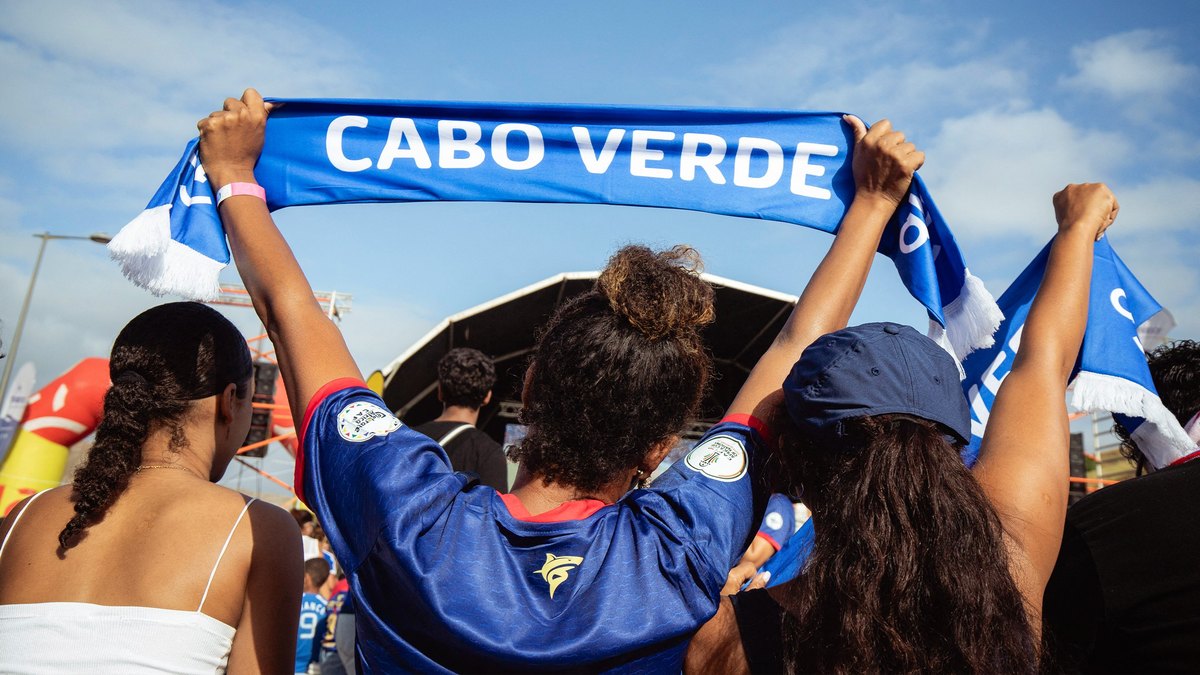
Although they were eliminated from the 2026 FIFA World Cup ahead of Sunday’s highly anticipated final, Scotland and the small African Island nation of Cabo Verde have won over legions of U.S. fans, fueling a surge of American interest in their local real estate and tourism markets.
Sitting west of Senegal in the central Atlantic Ocean, the Cabo Verde archipelago, also known as Cape Verde, which is home to roughly 570,000 people, made history by becoming the smallest country to ever make the World Cup’s knockout stage.
Despite having a fraction of the resources of global soccer powerhouses like Brazil and France, the ultimate underdogs punched well above their weight. Cabo Verde were able to hold former champions Spain and Uruguay to scoreless draws thanks to the heroic, viral performances of their 40-year-old goalkeeper Vozinha.
Although Cabo Verde’s luck ran out in the round of 32, the scrappy squad went down swinging, pushing Argentina to the brink in a 3-2 nailbiter—and firmly putting the tiny West African destination on the map for Americans.
Cabo Verde’s ‘World Cup effect’
Rachel Pritchard, CEO of Casa Verde, a real estate agency in Sal, Cabo Verde, says her team has already seen a noticeable uptick in inquiries coming from the U.S., including from potential buyers with no previous links to the archipelago, which is a new development.
“In the past, our American customers tended to have ties to Cabo Verde whether as first, second or even third generation to have settled in the States, especially from the Boston, Miami and Atlanta areas,” Pritchard tells Realtor.com®.
The CEO attributes this shift in demand to what she calls the “World Cup effect.”
“Cabo Verde has hit the headlines for all the right reasons in the World Cup,” notes Pritchard. “People have not only heard of our little island nation now; they finally know where we are!”
According to the real estate professional, despite its small size, Cabo Verde has a massive appeal: stunning sandy beaches, warm, clear ocean waters, a total absence of hurricanes, mild winters, as well as political stability.
Perhaps most importantly for homebuyers, Pritchard says that residential properties on the islands are remarkably affordable, offering attractive investment opportunities.
“You can get a two-bed apartment with a pool and ocean view for as little as $120,000, though prices are rising,” says Pritchard.
Looking ahead, she expects a short-term spike in demand for vacation homes from the U.S. in the late 2026 and early 2027, similarly to what happened when Croatia made its mark in the 1998 and 2018 World Cup tournaments, fueling a tourism boom.
“Inquiries about ‘Cape Verde vacations’ are already up 800%,” reveals Pritchard. “With every plane full of tourists that land, a handful think ‘hey, I’d love to live here!’ and get in touch.”
Prichard says that with direct flights now running from Rhode Island, and 30-day visa-free stays for U.S. citizens, Cabo Verde “is now perfectly positioned to capitalize on its huge rise in visibility and awareness.”
In the two weeks since Cabo Verde exited the FIFA tournament, Casa Verde Realty’s website saw traffic from the U.S. exceed that from the UK and Portugal for the first time ever.
“The USA is now our highest performing nation globally,” stresses Pritchard. “This is a sure sign that the World Cup Effect is real.”
Whether the impact will be prolonged or short-lived is an open question, but the company CEO says it’s not uncommon for visitors to repeatedly vacation on the islands before deciding to purchase a second home there.
Cabo Verde’s most popular tourist island, Sal, remains the top destination for foreign investors thanks to its robust infrastructure, stunning beaches, and direct flights from 44 cities worldwide, among them Providence, RI, seven hours away.
U.S. buyers tend to favor resort-style developments like Vila Verde and Melia Tortuga, which offer modestly priced condominiums and villas for sale in communities featuring pools and easy beach access.
How to buy a home in Cabo Verde?
When it comes to the logistics of purchasing a home in the island nation, which declared its independence from Portugal in 1975 after 500 years as a colony, Pritchard says the process is fairly smooth, albeit a little different from the U.S. model. One major distinction is that in Cabo Verde, the same real estate agent represents both the buyer and the seller, and escrow accounts are not used.
“The sales process does take between three and six months on average, which can be frustrating, but it’s pretty tight and very protective of buyers and their cash,” says the CEO. “Twenty years ago, Cape Verde may have been a little risky, a little Wild West in its property sales and conveyancing, but not any more.”
As an extra bonus, a real estate investment of over $140,000 on the islands can put the buyer on the path to permanent residency in Cabo Verde. Otherwise, foreigners can apply online to obtain a 180-day visa.
“One thing that U.S. citizens need to bear in mind that Cabo Verde is Africa, and it is a developing nation, just 51 years old as a nation independent from Portugal,” reminds Pritchard. “You won’t find fast food chains, malls or cinemas. You will encounter poverty and dirt track roads. But this is part of its charm. You also won’t find venomous spiders or snakes!”
She adds: “What you will find is a genuine welcome, the ‘morabeza’ (spirit of hospitality) of the smiling people, a laid back attitude…’no stress’ is not just a catchphrase, it’s a way of life.”
Archipelago’s tourism boom
Cabo Verde’s growing international profile in the wake of its World Cup participation is being felt beyond the second-home market.
Short-term bookings in Cabo Verde were already running hot before the soccer tournament, up 35.4% year over year in June, but they spiked to 68.2% annually so far in July, according to a new analysis from AirDNA, a firm that compiles and analyzes Vrbo and Airbnb data.
A closer look at the numbers reveals that June had only two days with more than 2,000 bookings on the islands, while the first two weeks of July have already had eight.
“Cabo Verde is a textbook example of how quickly a global spotlight can translate into travel demand,” Bram Gallagher, director of economics and forecasting at AirDNA, tells Realtor.com, highlighting the national team’s memorable debut in the tournament.
“That run put a small island nation in front of one of the largest television audiences in the world, and the booking uptick we’re seeing lines up with that exposure,” adds Gallagher.
Last week, the travel industry platform Skift published an analysis showing that U.S. searches on Expedia for Cabo Verde were up more than 800%.
Echoing Pritchard’s argument, AirDNA experts suggest that short-term rental demand is often a leading indicators of where second-home interest goes next.
Scotland’s Tartan Army also turns heads
Another tournament darling, the Scottish national team was sent home in late June at the group stage, but not before its supporters, known as the “Tartan Army,” left an unforgettable mark on American host cities.
The kilted visitors charmed the locals by playing bagpipes, drinking Boston bars dry while bellowing their signature rallying cry “no Scotland, no party,” and crowning statues with traffic cones in accordance with a quirky Glasgow tradition that crossed the Atlantic.
For U.S. buyers eyeing overseas real estate, Scotland’s appeal is proving hard to resist.
“We have seen continued strong levels of interest from U.S.-based buyers over the summer, and the World Cup has undoubtedly helped raise Scotland’s profile amongst American audiences,” Neil Scott, head of residential development at Knight Frank, a British property consultancy, tells Realtor.com.
Scott, who is based in Scotland’s capital of Edinburgh, notes that although it is difficult to directly attribute property enquiries to a single event such as the international soccer tournament, he contends that it has undoubtedly helped.
“Summer tends to be a busy period for American enquiries, but Scotland’s presence and strong supporter turnout in cities such as Boston and Miami will certainly have helped raise the country’s profile across the U.S.,” says the consultant. “The increased visibility has certainly generated conversations with prospective buyers who may previously have been less familiar with the Scottish market.”
U.S. buyers are drawn to Scotland’s rocky shores for a variety of reasons, including its rich history and striking architecture, breathtaking landscapes, access to world-class golf courses, outdoor lifestyle, and in some cases, family ancestry.
Major markets for American buyers include the capital of Edinburgh, the famed university town of St. Andrews, and smaller cities nestled along what is known as Scotland’s Golf Coast, including North Berwick and East Lothian. The area boasts the highest concentration of Championship links golf courses in the world.
“Scotland also offers a broad range of property options and can compare favourably on value against some competing international second-home markets,” says Scott.
According to the Knight Frank executive, it’s not just vacation homes that American real estate shoppers are eyeing; some are interested in moving to Scotland full time and establish their primary residence there.
“One buyer recently mentioned they felt it was a better and safer environment to raise a family, which, of course, may only relate to certain parts of the U.S.,” Scott points out.
Foreign buyers can purchase property in Scotland and enjoy the same ownership rights as their local counterparts, but investment in real estate does not offer a path to UK residency or citizenship.
The decisive match of the global FIFA tournament between reigning world champion Argentina and Spain is being played at Sunday 3 p.m. Eastern Time at MetLife Stadium in New Jersey.
Get real estate news in your inbox