



Winning construction work requires more than submitting a competitive price. Contractors, owners and design teams rely on bid documents to communicate project requirements, evaluate proposals and compare bidders consistently. Understanding the purpose of each document helps reduce confusion, improve bid accuracy and support better procurement decisions.
What Are Bid Documents in Construction?
Bid documents are a collection of construction procurement documents used to request, prepare, submit and evaluate contractor bids. They are commonly used by project owners, architects, engineers and contractors to define project requirements and support contractor selection. A bid package typically includes drawings, specifications, pricing forms, schedules and contractual information. Together, these documents establish a common understanding of the work, allowing bidders to prepare accurate proposals and owners to compare competing offers fairly.
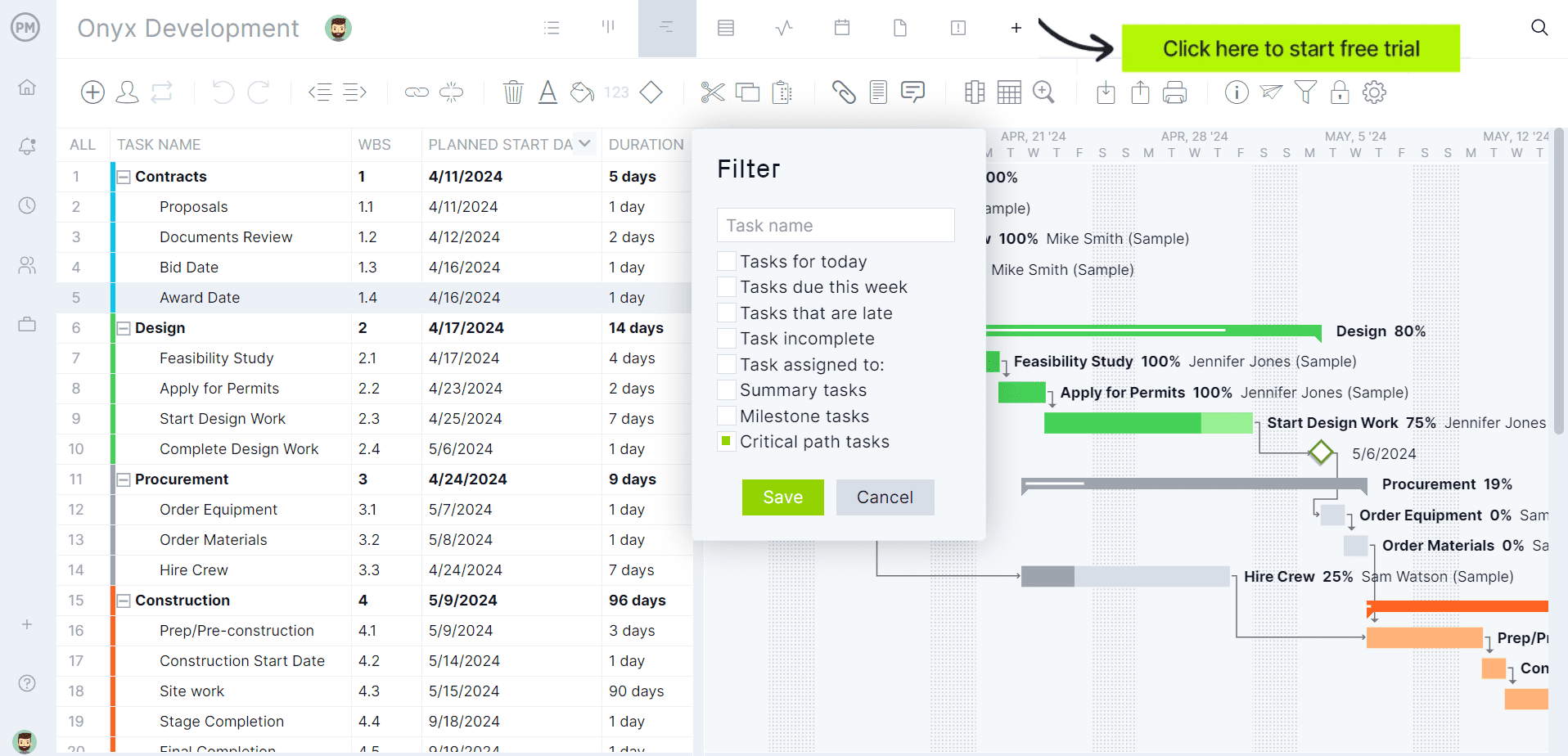
If you’re looking for software to plan, schedule and track construction projects from start to finish, try ProjectManager instead. ProjectManager is award-winning construction project management software that gives construction companies tools to ensure projects are completed on time, within budget and within scope. It allows project managers to create detailed construction schedules, estimate costs, allocate resources, set budgets, track progress and compare estimated versus actual project outcomes using real-time dashboards and reports to quickly identify delays or cost overruns. Get started with ProjectManager for free today.
1. Bid Proposal
A bid proposal is a formal pricing document used to submit a contractor’s offer for a construction project. It is commonly used during competitive bidding to communicate the proposed cost, scope assumptions and project commitments. The document serves as the contractor’s official response to the owner’s bidding requirements and procurement process.

During construction bidding, the bid proposal allows owners to compare contractors based on pricing and commercial terms. Estimators use project drawings, specifications and quantity takeoffs to prepare the proposal. Once submitted, it becomes a key document used by procurement teams to evaluate offers and select a contractor.
- General contractors typically prepare the bid proposal using estimating and scheduling information.
- Project owners, procurement departments or public agencies receive completed proposals.
- Estimators contribute pricing calculations, labor forecasts and material cost assumptions.
- Project managers review schedule commitments and construction execution considerations before submission.
- Subcontractors provide quotations that support the contractor’s final proposal pricing.
2. Bill of Quantities (BOQ)
A bill of quantities (BOQ) is a document that itemizes construction work, materials and measurable quantities for pricing purposes. It is commonly used in construction procurement to create a standardized pricing structure. Each work item is listed separately, allowing bidders to calculate costs consistently across the project scope.
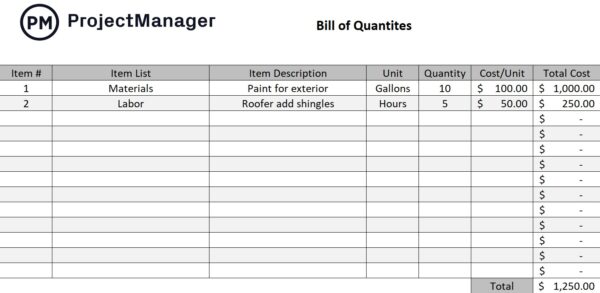
Rather than developing different quantity assumptions, contractors use the BOQ as a common pricing reference during bidding. This improves bid comparability and reduces discrepancies between proposals. Procurement teams also use the document during bid evaluation to identify pricing differences, review unit rates and assess contractor submissions.
- Quantity surveyors commonly prepare the BOQ using project drawings and specifications.
- Architects and engineers provide design information supporting quantity calculations and measurements.
- Contractors receive the document and use it to develop detailed pricing.
- Estimating teams review each line item before preparing cost breakdowns.
- Owners and procurement personnel use completed BOQs during bid evaluation.
3. Invitation to Bid
An invitation to bid is a procurement document used to formally request construction bids from qualified contractors. It is commonly used by project owners and public agencies to announce bidding opportunities. The document outlines submission requirements, deadlines, eligibility criteria and instructions for participating contractors.
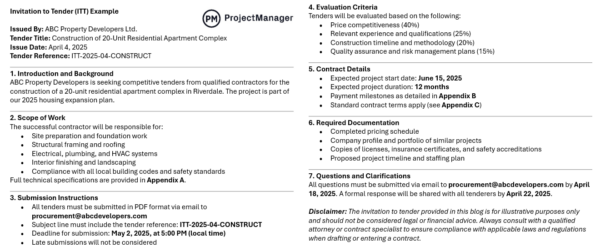
Before contractors can prepare pricing, they need information about the bidding process itself. The invitation to bid establishes the rules governing submissions and identifies where supporting bid documents can be obtained. Procurement teams rely on it to attract qualified bidders and maintain a structured selection process.
- Project owners or procurement departments typically create and distribute invitations.
- Qualified contractors receive the invitation and decide whether to participate.
- Procurement managers establish submission requirements, deadlines and evaluation procedures.
- Design consultants may provide supporting project information referenced within the invitation.
- Contractor business development teams review opportunities and coordinate bid participation.
4. Request for Proposal (RFP)
A request for proposal (RFP) is a procurement document used to solicit detailed project solutions from contractors. It is commonly used when owners want bidders to propose approaches, methodologies and pricing. The document outlines project objectives, requirements and evaluation criteria used to compare competing construction proposals.

Unlike a simple pricing request, an RFP allows owners to assess technical capabilities alongside cost. Contractors use it to explain how they will deliver the project, manage risks and meet performance requirements. Evaluation committees review submitted proposals to identify the contractor offering the best overall value.
- Project owners typically develop the RFP with support from consultants.
- Procurement teams distribute the document to qualified contractors and bidders.
- Contractors prepare technical proposals, pricing information and project approaches.
- Design professionals often help define project requirements and evaluation criteria.
- Selection committees review submissions and score proposals against established requirements.
5. Request for Quotation (RFQ)
A request for quotation (RFQ) is a procurement document used to obtain pricing for specific construction services, materials or equipment. It is commonly used when project requirements are already defined. The document focuses primarily on cost, allowing buyers to compare prices from multiple qualified suppliers or contractors.
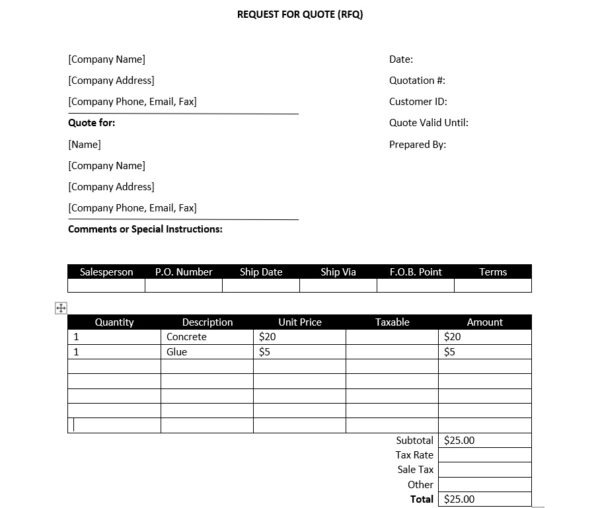
When drawings, specifications and quantities are already established, procurement teams use an RFQ to gather competitive pricing efficiently. Suppliers and subcontractors submit quotations based on the requested scope. Buyers then compare prices, delivery commitments and commercial terms before selecting the most suitable vendor or contractor.
- Procurement departments commonly prepare RFQs for suppliers and subcontractors.
- Project owners may issue RFQs directly during smaller construction procurements.
- Suppliers receive the document and provide pricing for requested items.
- Estimators review quotations and incorporate them into overall bid calculations.
- Purchasing personnel evaluate pricing, delivery schedules and commercial conditions.
6. Construction Drawings
Construction drawings are graphical documents used to communicate the design, dimensions and technical requirements of a construction project. They are commonly used by contractors, estimators and subcontractors to understand the work being bid. Plans, elevations, sections and details collectively define what must be built.
Before contractors can estimate costs accurately, they need a clear representation of the project scope. Construction drawings provide the information required for quantity takeoffs, scheduling and construction planning. Bidders use them alongside specifications and other bid documents to develop pricing and identify potential project risks.
- Architects typically create architectural drawings that define building layouts and details.
- Engineers prepare structural, mechanical, electrical and civil design drawings.
- Contractors review drawings to estimate labor, materials and equipment requirements.
- Subcontractors analyze discipline-specific drawings when preparing specialized quotations.
- Owners, consultants and procurement teams distribute approved drawing packages to bidders.
7. Technical Specifications
Technical specifications are written construction documents used to define material, equipment and workmanship requirements for a project. They are commonly used alongside construction drawings to communicate quality standards and performance expectations. The document establishes exactly how construction work must be executed and what products may be used.
Even detailed drawings cannot communicate every construction requirement. Technical specifications provide additional information needed for accurate estimating and procurement decisions. Contractors rely on them to understand acceptable materials, installation methods and testing requirements, helping bidders prepare proposals that align with the owner’s project expectations.
- Architects and engineers typically prepare specifications for their respective disciplines.
- Project owners receive specifications as part of the overall design package.
- Contractors review specification sections while developing cost estimates and bids.
- Subcontractors analyze requirements affecting materials, equipment and installation methods.
- Design consultants coordinate specifications with drawings to maintain project consistency.
8. Instructions to Bidders
Instructions to bidders are procurement documents used to explain how contractors must prepare and submit bids. They are commonly used during competitive construction bidding to establish submission procedures and administrative requirements. The document defines deadlines, required forms, eligibility criteria and other rules governing participation.
Because owners often receive multiple bids, consistency is essential during evaluation. Instructions to bidders help standardize submissions by requiring contractors to follow the same procedures. Procurement teams use the document to reduce administrative errors, improve compliance and ensure all bidders compete under identical conditions.
- Procurement departments commonly prepare instructions to bidders for construction solicitations.
- Project owners approve the requirements before distribution to potential bidders.
- Contractors review the document to ensure complete and compliant submissions.
- Legal and procurement advisors may participate in drafting bidding procedures.
- Bid evaluation teams enforce the requirements established within the document.
9. General Conditions of the Contract
General conditions of the contract are legal construction documents used to define the rights, responsibilities and obligations of project participants. They are commonly used in construction contracts to establish administrative and contractual procedures. The document governs topics such as payments, schedule management, changes and dispute resolution.
Long before construction begins, bidders must understand the contractual framework they may be required to follow. General conditions allow contractors to assess risks, responsibilities and administrative requirements during pricing. Owners use them to establish consistent contract terms and reduce misunderstandings after project award.
- Owners often adopt standard contract conditions from industry organizations or agencies.
- Legal counsel may review and modify provisions before project procurement begins.
- Contractors examine the document to evaluate contractual risks and obligations.
- Procurement teams distribute general conditions as part of the bid package.
- Project managers, attorneys and contract administrators frequently participate in reviews.
10. Supplementary Conditions
Supplementary conditions are contract documents used to modify, clarify or add project-specific requirements to the general conditions of a construction contract. They are commonly used when standard contract language does not address unique project needs. The document establishes additional obligations, procedures and contractual requirements for participants.
Every construction project presents different risks, regulations and administrative requirements. Supplementary conditions allow owners to customize contract terms without rewriting the entire contract framework. Contractors review these provisions during bidding to understand project-specific responsibilities that may affect pricing, scheduling, insurance requirements or risk allocation.
- Project owners typically develop supplementary conditions with legal and procurement advisors.
- Attorneys often review provisions to ensure contractual compliance and enforceability.
- Contractors analyze supplementary conditions when assessing project risks and obligations.
- Procurement teams include the document within the complete bid package.
- Project managers and contract administrators frequently participate in drafting reviews.
11. Scope of Work (SOW)
A scope of work (SOW) is a construction document used to describe the work, deliverables and project requirements expected from a contractor. It is commonly used to define project boundaries and responsibilities. The document establishes what work is included, excluded and required for successful project completion.
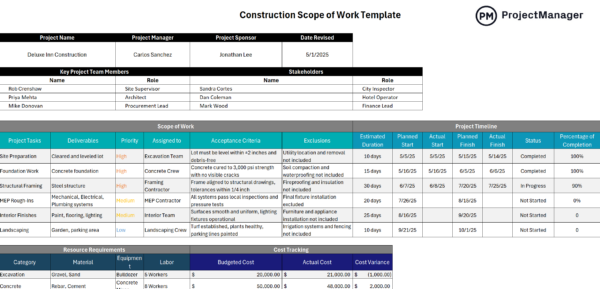
Clear project expectations are essential for accurate pricing and bid comparisons. A scope of work helps contractors understand the required activities, construction tasks and deliverables before preparing proposals. Owners use the document to reduce ambiguity, limit scope gaps and ensure bidders are pricing the same work.
- Project owners commonly prepare the scope of work with consultant support.
- Architects and engineers contribute technical requirements and project deliverables.
- Contractors use the document to estimate labor, materials and equipment needs.
- Subcontractors review relevant sections before preparing discipline-specific quotations.
- Procurement personnel distribute the scope to prospective bidders and contractors.
12. Bid Form
A bid form is a standardized procurement document used to collect contractor pricing and required bid information. It is commonly used in construction bidding to ensure submissions follow a consistent format. The document typically includes pricing fields, acknowledgments, certifications and signature requirements for bidders.
Evaluating bids becomes more efficient when contractors submit information in the same structure. Bid forms help owners compare proposals consistently while reducing administrative review time. Contractors complete the form using information from estimates, subcontractor quotes and other bid documents before submitting their final offer.
- Project owners or procurement departments typically create the bid form.
- Contractors complete the document and submit it with supporting materials.
- Estimators provide pricing information used to populate required form fields.
- Procurement teams review completed forms during compliance and bid evaluations.
- Authorized company representatives sign the document before official submission.
13. Bid Bond
A bid bond is a financial guarantee used to assure project owners that a bidder will honor its proposal if selected. It is commonly used in public and large private construction procurements to reduce bidding risk. The document provides financial protection if the successful bidder refuses to execute the contract.
Owners invest significant time evaluating construction bids and selecting contractors. A bid bond discourages non-serious submissions by creating financial consequences for withdrawing after award. Contractors typically obtain the bond before bid submission, giving owners greater confidence in the validity and commitment behind each proposal.
- Surety companies issue bid bonds after evaluating contractor qualifications and finances.
- Contractors obtain the bond and submit it with bid documents.
- Project owners receive the bond as part of the procurement package.
- Insurance brokers and surety agents often assist during bond procurement.
- Procurement teams verify bond compliance before accepting contractor submissions.
14. Schedule of Prices
A schedule of prices is a pricing document used to break down construction costs into individual work items or categories. It is commonly used during procurement to standardize bid pricing. The document lists unit rates, lump sums or itemized costs that support the contractor’s total bid amount.
Detailed pricing improves transparency during bid evaluation and contract administration. Owners use schedules of prices to compare costs across bidders and understand how proposals are structured. Contractors rely on the document to organize pricing assumptions and demonstrate how project costs are allocated throughout the work scope.
- Contractors typically prepare schedules of prices using detailed project estimates.
- Estimators develop unit rates and pricing breakdowns for individual work items.
- Project owners receive the completed schedule during the bid review process.
- Procurement teams compare submitted pricing structures across competing bidders.
- Subcontractor quotations often contribute to pricing included within the schedule.
15. Contractor Qualifications Statement
A contractor qualifications statement is a document used to demonstrate a contractor’s experience, capabilities and organizational resources. It is commonly used during prequalification and bid evaluation processes. The document provides information about financial strength, project history, key personnel, licenses, certifications and technical expertise.
Price alone does not determine whether a contractor can successfully deliver a project. Qualification statements help owners assess experience, capacity and past performance before awarding work. Procurement teams use the document to identify capable contractors and reduce the risk of selecting an unqualified bidder.
- Contractors prepare qualification statements using company and project performance information.
- Business development teams often coordinate document preparation and updates.
- Project owners review qualifications before inviting contractors to bid.
- Procurement personnel evaluate experience, resources and organizational capabilities presented.
- Executive leadership and project managers frequently contribute supporting information.
16. Addenda
Addenda are official procurement documents used to modify, clarify or supplement bid documents before bid submission deadlines. They are commonly used during construction bidding when project requirements change or additional information becomes available. The document ensures all bidders receive the same updated information before preparing final proposals.
Questions, design revisions and scope adjustments frequently arise after bid packages are issued. Addenda communicate these changes to contractors so estimates reflect the most current project requirements. Procurement teams rely on addenda to maintain fairness, reduce misunderstandings and ensure all bidders base proposals on identical information.
- Project owners typically authorize addenda before distribution to prospective bidders.
- Architects and engineers often prepare revisions that become part of addenda.
- Procurement departments distribute addenda to all registered bidding contractors.
- Contractors review updates and adjust pricing, schedules or assumptions accordingly.
- Estimators, project managers and design consultants frequently participate in reviews.
ProjectManager Is the Best Construction Project Management Solution
ProjectManager offers a comprehensive construction project management software that combines advanced scheduling, resource management, cost tracking and team collaboration in a single platform. Construction managers can build Gantt charts, manage task dependencies, identify critical paths and monitor project performance without the expensive price tag and steep learning curve commonly associated with Microsoft Project.
In addition to traditional construction scheduling capabilities, ProjectManager includes AI-powered project insights, workflow automation and live performance tracking that help teams identify delays, manage risks and make better decisions.
One of the biggest advantages of ProjectManager is that it is fully cloud-based. While Microsoft Project Professional and Microsoft Project Standard are desktop applications, ProjectManager gives office staff, project managers, superintendents and field teams access to the same live project data from anywhere. Schedule updates, resource changes, timesheet submissions and project status information are immediately available, helping construction teams improve coordination and reduce communication delays.
Beyond scheduling, ProjectManager includes workload management, resource scheduling, portfolio roadmaps, real-time dashboards, kanban boards, timesheets and automated reports that help construction companies balance labor resources, monitor project costs and track performance across multiple projects. These tools provide greater visibility into schedules, budgets and resource utilization, making it easier to keep construction projects on track.
Watch the video below to learn more!
The platform also supports an open API and more than 1,000 integrations with tools like Acumatica, QuickBooks, Microsoft Project, Slack and Google Workspace, allowing construction companies to connect operational and project data across their existing systems. The Acumatica integration is particularly valuable for construction businesses because it connects project management workflows with ERP capabilities such as accounting, financial management and operational reporting.
For organizations looking for a modern construction project management platform that combines construction scheduling, resource planning, budget tracking, collaboration and ERP connectivity, ProjectManager is the best alternative to Microsoft Project.
ProjectManager is online construction project management software that empowers teams to plan, manage and track their projects in real time. We connect architects and engineers in the office with your work crew on the job site so they can share files and comments to foster better collaboration. Get started with ProjectManager today for free.