

Investors in Canva will have to wait until at least 2027 if they want to cash in on the public market, with the Australian “AI” business confirming it won’t IPO this year.
But as the business held its annual product launch in California, ramping up its AI credentials after a year of publicly list SaaS tech companies seeing their share prices hammered, Canva’s billionaire cofounder and chief operating officer Cliff Obrecht told Capital Brief, a guest at the shindig, that as the graphic design platform’s core business model shifts to AI – without going full Allbirds – a US listing won’t be happening this year.
That means that unless there are further secondary market sales of Canva shares, which last traded hands at a A$65 billion valuation in August 2025, investors will have to wait at least another 9-12 months before an exit from the US-domiciled Australian company, founded in 2013.
Obrecht told Capital Brief that Canva was “fully IPO ready”, but they “want to make sure the evolution of this business model is really bedded in so we’re not having to explain ourselves to the market through a transitional period.”
Pressed about the timing of the IPO by reporter Bronwen Clune, who was Canva’s guest at the Los Angeles event, Obrecht said “I assume it will be next year.”
The COO has been busy in the last couple of years buying rather than building Canva’s AI credentials, having acquired eight startups in just two years.
Acquisition spree
Last week it was Simtheory, an AI collaboration and agent management platform, and Ortto, a customer data and marketing automation company – both built by the founders of accomodation platform Stayz – in a $100m+ deal. That came a fortnight after spending a rumoured $30 million on digital outdoor advertising startup Doohly. Canva’s gobbled up five startups in the first 15 weeks of 2026, including US startup Mango.AI while it was still in stealth mode, as well as the UK’s Cavalry.
Since 2024, Canva’s nabbed UK rival Affinity and local generative AI platform Leonardo as well as MagicBrief.
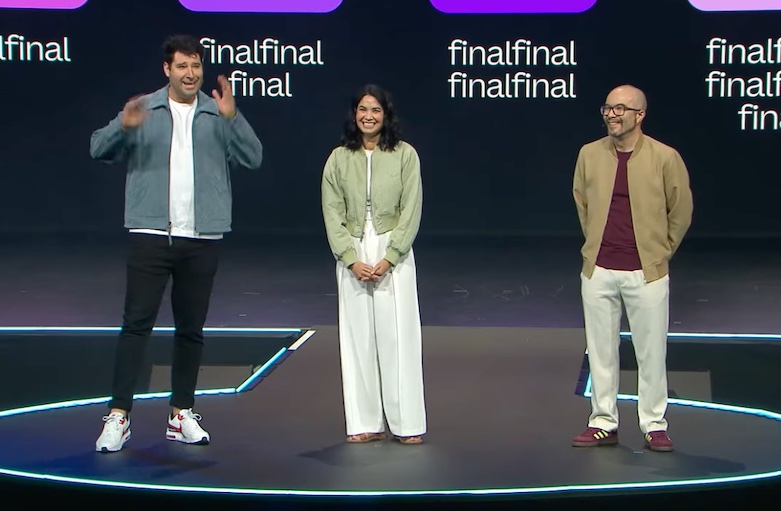
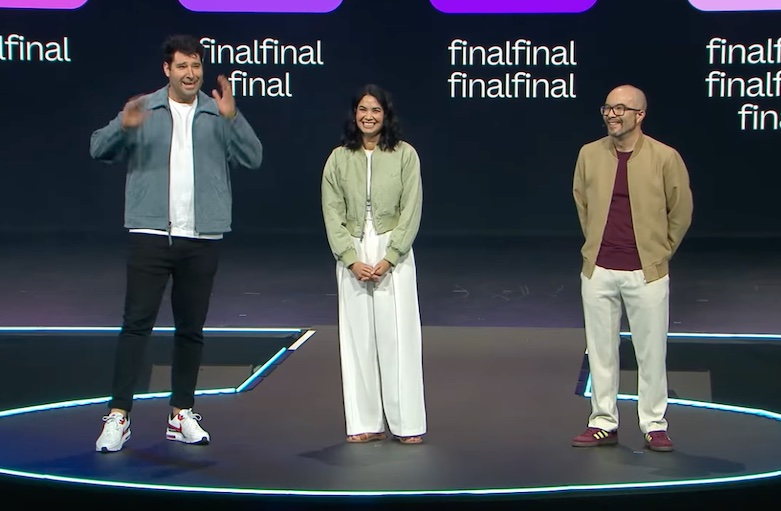
Obrecht’s one-brand AI busking band led to the annual reveal of the new, improved Canva, overnight in Los Angeles.
As SmartCompany’s Tegan Jones astutely observed, while the update “looks like a familiar wave of AI features: conversational design tools, automated workflows, and integrations with other workplace apps” on the surface, broader ambitions appear to be at play.
“Rather than simply improving how people design, Canva is moving into the work that surrounds it. Canva will be able to pull information from across emails, meetings and documents before transforming that data into a finished product. That kind of behaviour starts to place it in closer competition with the workflow and productivity tools that already sit at the centre of day-to-day work,” she writes.
“If this trajectory continues, it raises a longer-term question: will we see the likes of ‘Canva OS’ in five years time?”
That sounds like something patient investors would wait for.