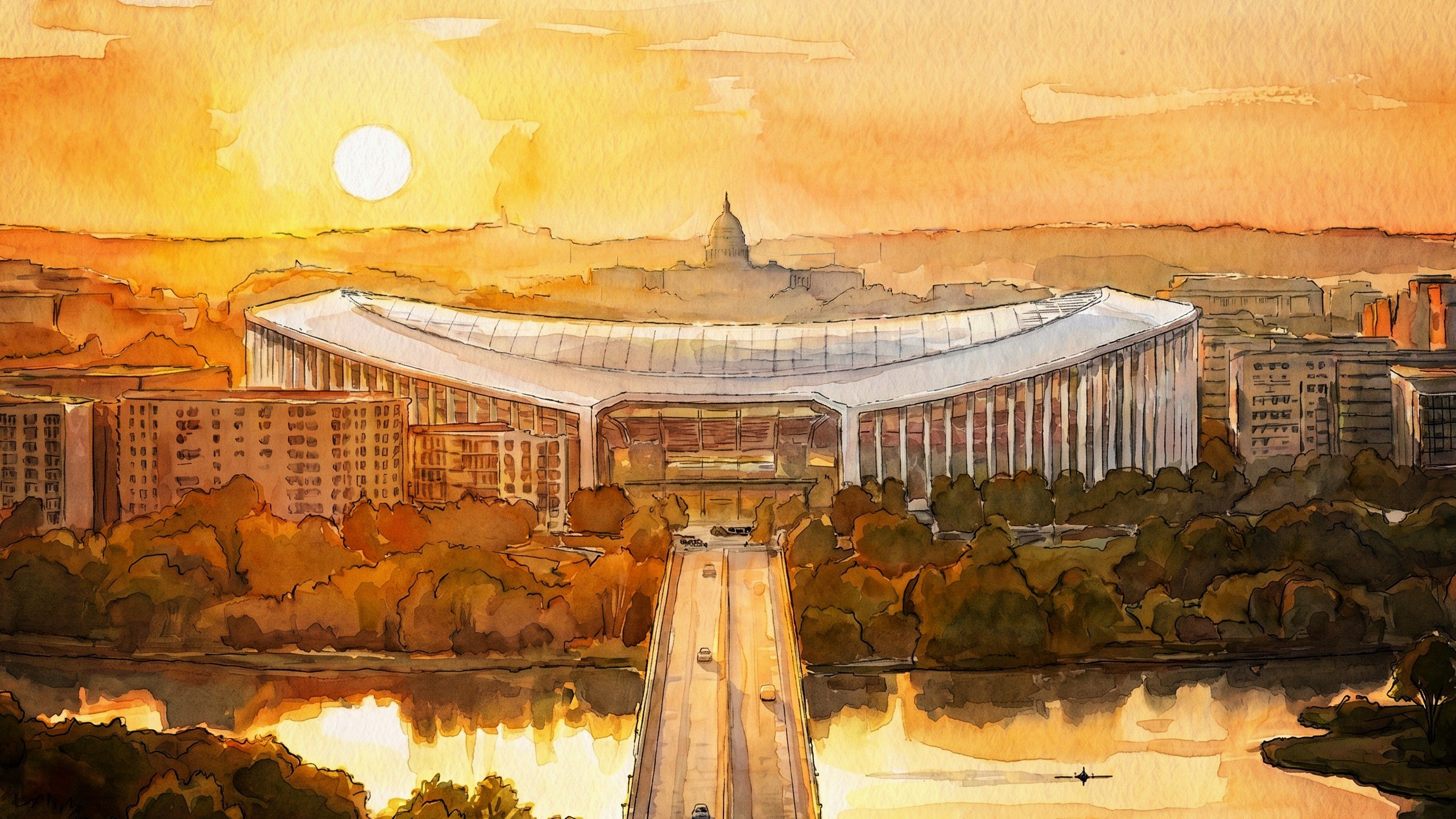
The Washington Commanders will anchor a new $24.2 billion development along the banks of the Anacostia River in Washington, DC.
City officials unveiled a master plan Tuesday for the redevelopment of the Robert F. Kennedy Campus in the city’s Hill East neighborhood. Under the new plan, the 180-acre former RFK Stadium and its surrounding parking lots would be redeveloped.
Last year, the Commanders announced a deal to return to the district, investing $2.7 billion into a new 65,000-seat stadium. They will complete it by 2030.
The master plan calls for 5,000 to 6,500 new housing units around the stadium. About 30% of them would be affordable housing. It would also have office, hotel, and retail space. The city would keep about a third of the land for parks and open spaces, plus 6,000 garage parking spaces.
City leaders said the project would create 30,000 construction jobs, 2,000 permanent jobs, and $5.1 billion in tax revenue for the district over the next 30 years. It follows years of public comments and input about what to do with the RFK stadium site.
“We are taking another step forward in our promise to district residents and businesses—to plan not just for a world-class stadium, but for a community-centric 365-day campus that will drive growth for years to come,” said Mayor Muriel Bowser.
The city is soliciting feedback on the plan through mid-August. It plans to approve the final master plan in September 2026.
The Washington Commanders played at the RFK Campus until they left for a new stadium in Landover, MD, in 2004. The city continued to use the venue for other teams but closed it in 2019. The property of the stadium site is owned by the federal government. Congress approved transferring it to the district for 99 years in 2024, allowing a stadium to proceed.
Economic boost
The district has worked for years to bring the Commanders back. They promise a new economic anchor at a time the city’s economy is at a crossroads. The office-focused economy of the district stagnated during the COVID-19 pandemic and it has not recovered. Many federal government agencies based in DC never returned to the office.
President Donald Trump‘s purge of federal employees further stagnated the local housing market. It also sent more workers to private companies in the Virginia and Maryland suburbs where housing is cheaper. Government shutdowns only added more hassle.
Trump has brought his own plans to remake DC including repainting the Lincoln Memorial Reflecting Pool, a 250-foot arch near Arlington Cemetery, and renaming the Kennedy Center as well as a new White House ballroom.
The district still has significantly more expensive housing than its suburbs, by and large. It has a median listing price of $589,721. The Realtor.com® state-by-state report card gave the city a D+ this year.
The district has tried to promote housing development since then. Presumptive mayor Janeese Lewis George supported the deal, but had concerns about its benefits for the community.
Under the deal inked in 2024, the district government will use a $175 million revenue bond, funded by stadium activity, to build parking. Events DC, the city’s convention authority, would contribute $181 million for parking garages that it will own. The city also put about $202 million into work for infrastructure.
The district argues it will be subsidizing the stadium far less than other cities have in recent deals. The DC deal means the stadium and parking development is 24% financed from public sources. Deals in Jacksonville, Buffalo, Nashville, and New Orleans required a far larger share of public funding.