



Your construction project has fallen behind schedule. Now what? It’s a situation every construction project manager faces sooner or later. The challenge isn’t just recovering lost time. It’s figuring out why the project slipped in the first place and deciding what changes will get work moving again without creating new problems elsewhere.
This guide walks through the practical steps construction project managers can take to get a construction project back on track. You’ll learn who’s responsible for driving the recovery effort, which schedule recovery techniques actually work, how each stakeholder contributes and how construction project management software makes it easier to monitor progress and respond before small delays turn into major ones.
If you’re looking for software to plan, schedule and track construction projects from start to finish, try ProjectManager. ProjectManager is an award-winning project management solution that gives construction project managers the tools they need to ensure projects are completed on time, within budget and within scope. Create detailed construction schedules, estimate costs, allocate resources, set budgets, track progress and compare estimated versus actual project outcomes using real-time dashboards and reports to quickly identify delays or cost overruns. Get started with ProjectManager for free today.
Who Should Get the Construction Project Back on Track?
Getting a construction project back on track isn’t one person’s job. Everyone has a role to play, from the crews in the field to the owner approving key decisions. That said, some stakeholders have much more influence over schedule recovery than others.
- Project manager: Takes the lead by figuring out what’s causing the delays, updating the construction schedule, coordinating everyone involved and making sure the recovery plan is actually improving project performance instead of creating new bottlenecks.
- Superintendent: Keeps the recovery effort moving in the field by directing crews, coordinating subcontractors, adjusting work sequences, solving day-to-day jobsite issues and tracking whether production is improving.
- General contractor: Brings the entire team together by coordinating subcontractors, suppliers and internal staff, resolving conflicts between trades and providing the resources needed to keep work moving forward.
- Subcontractors: Help recover lost time by adjusting crew availability, coordinating closely with other trades, communicating field constraints early and completing their work according to the revised schedule.
- Owner: Keeps the recovery effort from stalling by making timely decisions, approving change orders, authorizing additional funding when necessary and removing obstacles that require owner approval.
- Architects and engineers: Support schedule recovery by answering RFIs quickly, reviewing submittals without unnecessary delays, issuing revised drawings and resolving design questions before they hold up construction.
Step-by-Step Process to Get Your Project Back on Track
Recovering a delayed construction project isn’t about working faster just for the sake of it. The best results come from understanding what caused the delay, focusing on the work that actually affects completion and making smart adjustments as conditions change. Here’s a practical process construction project managers can follow to regain control.
1. Identify the Cause of the Delay
Before changing the schedule, figure out why the project fell behind. Was it weather, material shortages, labor issues, design changes or poor coordination between trades? The real cause isn’t always obvious. Fixing the wrong problem wastes time and often creates even concurrent delays later in the project.
2. Assess the Impact on the Project Schedule
Not every delay pushes the completion date back. Compare actual progress against the baseline schedule to see which milestones have been affected and how much float remains. This tells you whether you’re dealing with a minor setback or a delay that requires immediate corrective action.
3. Identify the Activities on the Critical Path
Focus on the work that’s controlling the project’s finish date. If a delayed activity isn’t on the critical path, speeding it up may have little effect on the overall schedule. Concentrating your recovery efforts on critical activities gives you the best chance of recovering lost time.
4. Assess Resource Availability and Constraints
Next, determine whether you have the people, equipment and materials needed to accelerate the schedule. A recovery plan only works if the necessary resources are actually available. At the same time, look for constraints like inspections, permits or supplier lead times that could limit your options.
5. Evaluate Schedule Recovery Techniques
Once you understand the situation, compare different ways to recover time. You might add crews, resequence work, overlap activities or crash the schedule where it makes financial sense. Every option comes with tradeoffs, so weigh the time savings against added costs, risks and potential quality issues.
6. Update the Construction Schedule
After choosing a recovery strategy, revise the construction schedule to reflect the new sequence of work, resource assignments and milestone dates. An outdated schedule quickly becomes useless. Everyone involved should be working from the same plan so expectations stay clear across the project.
7. Communicate the Recovery Plan to Stakeholders
A great recovery plan won’t accomplish much if nobody knows about it. Meet with owners, superintendents, subcontractors and other key stakeholders to explain what’s changing, why those decisions were made and what everyone is expected to do moving forward.
8. Monitor Progress and Adjust as Needed
Getting the project back on track doesn’t end when the new schedule is published. Track progress closely, compare actual performance against the revised plan and respond quickly if new issues appear. Small adjustments made early are usually much easier than another major schedule recovery effort.

Construction Scheduling Techniques to Get Your Project Back on Track
Choosing the right recovery strategy depends on what’s causing the delay and how much flexibility you still have. Some techniques are designed to recover lost time, while others help stabilize the schedule so the project doesn’t fall behind again. Here’s when each one makes the most sense.
Schedule Crashing
If your completion date is already in jeopardy, schedule crashing is one of the fastest ways to recover lost time. It speeds up critical activities by adding extra crews, equipment or overtime. Although it can significantly shorten the schedule, it also increases costs, so it’s usually reserved for situations where finishing on time outweighs the added expense.
Fast Tracking
When there’s room to overlap work safely, fast tracking can help bring a delayed project back on schedule. Instead of waiting for one activity to finish before another begins, certain tasks are performed at the same time. The payoff is a shorter timeline, but only if the additional coordination doesn’t create costly rework.
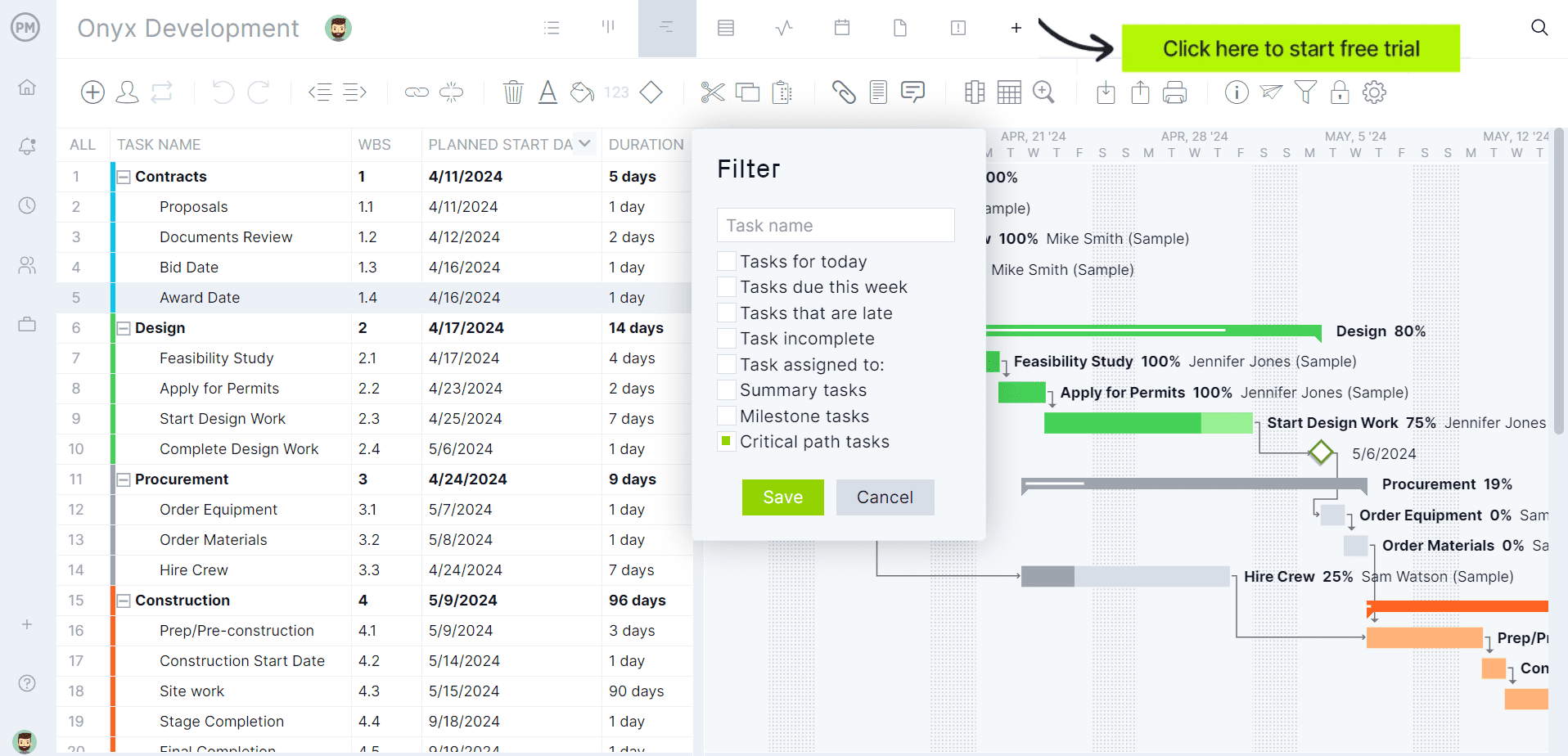
Critical Path Optimization
Rather than speeding up every activity, this technique focuses only on the work that controls the project’s finish date. Critical path analysis is most effective after delays have occurred because it helps project managers direct limited time, labor and equipment where they’ll have the biggest impact on the overall schedule.
Last Planner System
Even after a project has fallen behind, better planning can stop delays from piling up. The Last Planner System brings superintendents, foremen and trade partners together to make realistic short-term commitments, remove constraints early and improve coordination, making it easier to recover the schedule and keep work moving consistently.
Look-Ahead Planning
Once the recovery plan is in motion, look-ahead planning helps keep it that way. By reviewing the next few weeks of work, the team can spot missing materials, labor shortages, permit issues and other obstacles before they disrupt the construction process. It’s one of the best tools for preventing new delays from undoing your progress.
Scope Reduction
Sometimes the quickest way to recover the schedule is to reduce the scope of work that needs to be completed. Scope reduction involves removing, postponing or simplifying nonessential project requirements with the owner’s approval. While it won’t be appropriate for every project, it can be an effective option when meeting a critical deadline is more important than delivering every originally planned feature.
Re-Baselining
If delays are too significant to recover, re-baselining may be the most realistic path forward. Instead of trying to meet an unattainable schedule, the project team establishes a new baseline with updated dates, milestones and expectations. This creates a realistic plan for the remaining work and gives everyone a clear benchmark for measuring future progress.
How ProjectManager Helps You Get a Construction Schedule Back on Track
Getting a delayed construction project back on schedule starts with knowing exactly where things stand. ProjectManager is construction project management software built to plan schedules, manage resources, track costs and monitor progress in real time. Instead of reacting to problems after they happen, project managers can quickly identify schedule slippage, evaluate recovery options, reassign resources and measure whether corrective actions are actually improving project performance. That visibility makes it much easier to recover lost time while keeping costs, workloads and project risks under control.
Gantt Charts
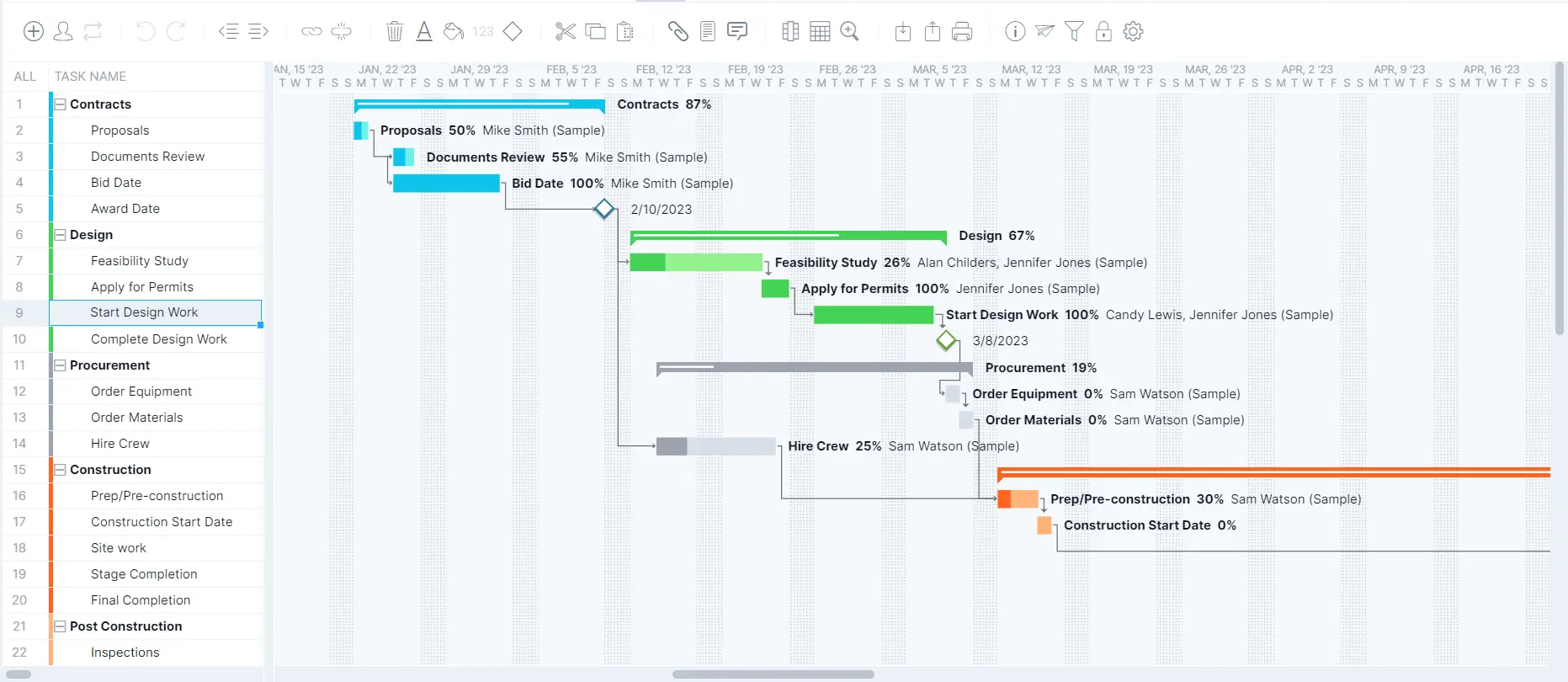
ProjectManager’s online Gantt chart gives construction project managers everything they need to analyze and recover a delayed schedule. Compare planned versus actual progress, identify the critical path, create project baselines and map milestones to see exactly where work has slipped. Four task dependency types—finish-to-start, start-to-start, finish-to-finish and start-to-finish—make it easy to resequence activities when needed, while visual percent-complete indicators and task-level resource assignments help teams monitor whether recovery efforts are delivering the expected results.
Real-Time Project Dashboards
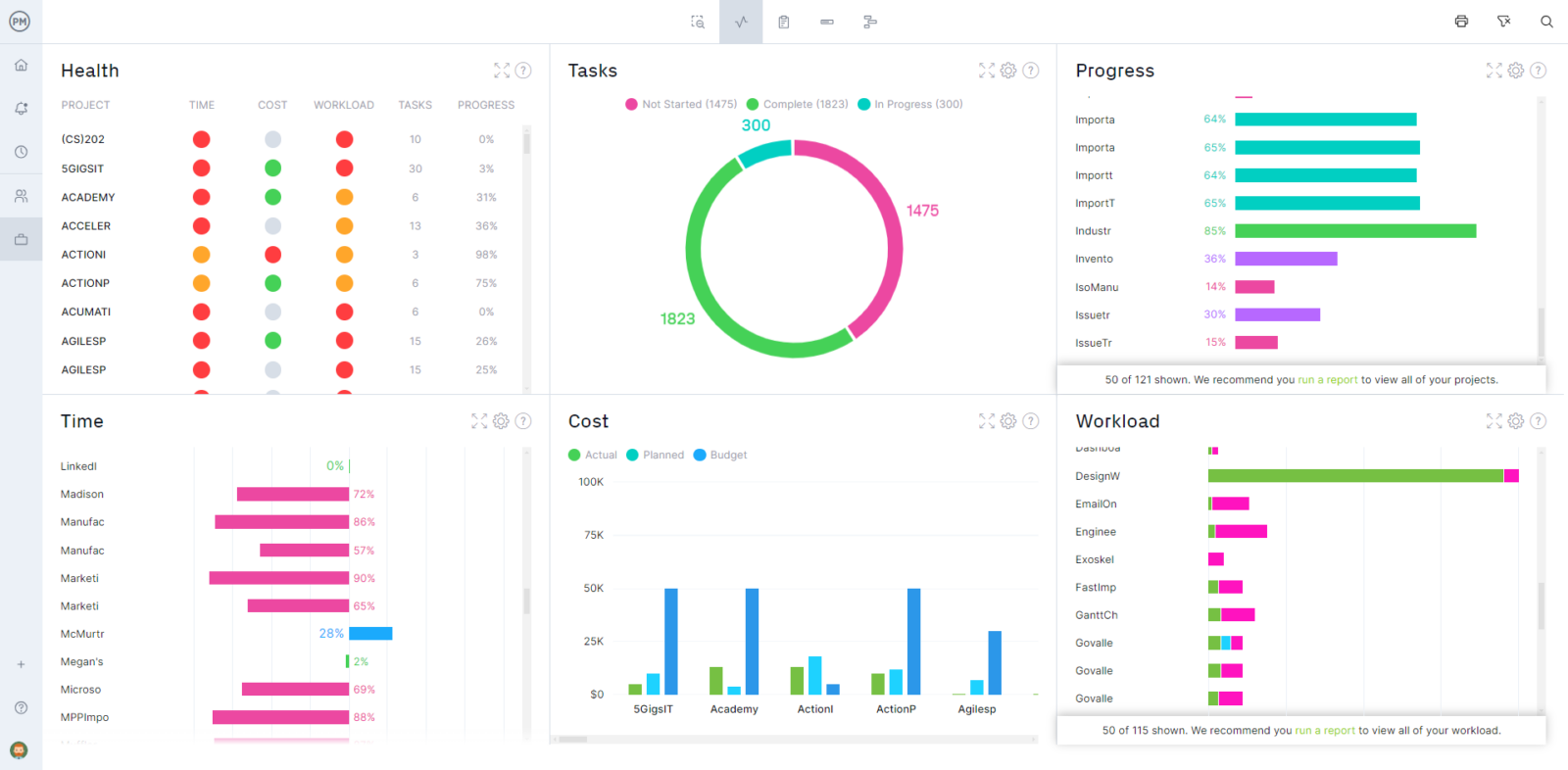
Once the recovery plan is underway, ProjectManager’s real-time dashboards provide an instant snapshot of project health. RAG indicators quickly highlight issues affecting schedule, cost and overall project performance, while live metrics compare planned versus actual progress across time, budget and scope. Construction firms managing multiple jobs also benefit from portfolio project management features that make it easy to monitor every project, identify troubled schedules early and shift attention to the projects that need immediate action.
Resource Management Tools
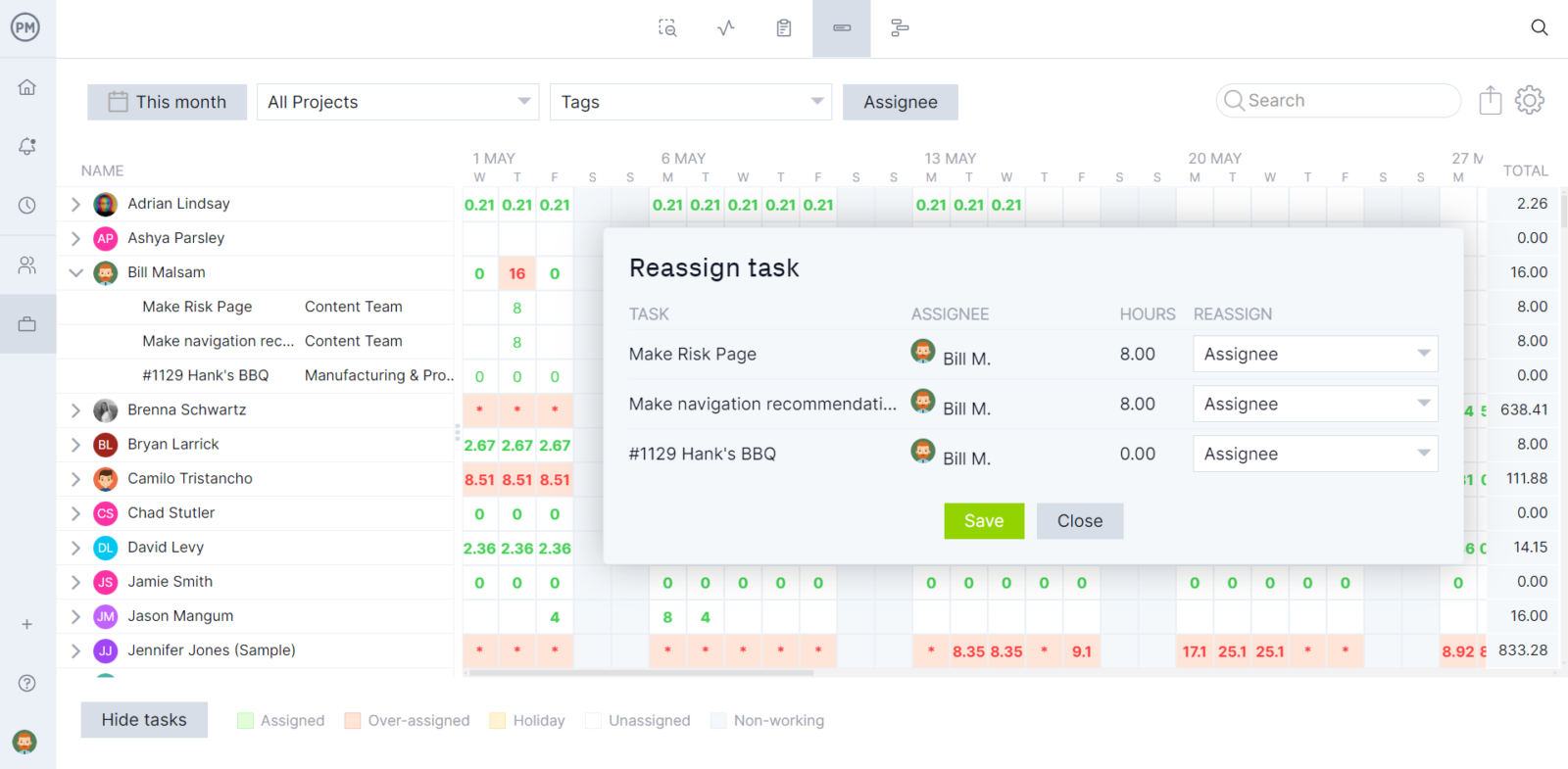
Recovering a delayed construction project often comes down to making better use of available resources. ProjectManager helps managers balance workloads, assign the right people to the right tasks and see team availability before making schedule changes. Resource charts, workload management views and real-time availability data make it easier to add crews where they’re needed most, avoid overallocating labor and support recovery strategies like schedule crashing without creating new bottlenecks elsewhere on the project.
Integrations
Recovering a delayed construction project often requires more than scheduling tools alone. ProjectManager integrates with leading accounting, ERP and business management platforms, giving project managers access to up-to-date financial and operational data without switching between systems. That connected workflow makes it easier to evaluate recovery options, monitor their impact and make faster, better-informed decisions.
Acumatica
The Acumatica integration connects project scheduling with construction ERP data, allowing teams to compare project progress with budgets, job costs and resource information. That visibility helps project managers decide whether acceleration efforts are financially viable before committing additional labor, equipment or materials to recover the schedule.

MYOB
By integrating with MYOB, construction businesses can combine project schedules with accounting information such as expenses, invoices and payroll. Having both operational and financial data in one workflow makes it easier to understand the cost of schedule recovery and choose corrective actions that fit the project’s budget.

QuickBooks
The QuickBooks integration gives construction project managers a clearer picture of how schedule delays affect project finances. As recovery plans are implemented, teams can monitor labor costs, expenses and budgets alongside project progress, helping them balance faster delivery with responsible financial decision-making throughout the recovery effort.

ProjectManager is online construction project management software that empowers teams to plan, manage and track their projects in real time. It connects architects, engineers, project managers and field crews through a single platform where they can collaborate, share updates and monitor progress from anywhere. Get started with ProjectManager today for free.