


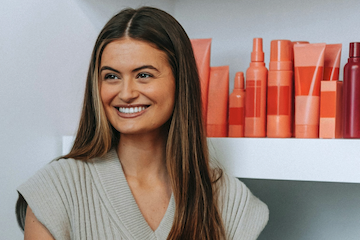
A decade ago I worked at L’Oréal, the global beauty brand. The professionals division sold cosmetics and personal care products directly to salons and stylists. I longed to use those items and recreate the salon experience at home, but alas, only practitioners could buy them.
I wasn’t alone. Since I left in 2016, many brands, L’Oréal included, have started selling directly to consumers.
That is my work today. I lead B2B and D2C ecommerce at a haircare brand.
How does a company sell products to both audiences? In my last article, I addressed how online D2C brands sell wholesale to physical spas.
This post addresses ecommerce.

Salons and pro stylists typically seek custom pricing, education, and growth support.
2 Audiences
Can beauty brands sell the same products to consumers and businesses? Most do not, because professionals usually need different formulas, and some items require training. At a salon, stylists apply hair extensions to clients, but the consumer equivalent is a simpler, do-it-yourself version. Similarly, skincare brands typically offer specialized items for estheticians to use in treatments.
Some brands run two websites: B2B and D2C. It’s doable, provided there are separate teams and budgets. B2B buyers want custom products and services, distinct from mass-market consumer options.
Yet I recommend one site with personalization and gating. Consumers can buy directly, but logged-in professionals should see different products, prices, and content. The site can replicate many duties of a B2B sales rep: validating and approving professionals, showing custom pricing, booking training, and facilitating reorders.
That setup, combined with a dedicated, quick-response B2B customer care team, covers nearly all B2B needs.
What Professionals Value
Price comes first. B2B prices must differ from D2C, visible only to approved logins. The stakes are high, since B2B orders are typically much larger than consumers’.
Gated pricing starts with verifying a professional. U.S. state cosmetology boards issue licenses. BeautyAList checks applicants’ credentials against state board records and syncs with Shopify and WooCommerce. Once approved, a stylist unlocks a brand’s B2B pricing. Manual checks are possible, but slow approvals push some professionals toward unauthorized resellers.
Education comes second, and is a must-have. Many brands lead with instructional content and let products follow. Some offer certification courses, as participating professionals often end up buying products. A France-based skincare brand sells a facial device that complements its products and includes training.
The most loyal, repeat professional buyers tend to be those the brand has trained.
Growth support comes third. It’s anything that helps professionals improve their business, such as an on-site salon locator map, exclusive services, marketing support, and events.
Attracting Consumers
Consumers require different calls to action and product copy, built around ease, results, and problem-solving. Many consumers also want the professional products. Some brands allow it but at a higher price. Others don’t, either to protect professionals or because a product needs a trained professional.
Promotions differ the most. Offering a gift with purchase improves D2C sales, but not B2B. Professionals respond to discounts, loyalty programs, education, and support to help grow their business.
Ultimately, D2C and B2B feed each other. Professional usage encourages consumers to trust the brand, and consumer sales build awareness and attract professionals.
Focus initially on your brand’s specialty. A mostly professional brand should start with B2B ecommerce. Add D2C later, using the same website for both. Similarly, a consumer-first brand can add a gated B2B section.